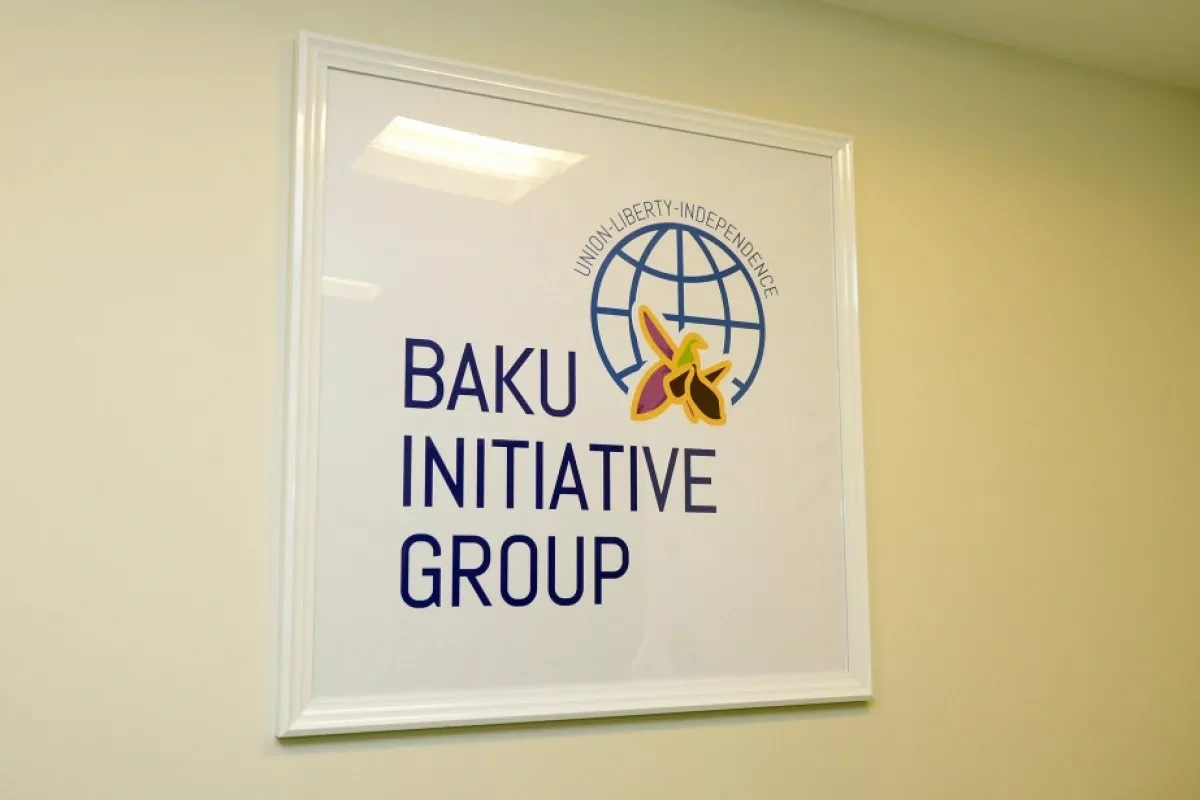
The Baku Initiative Group (BIG) has condemned an initial legislative initiative adopted by the Corsican Assembly concerning the so-called "Artsakh Republic" and Armenian nationals facing criminal proceedings in Azerbaijan, describing the move as politically motivated and contrary to international law.
In a statement, the group said the initiative was "a unilateral, provocative, and politically motivated initiative" that contradicted the principles of sovereignty, territorial integrity and non-interference in the internal affairs of states, Caliber.Az reports via local media.
BIG also argued that the initiative reflected geopolitical narratives promoted by the French government rather than the political will of the Corsican people.
"The actions of those supporting this initiative cannot be regarded as an independent expression of the political will of the Corsican people. They have become more political instruments of Paris—in effect, puppets—than representatives who should be defending Corsica's national interests, language, culture, and identity, choosing instead to act as conduits for France's foreign policy agenda," the statement said.
The statement also noted that the hypocrisy of this position is particularly striking.
The organisation criticised the contradiction between the Corsican Assembly's stance on self-determination abroad and the status of the Corsican language and political rights within France.
“The same political circles that loudly speak of the right to self-determination thousands of kilometres away do not want to guarantee the most basic linguistic and political rights of the Corsican people in Corsica itself. According to Article 2 of the French Constitution, the French language is the only official language of the Republic,” the statement said.
According to BIG, France has not granted Corsican equal institutional status with French, despite signing the European Charter for Regional or Minority Languages in 1999. The group also noted that the charter has yet to be ratified by France. It cited French court rulings that prevented Corsican from being recognised as an official language alongside French in regional institutions.
The statement questioned why Corsican representatives were addressing issues in the South Caucasus while failing to challenge Paris' centralising policies toward Corsica.
"Before adopting initiatives concerning the South Caucasus, those representatives must answer a few questions: Why do they remain subject to a state that refuses to grant the Corsican language equal institutional status? Why do they not show the same determination against the centralising and deliberate assimilation policy carried out by official Paris?" the statement said.
BIG said it distinguished between the Corsican people and politicians who were advancing the interests of the French government instead of defending Corsica's language, culture and political rights.
The group called on the Corsican Assembly to prioritise the unresolved issues facing Corsica, including greater protection for the Corsican language, ratification of the European Charter for Regional or Minority Languages, and stronger safeguards for the island's cultural identity and political rights.
It also urged the assembly to maintain its institutional independence.
"As the representative body of the Corsican people, the Assembly must defend the language, cultural, and political rights of the Corsican people and must not allow itself to be used to legitimise policies that undermine Corsican identity and aspirations," the statement said.
By Sabina Mammadli