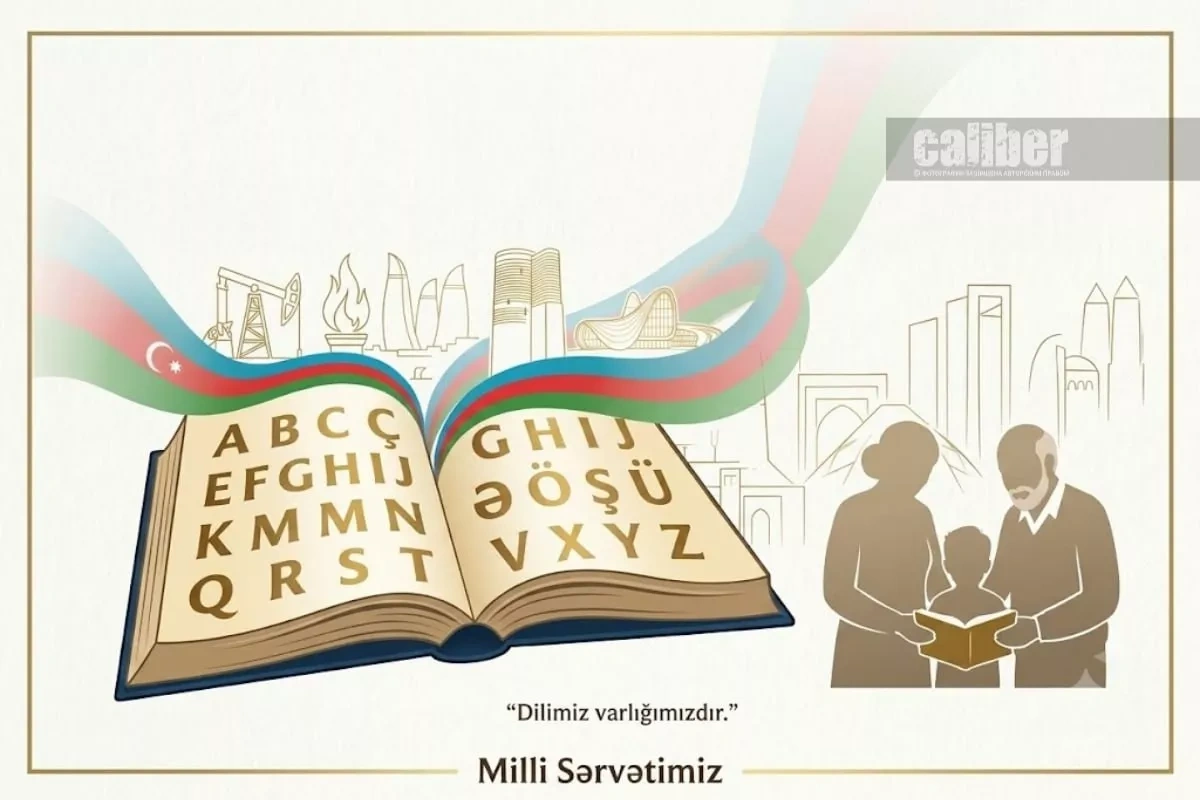
The alphabet... How much sacred, mental, and truly spiritual meaning this word carries for every nation. It is not merely a fixed sequence of letters, but a crucial code of national identity and the continuity of generations, through which language, literature, traditions, worldview, and the very system of values shaped over centuries are transmitted. That is why the issue of writing has never been merely technical or linguistic, and the transition from one alphabet to another has never been carried out by philologists alone. It has always been decided by governments.
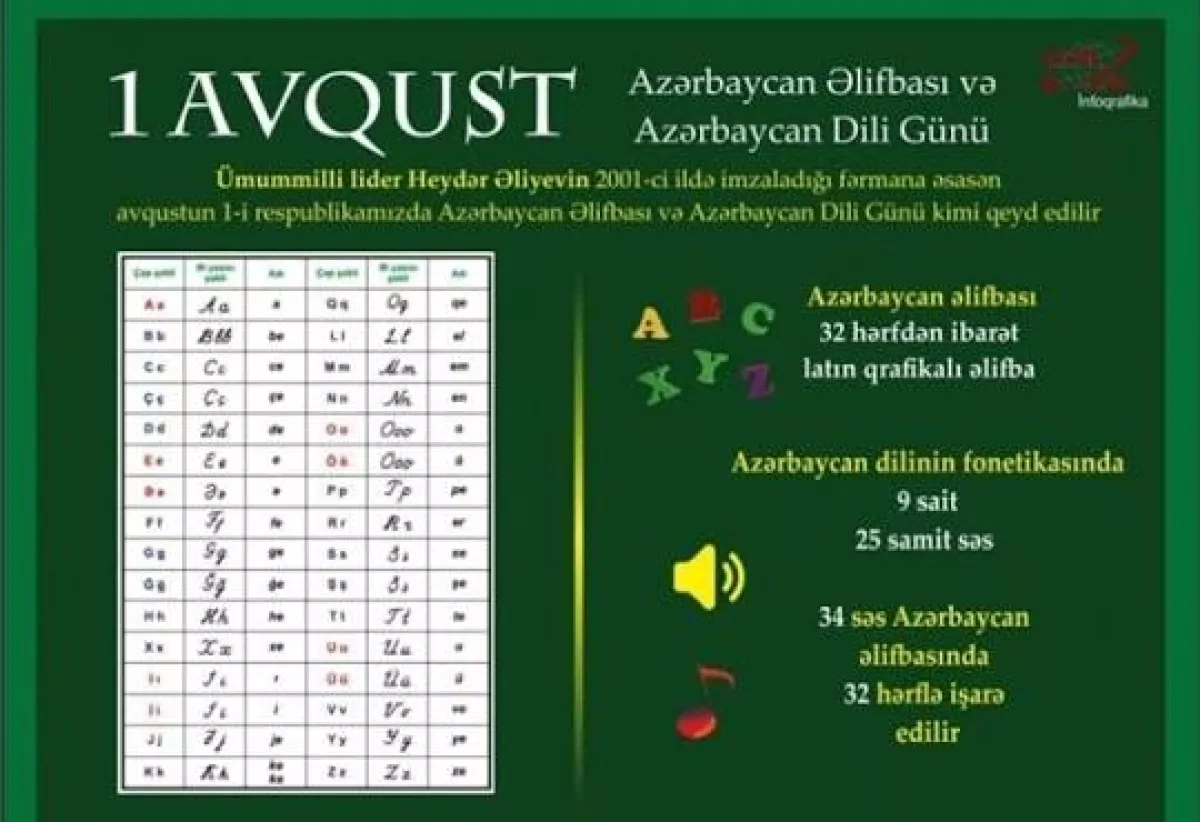
Azerbaijan went through such a transformation three times within a single century. The Arabic script gave way to the Latin alphabet, the Latin alphabet was replaced by Cyrillic, and then, in December 1991, Latin script returned once again. Starting the following year, schools switched to the new script, and the country subsequently lived with two writing systems for nearly a decade: textbooks were published in Latin, newspapers continued to appear in Cyrillic, printing houses maintained two sets of typefaces, and a signboard at one end of a street seemed to contradict the one at the other. The law had been adopted, the alphabet had been approved, but habits did not change.
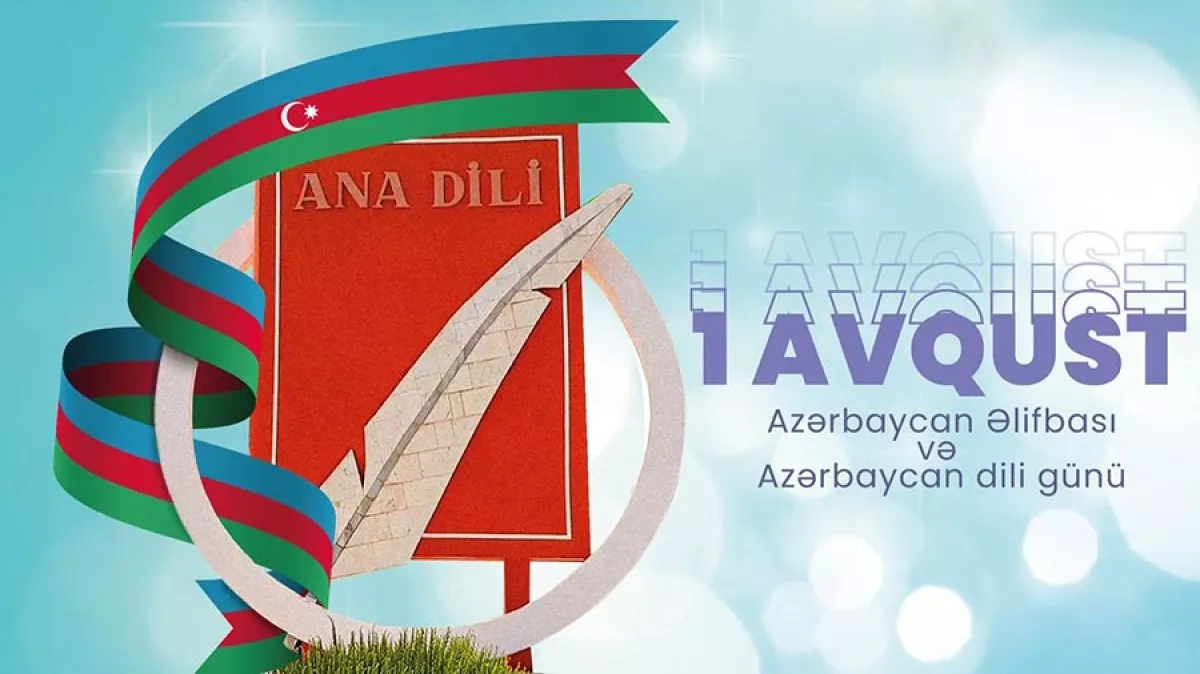
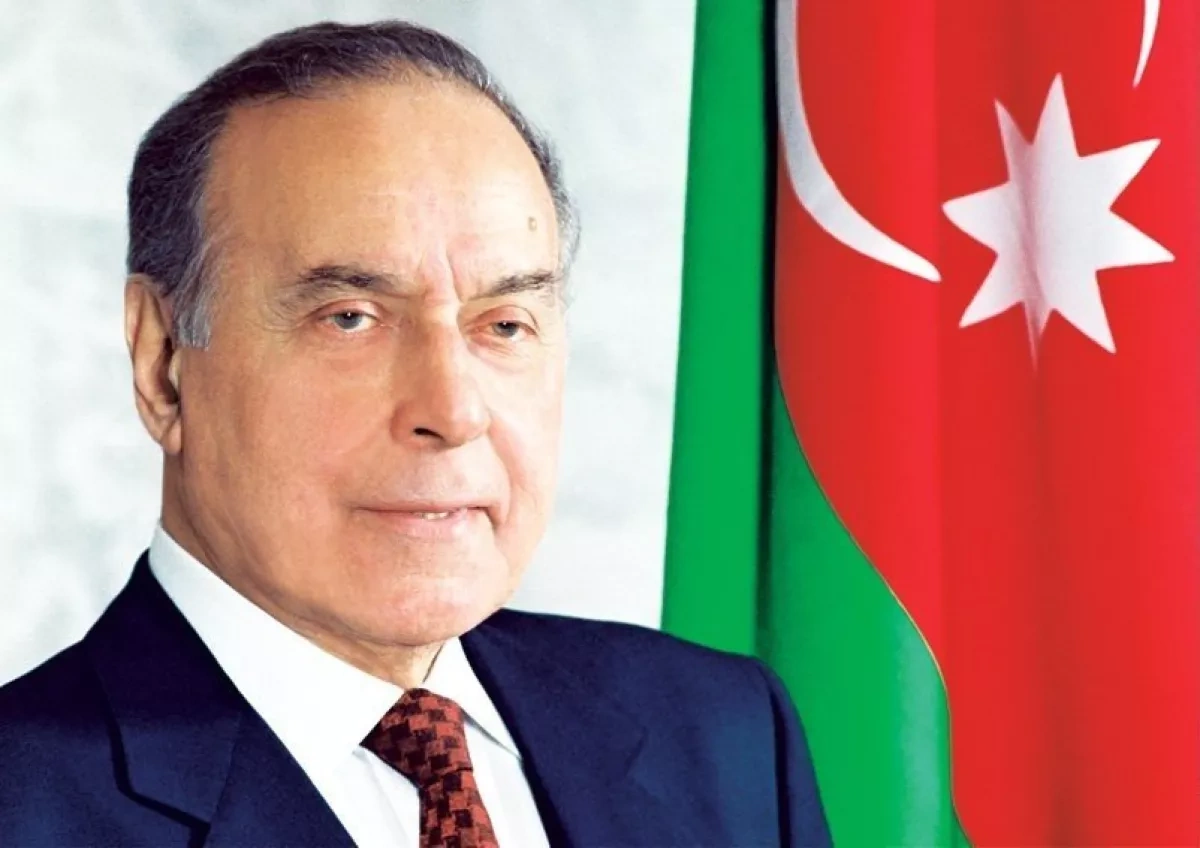
The decree of June 18, 2001 did not introduce the new script. It set a deadline. From August 1, printing, official correspondence, institutional and private-sector documentation, as well as signs and announcements, were required to be converted to the Latin alphabet. A month and a half was allotted for implementation. A week later, on August 9, President Heydar Aliyev signed a decree establishing the Day of the Azerbaijani Alphabet and Azerbaijani Language, with August 1 designated as the commemorative date.
One issue remained: the book heritage. Half a century of publications in Cyrillic had effectively fallen out of circulation, and a separate decision was needed to launch mass re-publication in Latin script so that classics, dictionaries, and reference works could be printed anew.
The alphabet is only one part of the equation. The other is the language itself, and its relationship with Azerbaijani statehood has deep roots. The government of the Azerbaijan Democratic Republic declared Azerbaijani the state language almost from the very first days of its establishment — independence began with the language in which the state spoke.
In 1978, Heydar Aliyev secured the inclusion of the status of Azerbaijani as the state language in the Constitution of Azerbaijan through an amendment to the draft, which had not originally contained such a provision — and this was at a time when the Soviet centre was, to put it mildly, wary of such formulations.
The Law “On the State Language in the Republic of Azerbaijan,” which the National Leader brought into force in January 2003, became the third major legislative step in this area and established the state’s responsibilities for protecting, preserving, and developing the native language.
From that point onward, the focus shifted from the letter to the word: a state programme for the development of linguistics was launched, a Terminology Commission was established, and a decree was adopted on ensuring the presence of the Azerbaijani language in the digital environment. In 2018, the Monitoring Centre under the Commission on the State Language was established with a direct mandate to oversee literary standards in the press, on the Internet, and across advertising platforms. The direction is clear: from the printed page to the screen, because that is where the language now lives.
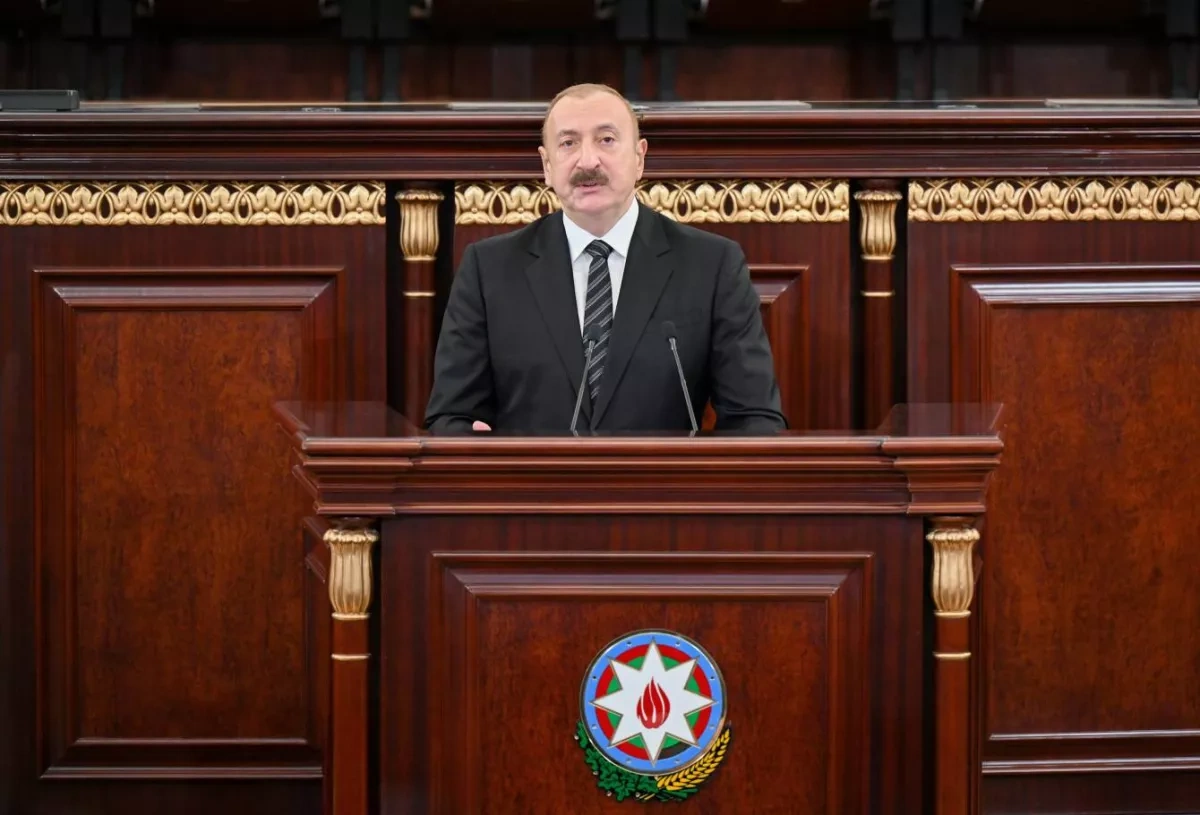
Speaking on November 3, 2025, at a gathering dedicated to the 80th anniversary of the National Academy of Sciences, President Ilham Aliyev returned to a topic he had previously raised from the same podium. The head of state acknowledged that measures had been taken during this period, but added that the current situation did not satisfy him — an unusually sharp remark for an anniversary address: “There is an international lexicon, and we all use it. But if there is an original word in the Azerbaijani language, why replace it with a word from another language? This is either a mistake or a provocation. Both are unacceptable.”
The formula is straightforward. A mistake implies negligence and can be corrected through editing; a provocation implies intent and requires a different response. A country that has lived for three decades under continuous information pressure has learned to recognise how such mechanisms work: an external narrative arrives wrapped in an external vocabulary, and before an argument itself is accepted or rejected, the language used to frame that argument often takes hold. Whoever supplies the words also supplies the categories through which you perceive yourself.
This leads to the second, much broader point of the speech. According to the assessment cited by the President, Azerbaijani is the native language of more than 50 million people, the majority of whom live outside the republic. The head of state described independent Azerbaijan as the guardian of the pure literary language. Beyond its borders, the literary register gradually recedes: the language survives in everyday use, becomes increasingly mixed with foreign words, and loses its ability to serve science, law, and high literature. This is the fate of any language that lacks its own statehood behind it. Baku has declared its role as a custodian of this linguistic space calmly, without grand declarations, but with unmistakable clarity.
Borrowing is a natural mechanism of any living language; no great language has ever developed without it. Yet the experience of the past century distinguishes between two different concepts. Prohibition works poorly. What works is supply. The Turkish Language Association succeeded in its campaign because it managed to offer Turkish equivalents before foreign terms became deeply rooted. The French Toubon Law relies on a terminology system that produces official equivalents on a monthly basis; a prohibitive clause alone would never have been enough.
The transition to a new alphabet had a clearly defined deadline: it had to be established by decree, and its full implementation took years. Language, however, has no such deadline — nor can it. It cannot be introduced by administrative order and then declared a completed task in a final report. Language lives and survives through the daily efforts of editors, teachers, broadcasters, civil servants drafting official documents, and thousands of others who cannot be arranged into a single formation or subjected to one universal inspection.
That is precisely why the head of state returns to the issue of language again and again. It is a distinct sphere of state-building in which it is impossible to one day report that the work has been fully completed. August 1 marks the day when the deadline set for the transition to the new alphabet expired. But the work for which that deadline was established continues to this day.