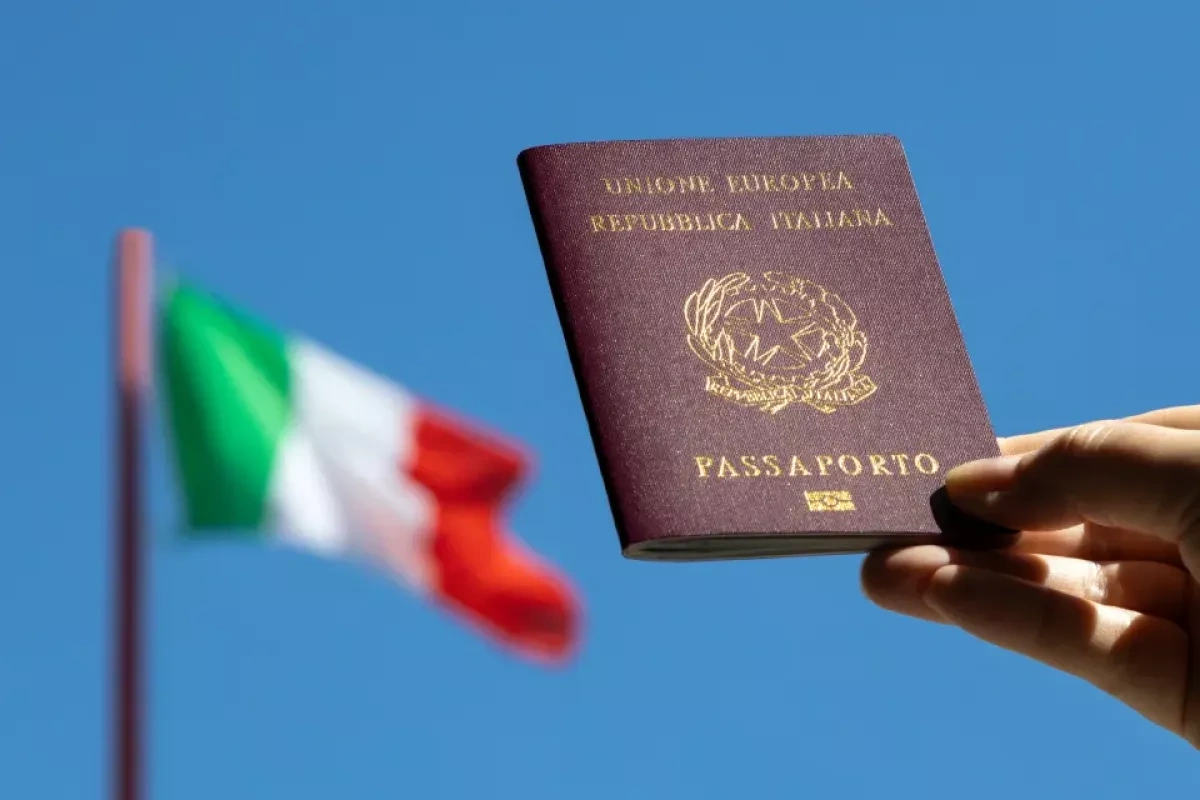
Italy's highest court has issued a landmark decision relating to a long-running dispute relating to citizenship-by-descent claims, which is expected to strengthen for descendants of Italian emigrants around the world.
The decision, which was reached this weekend but published only on July 29, rules that children born with Italian citizenship do not automatically lose that status if one of their parents later acquires the citizenship of another country, as Italian media reports.
The ruling resolves a long-running legal dispute known as the "Minor Issue," which has affected thousands of applications for Italian citizenship by ancestry. Legal experts say many of the cases involve descendants of Italians who emigrated to the United States in the late 19th and early 20th centuries, as well as families in other countries with large Italian diaspora communities.
The decision was issued by the United Sections of Italy's Court of Cassation, the court's highest panel responsible for resolving conflicting interpretations of the law.
At the heart of the case was whether children automatically lost their Italian citizenship when an Italian parent later became a citizen of another country while the children were still minors.
Beginning in 2023, a series of court decisions adopted a restrictive interpretation of the law, leading authorities to reject many citizenship applications from later generations on the grounds that the chain of citizenship transmission had been interrupted.
In its latest ruling, however, the Court of Cassation found that under Italy's historical citizenship legislation, children who acquired Italian citizenship at birth under the principle of *jure sanguinis*—citizenship by bloodline—did not automatically lose that citizenship when a parent subsequently naturalised abroad.
The court further clarified that children born in countries that automatically grant citizenship at birth, including the United States, retained their Italian citizenship even if their parents later became citizens of those countries. As a result, they remained entitled to pass Italian citizenship to future generations.
Lawyer Marco Mellone, who represented two American families and one Venezuelan family in the case, said the ruling overturns the restrictive legal interpretation that had prevented many descendants—particularly in the United States—from successfully claiming Italian citizenship.
“The Supreme Court of Cassation has completely changed its position and gone back, confirming that all these Italian-American families — and, more generally, families in all countries where this situation existed — regain the right to Italian citizenship by descent,” Mellone told reporters.
The decision is expected to have far-reaching implications for descendants of Italian emigrants, particularly in North and South America, where large Italian communities maintain ancestral ties to Italy. Mellone estimated that the restrictive interpretation adopted in recent years may have affected several hundred thousand families.
It remains unclear whether Italy's Interior Ministry and the country's consular network will immediately revise their administrative practices to reflect the court's interpretation. However, decisions issued by the Court of Cassation's United Sections carry particular legal authority because they are specifically intended to resolve conflicting interpretations of the law.
Mellone noted that “there’s no one above” the panel, adding that its rulings have only rarely been overturned.
By Nazrin Sadigova