BAKU, Azerbaijan, July 25. The value of
international freight transportation by rail in Azerbaijan grew by
more than 15% from January through June 2026.
This is reflected in a report released by the State Customs
Committee
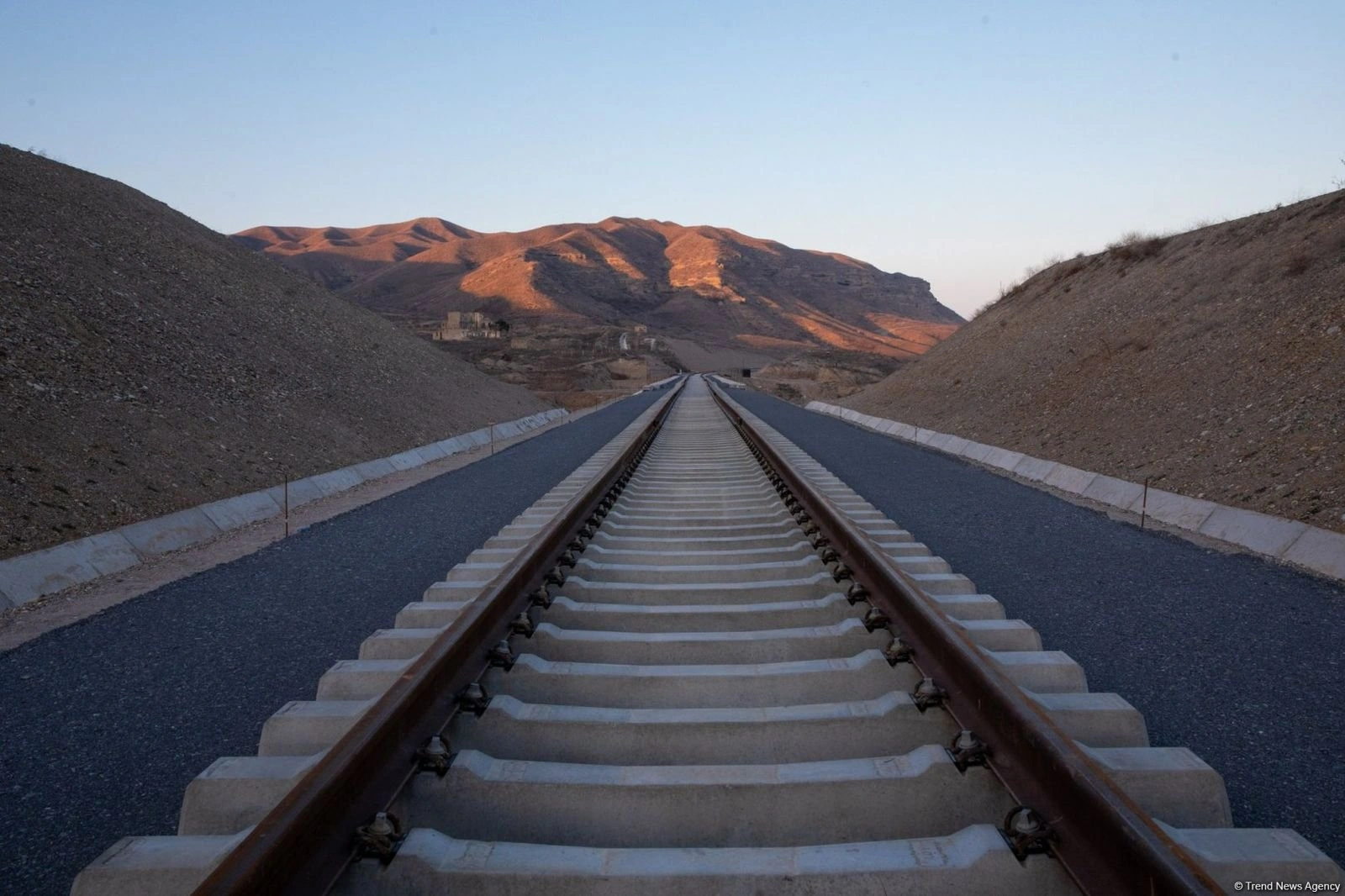
According to the report, 3.5 million tons of cargo worth $1.7
billion were transported by rail in the country, representing a
rise of $232.2 million in value and a decrease of 9,136 tons, or
0.3%, in volume compared to the same period of 2025.
Overall, during the first half of 2026, Azerbaijan exported
roughly 1.34 million tons of cargo worth $634 million by rail
transport. Compared with the same period of last year, the figure
grew by $219.7 million, or 53%, in value, and 5,600 tons, or 0.4%,
in volume.
During the reporting period, imports transported by rail to
Azerbaijan amounted to 2.19 million tons worth $1.1 billion.
Compared with the same period of the previous year, this represents
a growth of $12.5 million, or 1.1%, in value terms, while the
volume declined by 14,800 tons, or 0.7%.
In the period from January through June 2026, total cargo
transportation in Azerbaijan amounted to 26.45 million tons worth
$24.66 billion. Compared with the same period of 2025, the figure
increased by $261 million, or 1.1%, in value terms, while declining
by 2.8 million tons, or 9.6%, in volume terms.
Over the reporting period, Azerbaijan exported a total of 22.03
million tons of cargo worth $16.32 billion through various modes of
transport. This represents an annual increase of $3.4 billion, or
26.7%, in value terms, while the volume decreased by 1.9 million
tons, or 7.8%.
At the same time, imports by various modes of transport amounted
to 4.4 million tons worth $8.34 billion from January through June
2026. Compared with the same period of 2025, this reflects a
decrease of $3.2 billion, or 27.6%, in value terms and 941,000
tons, or 17.6%, in volume terms.
In recent years, Azerbaijan has continued implementing
large-scale infrastructure projects aimed at becoming one of the
key transit and logistics hubs in Eurasia. The country has invested
billions of dollars in railways, highways, seaports, and logistics
infrastructure to increase cargo flows along the East-West,
North-South, and Middle Corridor routes. The main objective of this
policy is to further strengthen Azerbaijan’s position as a reliable
transit hub between Europe and Asia.
The development of the Middle Corridor, also known as the
Trans-Caspian International Transport Route, remains one of
Azerbaijan’s priorities. The Baku International Sea Trade Port, the
Baku-Tbilisi-Kars railway, the Alat Free Economic Zone, and new
logistics centers have significantly enhanced the competitiveness
of the route. Expansion works are currently underway to increase
the port’s cargo handling capacity from 15 million tons to 25
million tons and container handling capacity from 500,000 TEU to 1
million TEU.
In an interview with Trend, Umberto de Pretto, secretary general of the
International Road Transport Union (IRU), said Azerbaijan has
become one of the Middle Corridor's key participants thanks to
sustained investment in transport and logistics infrastructure.
"Investments in Azerbaijan's transport infrastructure are now
delivering results. The country continues to strengthen its
position as a reliable transit gateway between Europe and Asia and
plays a leading role in the development of the Middle Corridor," he
said.
Asset Assavbayev, secretary general of the TRACECA
Intergovernmental Commission, also told Trend that Azerbaijan's
transport projects are reshaping the region's logistics
landscape.
"The modern transport infrastructure and port facilities
developed by Azerbaijan have significantly enhanced the
competitiveness of the TRACECA route. The increase in freight flows
along the Middle Corridor demonstrates the effectiveness of these
investments," he said.
Freight volumes along the China-Central
Asia-Caspian-Caucasus-Europe route are expected to continue growing
in the coming years, further boosting Azerbaijan's transit
potential. This is expected to support higher non-oil revenues,
expand logistics services, and strengthen the country's strategic
role in international trade routes.
The opening of the Zangezur corridor is also expected to further
expand Azerbaijan's transit opportunities. The route would connect
the East-West and North-South international transport corridors,
improve the efficiency of the Middle Corridor, shorten freight
routes, and further strengthen Azerbaijan's position as a regional
logistics hub. It is also expected to improve transport
connectivity across the Turkic world while increasing cargo flows
between Europe and Asia.
According to Azerbaijan's Ministry of Digital Development and
Transport, freight volumes along the Middle Corridor are expected
to continue rising in the coming years. Efforts are underway to
increase the route's capacity, expand digitalization, and simplify
border procedures.
In an exclusive interview with Trend, Taleh Ziyadov, director general of the
Port of Baku, said the port currently has an annual cargo handling
capacity of 15 million metric tons and 150,000 TEU of containers.
Following completion of the second phase of its expansion, those
figures will increase to 25 million metric tons and 500,000 TEU,
respectively.
"We are developing the Port of Baku not only as a cargo handling
facility but also as an integrated logistics and industrial hub
connecting Europe and Asia. Our goal is to enhance the
competitiveness of the Middle Corridor and further expand
Azerbaijan's transit potential," Ziyadov said.
He added that the introduction of digital solutions, faster
cargo handling and expanded multimodal transport services at the
port are helping reduce transit times and improve transport
efficiency.
Valeh Alasgarov, chairman of the Alat Free Economic Zone (AFEZ),
told Trend that the
zone is being developed as one of the Middle Corridor's key
manufacturing and logistics platforms.
"The Alat Free Economic Zone offers one of the region's most
competitive business environments for investors. Our objective is
to transform Azerbaijan into a regional center for manufacturing,
logistics and export-oriented industry. Companies operating in the
zone will gain access to markets with hundreds of millions of
consumers through the Middle Corridor and other international
transport routes," Alasgarov said.
He added that projects implemented in the free zone will support
not only transit operations but also the development of high
value-added manufacturing, further strengthening Azerbaijan's role
in global supply chains.
Thus, the released statistics on cargo transportation along
international transport corridors highlight the results of
Azerbaijan’s long-term strategy aimed at strengthening its position
as a logistics and transit center. The expansion of Baku Port,
development of the Alat Free Economic Zone, and deeper
international cooperation within the Middle Corridor are expected
to create conditions for further growth in transit revenues and
Azerbaijan’s share in regional logistics in the coming years.