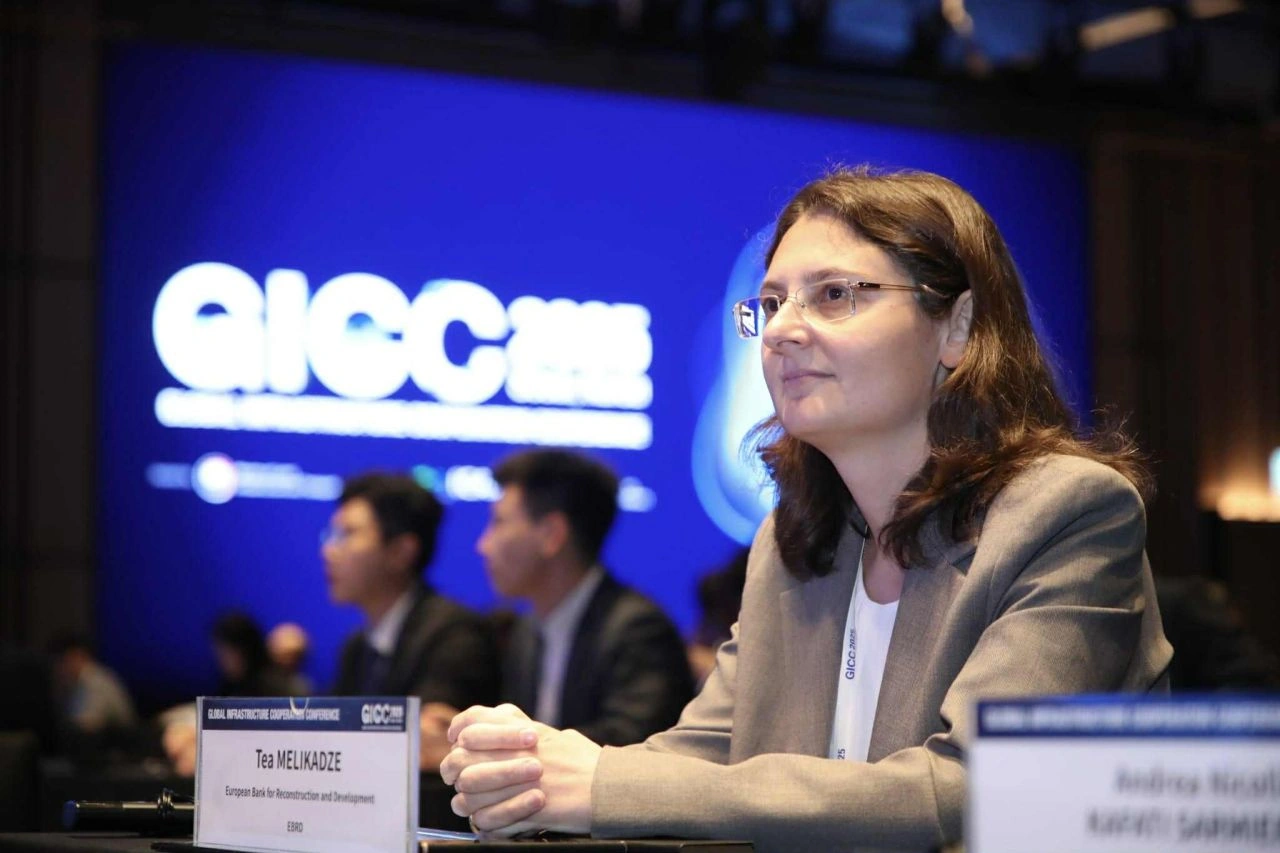
BAKU, Azerbaijan, October 30. The European Bank
for Reconstruction and Development (EBRD) is interested in
sustainable transport linked to the Middle Corridor, Tea Melikadze,
the new Regional Head of Infrastructure for the Caucasus, said in
an exclusive interview with Trend.
"We see the Middle Corridor as an increasingly important route
connecting Central Asia with European markets through the South
Caucasus. Azerbaijan plays a central role in this corridor, given
its strategic location on the Caspian Sea and its onward links,"
she said.
Melikadze pointed out that for the Bank, the next phase is about
identifying investments that can remove bottlenecks, improve the
efficiency and resilience of transport connections and strengthen
the overall competitiveness of the corridor.
"We are interested in sustainable transport and other
infrastructure projects linked to the corridor. Discussions on
individual projects will depend on their preparation and readiness,
so it would be premature to name specific financing commitments at
this stage," she explained.
EBRD's possible role in TRIPP project
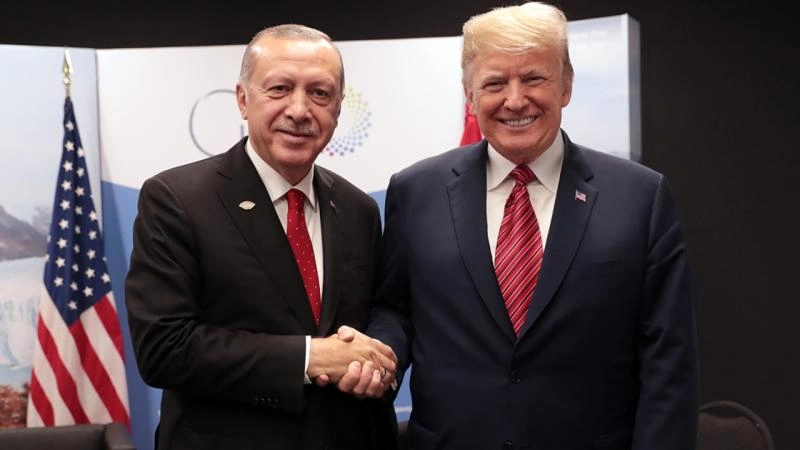
Melikadze noted that the EBRD sees the Trump Route for
International Peace and Prosperity (TRIPP) as a new development in
South Caucasus connectivity.
"We welcome initiatives that have the potential to improve
regional connectivity and economic integration in the South
Caucasus. TRIPP is an important new development in this context,"
she said.
Melikadze said that the Bank has extensive experience in
financing transport infrastructure and supporting regional
connectivity across the countries of its operations.
"Depending on how individual projects develop, the EBRD could
contribute at several stages: helping prepare well-structured
projects, providing financing where projects meet our requirements,
supporting policy dialogue and mobilising private investment.
Private-sector participation could be particularly valuable in
areas such as logistics and other commercially viable
infrastructure and services. The precise role of the EBRD will
depend on how individual projects are developed and structured,"
she added.
Plans for deeper infrastructure engagement in
Azerbaijan
Melikadze said that the EBRD sees considerable potential to
deepen its infrastructure engagement in Azerbaijan.
"As of 31 August 2026, the EBRD's portfolio in the country stood
at approximately EUR 879 million across 35 active portfolio
operations, although this extends beyond infrastructure alone. From
an infrastructure perspective, there is scope to increase
financing, but this would depend on the development of
well-prepared, sustainable and bankable projects rather than a
predetermined volume target. We are looking at where EBRD financing
and expertise can deliver the greatest impact and support
Azerbaijan's long-term development priorities," she said.
The regional head for infrastructure noted that there are
several areas where the Bank sees opportunities, including
sustainable transport and logistics, water and wastewater
infrastructure and broader urban infrastructure, alongside the
country's green transition and regional connectivity agenda.
"We are also interested in opportunities to bring greater
private-sector capital into infrastructure where the conditions are
appropriate.The EBRD’s range of financing instruments gives us
considerable flexibility in this respect. We can provide sovereign
and sub-sovereign financing, as well as financing directly to
private-sector companies, using instruments such as debt, equity
and guarantees, as appropriate to the project and client. This can
be complemented by blended finance, technical assistance, and
policy dialogue. The objective is to bring together the right
investment and expertise to deliver lasting improvements," she
explained.
Avenues for new projects and investment in
infrastructure
Melikadze named three areas for new projects in infrastructure
in Azerbaijan.
"First is regional connectivity and sustainable transport.
Azerbaijan’s position between Central Asia and Europe gives it an
important role in strengthening transport and logistics links,
benefiting both the country and the wider region," she said.
She believes that the second is water and municipal
infrastructure.
"Water security, efficient water use, wastewater treatment and
the resilience of urban infrastructure are becoming increasingly
important," Melikadze added.
She named mobilisation of private capital into infrastructure as
the third area.
"The EBRD can help governments prepare bankable projects,
consider appropriate PPP structures, strengthen institutional
capacity and use risk-mitigation and financing instruments to help
crowd in commercial capital. However, PPPs are not suitable for
every project and should be pursued where they offer value for
money compared with conventional public procurement," the regional
head for infrastructure added.
Priorities for strengthening regional connectivity in
Caucasus
Melikadze pointed out that her priority is to build on the
EBRD’s strong work across the Caucasus and further increase the
impact of the Bank's investments.
"Infrastructure has an important role to play in supporting
economic development, strengthening regional connectivity and
improving the quality and resilience of essential services. Our
work is guided by the Infrastructure Sector Strategy 2025-2029 with
three clear priorities: improving connectivity, enhancing climate
and nature action, and strengthening resilience. In the Caucasus,
this means supporting high-quality, inclusive infrastructure that
meets the needs of businesses and communities, while helping our
clients improve governance and service delivery. My approach is
therefore one of continuity combined with ambition, rather than a
fundamental change of direction. I want to deepen our engagement
with clients and help turn investment priorities into
well-prepared, bankable projects, combining financing with
technical assistance and policy dialogue where these can make a
practical difference," she said.
Melikadze went on to add that the EBRD already has a strong and
relatively new strategic framework for its cooperation with
Azerbaijan.
"The EBRD's Azerbaijan Country Strategy 2025-2030 was approved
by our Board in January 2025 and guides our investments and policy
engagement. The strategy has two main priorities: fostering greater
economic diversification through a stronger, more competitive and
inclusive private sector and improved governance; and accelerating
Azerbaijan's transition to a green economy while improving regional
connectivity. For infrastructure, this provides scope to support
municipal infrastructure, sustainable transport networks, and
digital connectivity, with particular attention to projects linked
to the Middle Corridor. Our focus now is on turning these
priorities into concrete investments and reforms," she said.
Feasibility study for Baku Integrated Drinking Water
Supply Project
Melikadze noted that the Feasibility study for Baku Integrated
Drinking Water Supply Project is underway.
"It will provide the technical, economic, environmental and
social analysis needed to identify priority investments. The water
infrastructure initiative for the Greater Baku region is an
important part of our cooperation with Azerbaijan. It takes a
comprehensive approach to the challenges facing water
infrastructure in Baku and the Absheron Peninsula, with the aim of
identifying sustainable, climate-resilient and financially sound
investment solutions that improve service quality. The findings of
the feasibility study will help determine the scope and sequencing
of the priority investments and inform the next steps for the
project," she concluded.