BAKU, Azerbaijan, July 24. Uzbekistan and
Russia reaffirmed their commitment to expanding strategic
cooperation, with a focus on implementing high-level agreements and
strengthening trade, economic and regional ties, during a meeting
between the countries' foreign ministers on the sidelines of the
Shanghai Cooperation Organization (SCO) Council of Foreign
Ministers.
This was reflected in the statement by the Ministry of Foreign
Affairs of Uzbekistan.
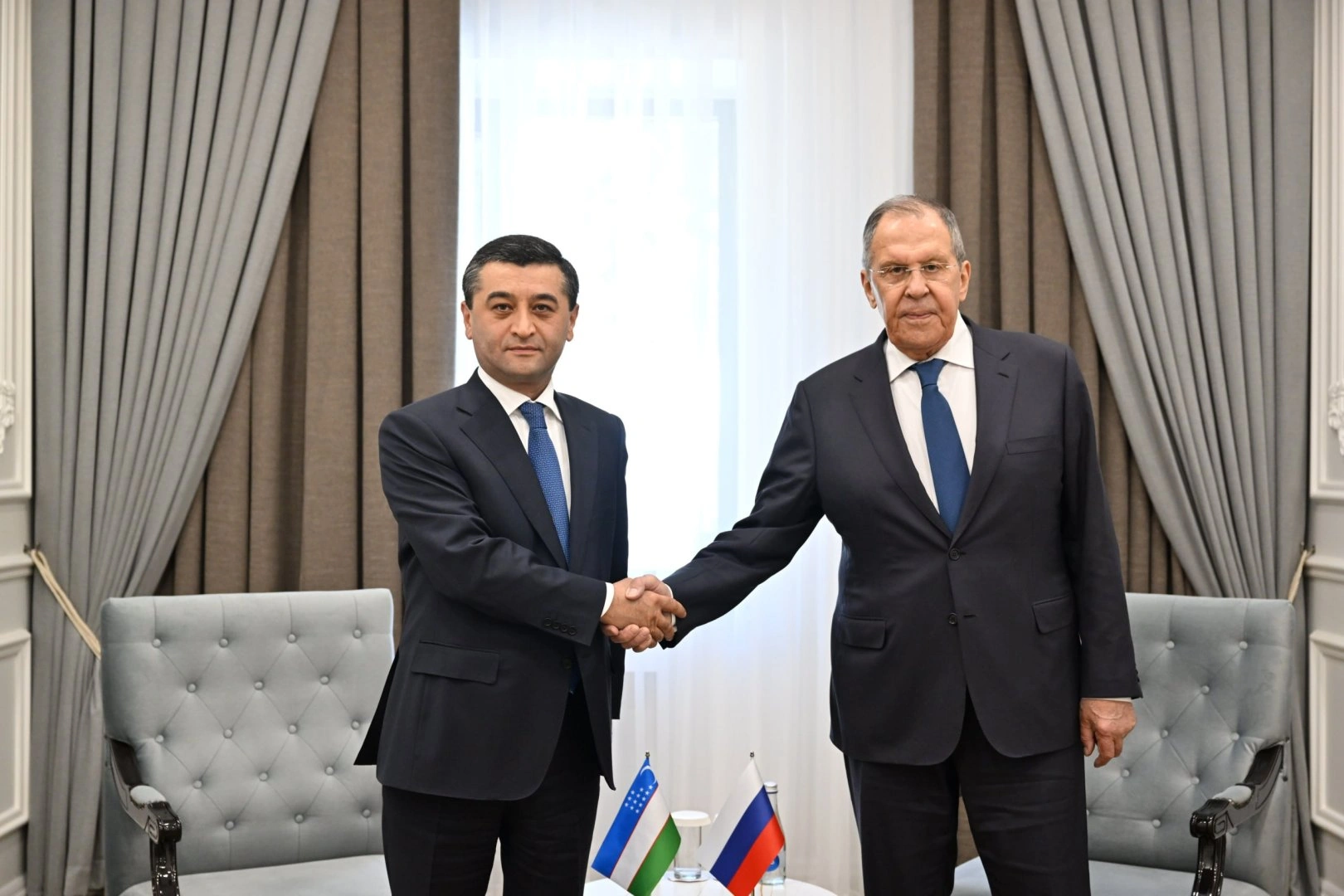
Uzbek Foreign Minister Bakhtiyor Saidov met with Russian Foreign
Minister Sergey Lavrov to review the current state of bilateral
relations and discuss priorities for advancing the strategic
partnership and allied relations between the two countries.
"The strong momentum in the strategic partnership and allied
relations between Uzbekistan and Russia was particularly noted. The
active and trust-based dialogue between our leaders provides a
solid foundation for the consistent development of cooperation
across all areas," the ministry said in a statement.
The ministers emphasized the importance of ensuring the timely
and full implementation of agreements reached by the two countries'
leaders. They also discussed measures to expand trade and economic
cooperation, strengthen interregional ties and intensify cultural
and humanitarian exchanges.
In addition to bilateral issues, Saidov and Lavrov exchanged
views on current regional and international developments. They
reaffirmed their commitment to maintaining close coordination
within multilateral organizations, including the Shanghai
Cooperation Organization, the Commonwealth of Independent States
(CIS), the United Nations and other international platforms.
The meeting took place on the sidelines of the SCO Council of
Foreign Ministers, which brings together the organization's member
states to coordinate positions on regional security, economic
cooperation and other issues ahead of the annual leaders'
summit.
Russia remains one of Uzbekistan's largest trading partners and
a key strategic partner in Central Asia. In recent years, the two
countries have expanded cooperation across trade, investment,
industry, energy, transport and education, while also strengthening
coordination through regional and international organizations.
The latest talks underscore Tashkent and Moscow's continued
focus on translating high-level political agreements into practical
economic and regional cooperation projects while maintaining close
coordination on shared international and regional priorities.