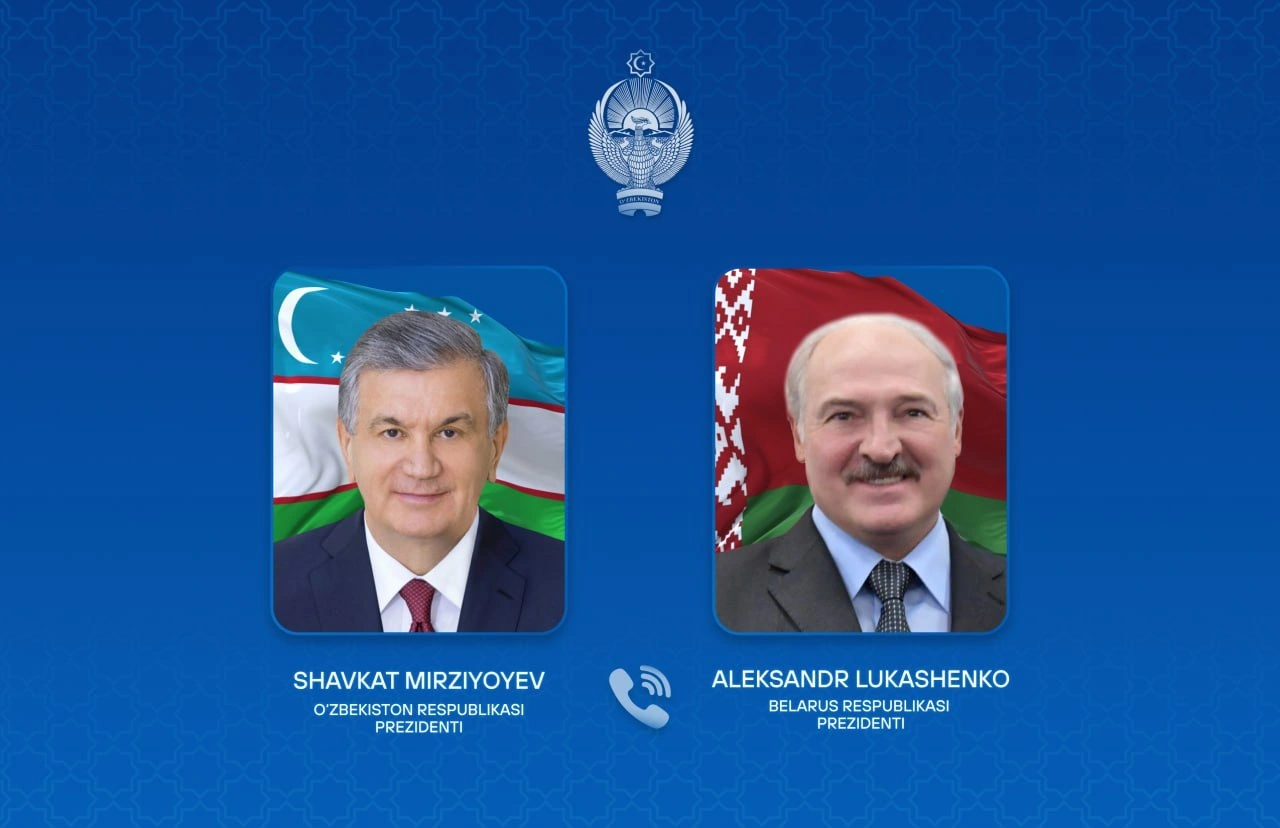
BAKU, Azerbaijan, July 24. Uzbek President
Shavkat Mirziyoyev and Belarusian President Alexander Lukashenko
discussed implementing agreements reached during Mirziyoyev's
official visit to Minsk earlier this month, with a focus on
expanding bilateral trade and industrial cooperation.
This was reflected in the statement by the press service of the
Uzbek president.
The two leaders reviewed progress in carrying out the agreements
reached during Mirziyoyev's July 8–9 state visit to Belarus and
reaffirmed their commitment to further strengthening the strategic
partnership between the two countries, according to the press
service.
"The leaders considered current issues related to the further
deepening of the Uzbek-Belarusian strategic partnership in the
context of implementing the agreements reached during the official
visit of the President of Uzbekistan to Minsk on July 8–9," the
statement said.
Mirziyoyev and Lukashenko noted the steady growth in bilateral
trade and ongoing cooperation projects in key sectors of the
economy. They also emphasized the importance of maintaining active
interregional exchanges and expanding cultural and humanitarian
cooperation.
The leaders exchanged views on the next steps to advance the
implementation of joint initiatives launched during the Minsk
visit, with particular attention to practical cooperation across
priority sectors.
Lukashenko also congratulated Mirziyoyev on his birthday,
wishing him good health, continued success in public service, and
peace and prosperity for the people of Uzbekistan, the press
service said.
Mirziyoyev's official visit to Belarus on July 8–9 resulted in a
series of agreements aimed at expanding trade, industrial
cooperation and investment ties. The two countries have also sought
to strengthen regional partnerships and deepen cooperation between
businesses and local authorities.
The latest talks highlight both sides' focus on translating the
outcomes of the Minsk visit into concrete projects, with trade,
industrial cooperation and regional partnerships expected to remain
at the center of the bilateral agenda.