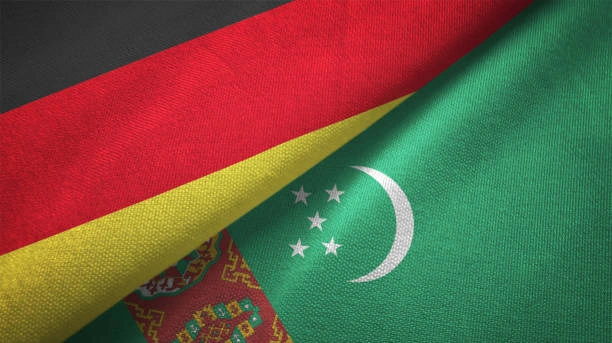
BAKU, Azerbaijan, July 24. On July 20, Turkmen
President Serdar Berdimuhamedov signed a decree authorizing the
state concern Turkmengas to conclude a contract with Germany's
Vietz GmbH for the supply of specialized technical equipment. The
decision followed a Cabinet meeting during which Deputy Chairman of
the Cabinet Guvanch Agajanov presented measures aimed at
strengthening the material and technical base of the country's gas
industry.
According to the government, the equipment will be installed at
Turkmengas production facilities as part of the ongoing
modernization of Turkmenistan's gas sector. The official statement
emphasized that cooperation with the German company reflects
Turkmenistan's consistent policy of expanding Turkmen-German
business relations. President Berdimuhamedov stated that the
primary objective of the project is to increase natural gas
production through the modernization of the sector's technical
infrastructure and instructed the relevant authorities to ensure
the timely implementation of the agreement.
The decision is consistent with the broader trajectory of
expanding economic cooperation between Turkmenistan and Germany. In
recent years, bilateral engagement has become increasingly
implementation-oriented, with particular emphasis on the
modernization of strategically important sectors of the Turkmen
economy. German companies have established a notable presence in
industry, energy, agriculture, and textile manufacturing, areas
that the Turkmen government identifies as key pillars of the
country's long-term economic development.
One of the largest and longest-standing examples of this
cooperation is CLAAS, which has supplied Turkmenistan with combine
harvesters and tractors for many years while also providing
maintenance services and specialist training. In industry, Linde
Engineering played a significant role in the construction of the
world's largest gas-to-gasoline (GTG) plant in the Ahal region,
while Siemens Energy continues to support the modernization of the
country's power infrastructure by supplying equipment and
technological solutions for electricity generation facilities.
The positive momentum is also reflected in the latest
assessments from the German side. In an exclusive interview with
Trend on July 22, Vladimir Nikitenko, Regional
Director for Central Asia at the German Eastern Business
Association (Ost-Ausschuss der Deutschen Wirtschaft), stated that
bilateral trade between Germany and Turkmenistan increased by
around 12% during the first five months of this year. According to
him, Turkmenistan's industrial modernization agenda is creating new
opportunities for German companies in energy, transport,
healthcare, agriculture, and water management, while the
Turkmengas-Vietz GmbH contract confirms not only the strong
reputation of German technology but also Turkmenistan's growing
preference for direct cooperation with equipment manufacturers.
Where German companies previously participated mainly in
individual equipment supply projects, the conditions for expanding
their presence have now become considerably more favorable. As
Trend noted in its earlier analytical article "Inside
Turkmenistan’s investment cycle: How Turkish contractors anchor a
new phase of economic expansion," the country has effectively
entered a new investment cycle in recent months by launching the
fourth phase of development at the Galkynysh gas field together
with CNPC, signing a new production sharing agreement with PETRONAS
for offshore blocks in the Caspian Sea, and continuing the
modernization of its petrochemical industry, transport
infrastructure, and industrial sector under the State Program for
Socio-Economic Development and Investments for 2026-2028.
Against this backdrop, demand for advanced technologies,
engineering solutions, and industrial equipment is naturally
increasing - precisely the areas where German companies
traditionally hold strong competitive positions. Notably, in the
above-mentioned interview with Trend, Nikitenko identified gas
processing, cement and glass production, railway infrastructure,
medical technologies, methane-emission reduction solutions, digital
monitoring systems, and energy-sector modernization as some of the
most promising areas for future cooperation.
The two countries have significantly intensified their contacts
over the past year. In spring 2025, Gurbanguly Berdimuhamedov,
Chairman of the Halk Maslahaty (Parliament) of Turkmenistan,
proposed expanding cooperation with German companies in the
chemical industry, transport, agriculture, healthcare, textiles,
and banking during a telephone conversation with German Federal
President Frank-Walter Steinmeier, specifically highlighting
interest in companies such as BASF, Siemens, MAN, Deutsche Bahn,
Thyssenkrupp, and Knauf.
The dialogue gained additional momentum in 2026. In January,
discussions in Germany focused on the practical implementation of
agreements reached during the Turkmenistan Economic Days in
Frankfurt, including the organization of reciprocal business
missions and expanded contacts between enterprises from the two
countries. Then, in July, Turkmen Deputy Foreign Minister Mahri
Bashimova and Michael Harms, Executive Director of the German
Eastern Business Association, discussed the introduction of German
technologies into the modernization of Turkmen industry,
cooperation in energy, water management, logistics, and interaction
with German financial institutions to support joint investment
projects.
Against this background, the contract between Turkmengas and
Vietz GmbH appears not as an isolated decision but as part of a
broader strategy that Turkmenistan has been consistently pursuing
in recent years. On the one hand, the country is accelerating the
modernization of its gas industry and industrial sector within the
framework of a new investment cycle, creating growing demand for
advanced technologies and engineering solutions. On the other hand,
German businesses are steadily expanding their presence in
precisely those sectors that are becoming increasingly important
for Turkmenistan's economic development.
In this context, cooperation with Germany is gradually moving
beyond equipment supplies alone. As the number of joint projects
continues to grow, bilateral cooperation is evolving into a more
comprehensive partnership encompassing technological modernization,
maintenance services, engineering solutions, and long-term
industrial collaboration. Viewed through this lens, Serdar
Berdimuhamedov's decision to authorize the contract with Vietz GmbH
reflects not only the current needs of Turkmenistan's gas sector
but also the broader trend toward deeper German-Turkmen economic
cooperation.