BAKU, Azerbaijan, June 30. “Turkic World Week,”
dedicated to the 100th anniversary of the First Turkological
Congress in Baku, is not merely a celebration of a historic
anniversary. This event once again demonstrates Azerbaijan’s role
in the scientific, cultural, and spiritual integration of the
Turkic world. It is precisely in Baku that the ideas laid down a
century ago are regaining relevance today against the backdrop of
new geopolitical realities and finding tangible expression in
cooperation projects implemented within the framework of the
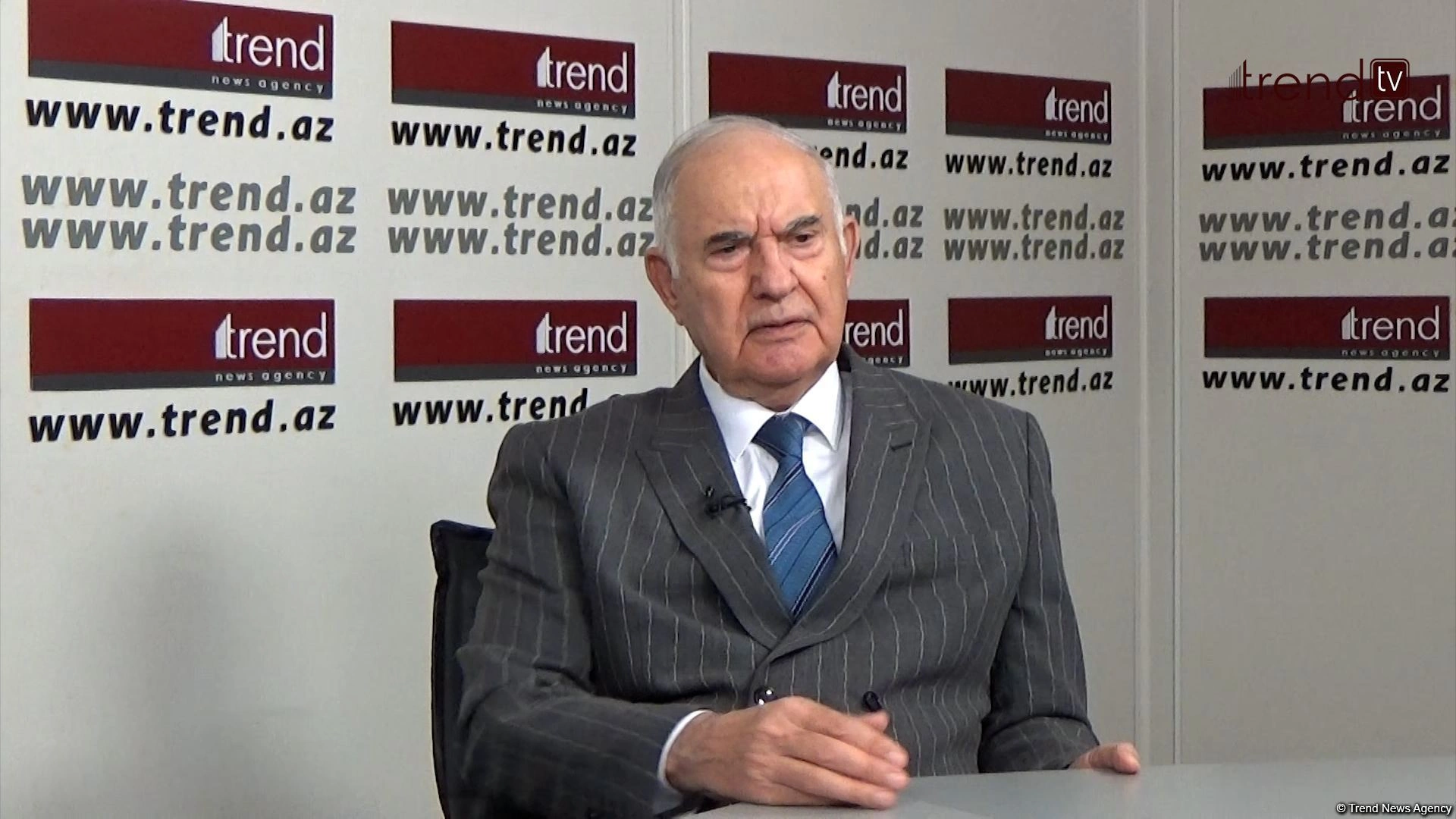
Organization of Turkic States, Political scientist Azer Garayev
told Trend.
“The First Turkological Congress, held in Baku in 1926, was a
historic event at which issues concerning the common language,
history, alphabet, literature, and culture of the Turkic peoples
were discussed for the first time on a broad international scale.
The decisions adopted at that time were not merely of an academic
nature. They represented a strategic vision that contributed to the
formation of a shared identity and the strengthening of
intellectual ties among the Turkic peoples. “The fact that the
Soviet authorities obstructed the implementation of these ideas in
the years that followed, and that the congress participants were
subjected to repression, also attests to the great historical
significance of this initiative,” he said.
According to him, these ideas are being revived today.
It is no coincidence that the events marking the 100th
anniversary of the First Turkic Congress are being held precisely
during Azerbaijan’s chairmanship of the Organization of Turkic
States. This is a logical continuation of the policy pursued in
recent years to deepen integration among the Turkic states.
President Ilham Aliyev, emphasizing this point in his address,
states: ‘The fact that the Turkic World Week, dedicated to the
100th anniversary of the First Turkological Congress, coincides
with Azerbaijan’s chairmanship of the Organization of Turkic States
carries special symbolic meaning.
The First Turkological Congress, which brought together
prominent figures in world Turkology and renowned scholars at the
magnificent Ismailiyya Palace, one of the architectural gems of our
capital, holds exceptional importance as the ideological foundation
for the cultural integration of Turkic peoples, who share a rich
history and ancient heritage.
The fact that this unique international scientific and cultural
forum, which focused on key issues related to the development and
future of the common spiritual values of the Turkic world –
language, history, ethnography, literature, and culture –
particularly the transition to a unified Turkic alphabet, was held
in Azerbaijan at that time was no coincidence. Beginning in the
19th century, profound socio-political and cultural transformations
in Azerbaijan paved the way for national self-awareness through the
creation of a new type of theater, school, and the first national
press publication, ultimately culminating in the establishment of
the first democratic state in the Muslim and Turkic world. Even in
the early 20th century, the capital of Baku was recognized as one
of the prestigious centers of world Turkology thanks to its
high-level intellectual environment consisting of a generation of
nationally minded intellectuals.
Garaev noted that Azerbaijan’s special status in the Turkic world
is not limited to the modern era. As early as the late 19th and
early 20th centuries, Baku had become one of the largest
educational and intellectual centers of the Turkic-Muslim
world.
“It was here that the first national theater was established,
the first national press was formed, a modern education system was
developed, and the first parliamentary republic in the Muslim East
was created. It was precisely this foundation that made it possible
to hold the First Congress of Turkology in Baku. President Ilham
Aliyev articulates this historical reality in his speech:
“Beginning in the 19th century, profound socio-political and
cultural transformations in Azerbaijan paved the way for national
self-awareness through the creation of a new type of theater,
school, and the first national press publication, ultimately
culminating in the establishment of the first democratic state in
the Muslim and Turkic world. Even in the early 20th century, the
capital of Baku was recognized as one of the prestigious centers of
world Turkology thanks to its high-level intellectual environment
consisting of a generation of nationally minded intellectuals.”
This quote clearly illustrates the historical foundations of
Azerbaijan’s role in the Turkic world. Azerbaijan served as a
bridge between the Turkic peoples not only geographically but also
in terms of ideas and intellectual exchange. The educational
system, cultural environment, and political thought that took shape
here subsequently became a model for the entire region. That is
precisely why Baku has long been considered one of the main centers
of global Turkology,” he said.
The political scientist emphasized that this tradition continues
to this day. The gathering of scholars, government officials, and
representatives of international organizations from 20 countries in
Baku as part of Turkic World Week demonstrates Azerbaijan’s growing
prestige as a platform for dialogue. Of particular significance is
the fact that the events are taking place not only in the capital,
but also in Shusha, Khankendi, and Aghdam. In this way, on the one
hand, Azerbaijan is demonstrating the full restoration of life in
the territories liberated from occupation, and on the other, it is
transforming Karabakh into a shared cultural space for the Turkic
world.
“In reality, in the modern era, integration among Turkic states
is no longer limited to shared history and language alone. Economic
projects, the Middle Corridor, energy security, digital
development, educational programs, and humanitarian cooperation are
contributing to the formation of a unified strategic space. In this
process, Azerbaijan is one of the leading players thanks to its
geographical location, political initiatives, and balanced foreign
policy. In this regard, another idea contained in President Ilham
Aliyev’s address deserves special attention: “We can confidently
say that the progressive ideas put forward by the First
Turkological Congress form the foundation of the projects
successfully being implemented by the Organization of Turkic States
today to create a common humanitarian space.” This quote
demonstrates that the ideas put forward a century ago are not
merely historical memories. They remain one of the main directions
of practical policy. “Projects such as the development of a common
alphabet, cooperation in science and education, the preservation of
cultural heritage, and the development of a common media and
information space can be viewed as a modern continuation of the
strategic direction set by the First Turkic Congress,” Garayev
said.
According to him, the holding of Turkic World Week once again
demonstrates that Azerbaijan positions itself not only as an
organizer.
The ideas expressed in Baku a century ago are once again being
discussed in the same city today. The difference is that there are
now independent Turkic states, strong international platforms, and
a shared political will to implement these ideas. Azerbaijan is one
of the leading participants in this process, based on its
historical mission and current capabilities. “World Turkic Week can
be viewed as one of the most striking manifestations of this
continuity, historical continuity, and strategic vision for the
future,” the political scientist added.