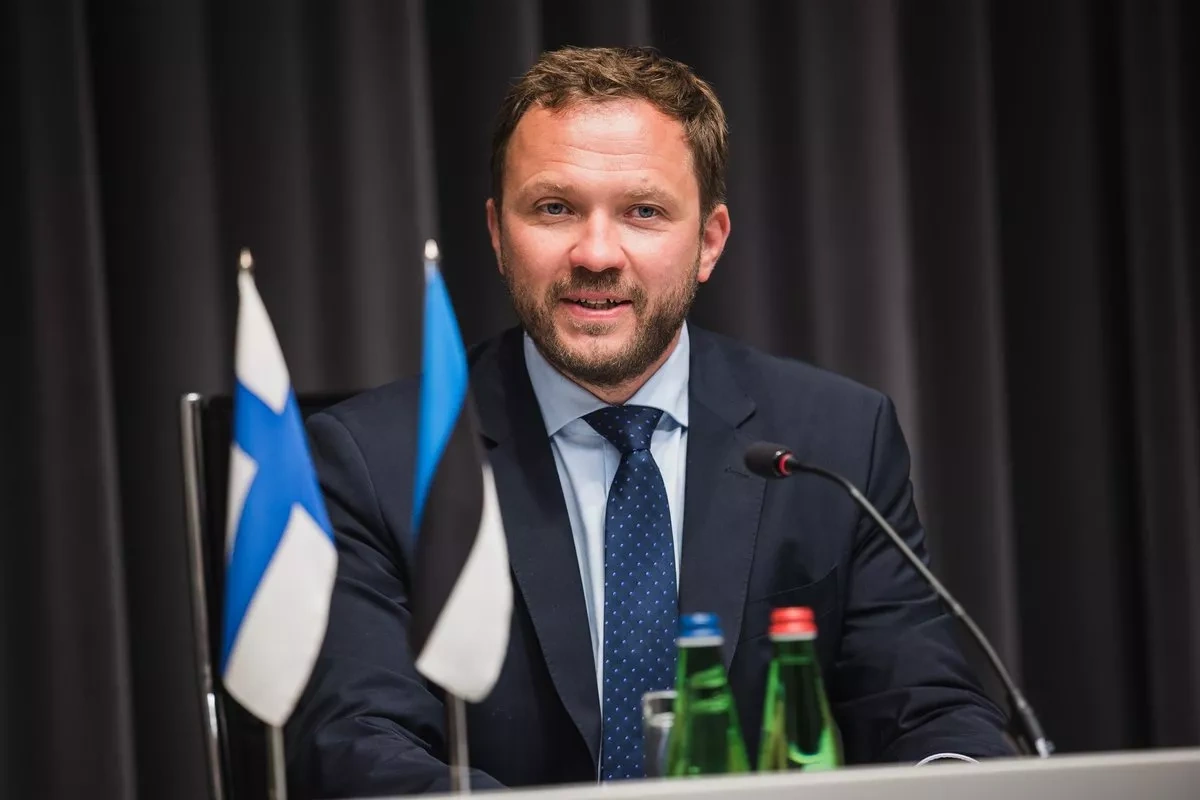
Estonia's foreign minister Margus Tsahkna said stray Ukrainian drones landing on NATO territory were a price worth paying for Kyiv's campaign against Russian military and energy infrastructure, while warning that European negotiations with Moscow would be premature.
Ukraine has sharply increased long-range missile and drone attacks on targets deep inside Russia in recent months, striking military bases and oil facilities hundreds of kilometres from the front line.
Russia has responded by intensifying electronic jamming and other countermeasures, causing some Ukrainian drones, particularly those targeting the Baltic port of St Petersburg, to veer off course and land in neighbouring NATO countries.
"Of course we are not happy about [these incidents]," Tsahkna told the Financial Times. "But we are not saying to Ukraine to stop it."
"This is hitting the lifeline of [Vladimir] Putin."
Estonia, which borders Russia and lies closest to St Petersburg among the Baltic states, has seen several Ukrainian drones crash on its territory. An unexploded Ukrainian drone carrying a 5kg warhead was found in an Estonian field last week. Ukrainian drones have also landed in Latvia, Lithuania and Finland this year.
Tsahkna dismissed Russian accusations that the Baltic states were directly involved in the strikes or allowing Ukraine to use their airspace as "ridiculous".
"We know that the tone around Putin has changed in the last two and a half months... It's not so optimistic anymore. The main reason is economic — because of these deep strikes," he said.
Ukraine's campaign of long-range attacks, often referred to on Ukrainian social media as "deep sanctions", has targeted Russian oil infrastructure and export routes. Tsahkna said the Kremlin appeared to be "deeply concerned" by the strikes, particularly those affecting exports through the Baltic Sea, where much of Russia's seaborne oil shipments transit the Gulf of Finland.
Despite the growing pressure on Russia, Tsahkna said it was too early to believe Putin was ready for peace negotiations, arguing that recent European efforts to engage with Moscow risked weakening support for Ukraine.
"Putin has tried during the past month already to bring Europe into talks. This is to win time. To use Europe as an opportunity to win time. To divide us," he said.
Tsahkna also cautioned against discussions within the European Union over appointing a representative for possible negotiations with Russia.
"Before Europe decides who should represent us, we must first agree on the message and only then discuss the question of the messenger."
By Aghakazim Guliyev