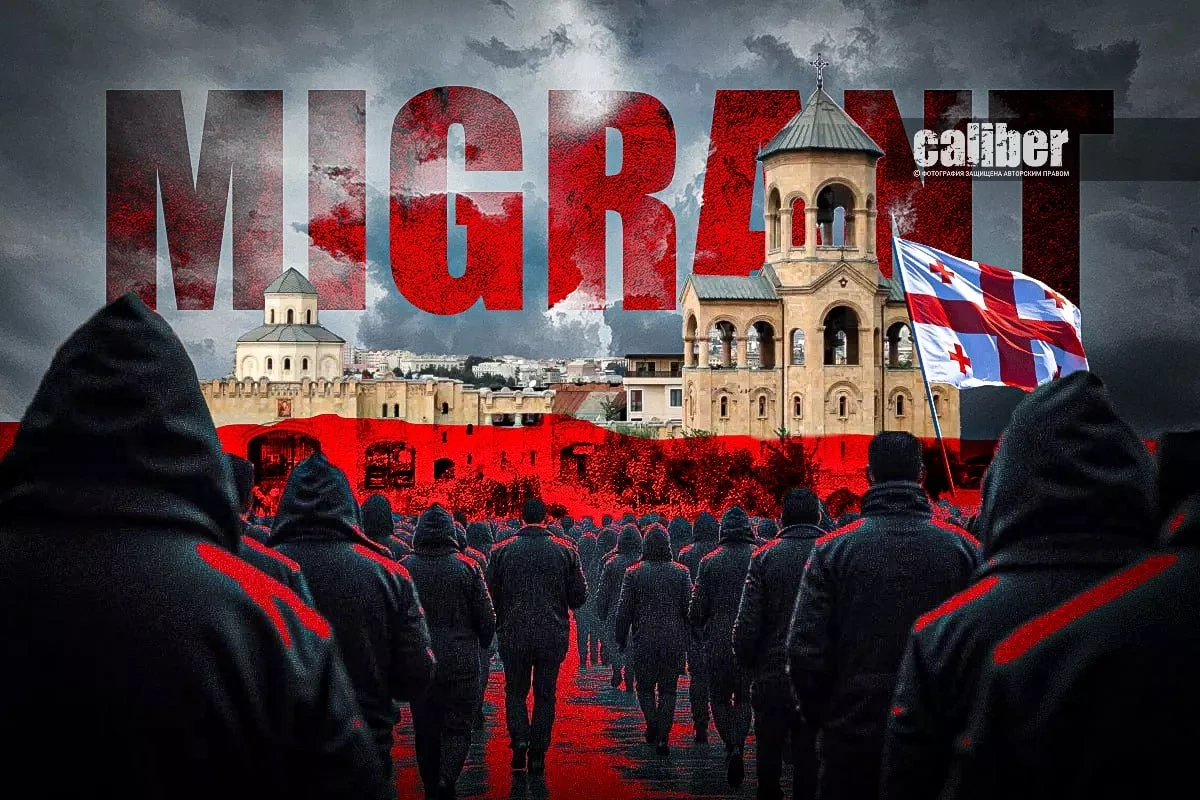
The upturn in Georgia’s economy is increasingly leaving behind the times when the country’s residents tried by all possible means to move abroad, escaping wars, poverty, unemployment, and political instability. Today, Georgia is becoming an attractive country for living and working, and not only for ethnic Georgians. If in the 1990s or early 2000s someone had said that Russian citizens would seek to obtain citizenship or residence permits in Georgia and find employment here, they would not have been believed. But today this is an objective reality.
The growing number of migrants is causing dissatisfaction among a certain part of the population, and this dissatisfaction has a political tone. Those who support the opposition with its anti-Russian rhetoric are unhappy with the significant number of Russian citizens settling in Georgia. The supporters of the Georgian Dream are also dissatisfied with the increase in migrants—however, their discontent is mainly directed at people from Asian and African countries. The abundance of Indian arrivals leads to situations where street crowds in some districts of Tbilisi begin to resemble corners of Bombay or New Delhi.
According to the population census conducted from November 14 to December 31, 2024, the share of foreign citizens in Georgia’s total population reached 3.4%, with their number estimated at 134,000 people. Among foreigners permanently residing in Georgia, the largest group consisted of Russian citizens—37,700 people, corresponding to almost 1% of the country’s population. They were followed by citizens of India—23,900 people—and Ukraine—11,500 people. However, the census accounted only for foreigners who had lived in the country for more than 12 months on legal grounds; therefore, the real number of migrants at the end of 2024 was higher, and has only increased since then. In order to stay in Georgia, foreigners resort to various tricks, and the authorities have decided to put a stop to this.
The Georgian Ministry of Internal Affairs has prepared amendments to the Law of Georgia “On the Legal Status of Aliens and Stateless Persons” and related legislative acts. These amendments were adopted by the Parliament of Georgia on June 25, 2026, in the third and final reading. A total of 81 MPs participating in the session voted in favour of their adoption.
The changes introduce a new type of residence permit — a “marriage-based” permit — which will be issued to foreigners who are in a registered marriage with Georgian citizens, for a period of one year. A special commission will be established within the Ministry of Internal Affairs of Georgia to verify the authenticity of marriages between citizens of the country and foreigners.
Amendments are also being introduced to the Criminal Code of Georgia. A new article will appear — “Entering into a sham marriage with a citizen of Georgia for the purpose of obtaining a residence permit or another legal basis for staying in the country.” For this offence, foreigners will face deportation with a ban on entry into Georgia for up to ten years, or a substantial fine. A Georgian citizen who enters into a sham marriage may be sentenced to house arrest or imprisonment for up to two years.
According to the Ministry of Internal Affairs, the need for this amendment is explained by the fact that some citizens from Asian and African countries have been exploiting the lack of proper oversight and legal regulations, entering into sham marriages and obtaining residence permits.
Foreign students will also face stricter requirements. Foreigners will only be allowed to enroll in universities and vocational schools that have state accreditation. When applying to universities and colleges, applicants will be required to confirm their knowledge of the language of instruction—either with an international certificate or by passing a state exam. Educational institutions will be obliged to inform state authorities about the enrollment, transfer, academic performance, and absences of foreign students. For withholding information, universities will face fines and may even lose the right to admit foreign students.
A student residence permit will be revoked if a student fails to cope with their studies, is absent from the country for too long—more than 183 days, except for exchange programmes or medical necessity—or works illegally. Suspension of student status for more than 90 days will become grounds for deportation from the country.
The deportation of foreigners from Georgia under the new legislation will also be significantly simplified. Specific offences and actions by foreigners that may lead to expulsion or denial of residence rights in Georgia have been defined. Among such violations are drug use, drunk driving, verbal insults against public officials, and illegal possession of weapons. The absence of a work permit and non-compliance with its conditions will also become official grounds for expelling foreigners from the country.
The penitentiary system of Georgia will also be “cleansed” of foreign nationals to the maximum extent. The country’s prisons will be required to apply to the Penitentiary Service Boards regarding the review of sentences for the deportation of convicted foreign nationals, except for those who have committed especially serious crimes.
A special register of foreign citizens will be created in Georgia. It will serve as the basis for detailed accounting and monitoring of foreigners’ entry into the country, their registration, and their access to various services. Foreign citizens will be required to obtain a certificate confirming the legality of their stay in Georgia in order to receive a range of services, with the exception of emergency medical assistance. Such a certificate will also become mandatory for obtaining a work permit.
Time will tell whether the tightening of migration legislation will help address contemporary migration challenges. At the same time, thousands of residents of Georgia who in the past, for various reasons, lost their Georgian citizenship find themselves in a difficult position. This is especially true in the Samtskhe-Javakheti region, which is populated by ethnic Armenians. Previously, in order to be able to travel for work to Russia, many locals actively acquired Armenian or Russian citizenship, ultimately losing Georgian citizenship. The new laws, which tighten requirements for foreign nationals, make the issue of their prompt “legalisation” particularly urgent: they must either restore Georgian citizenship as soon as possible or decide on their country of future residence.
By Vladimir Tskhvediani, Georgia, exclusively for Caliber.Az