The results of a new sociological survey, “Socio-Political Attitudes of Ukrainians (June 2026),” provide a much deeper understanding of Ukraine’s internal situation than it might seem at first glance. Formally, the study deals with the distribution of public perceptions regarding the level of corruption and responsibility for it; however, in essence, we are already witnessing a consolidated public verdict.
As is known, corruption today ranks second among the problems concerning Ukrainians, which in itself is a worrying signal for any government, especially amid an ongoing military conflict. But far more important is not the fact of high concern itself, but how responsibility is distributed in public perception.
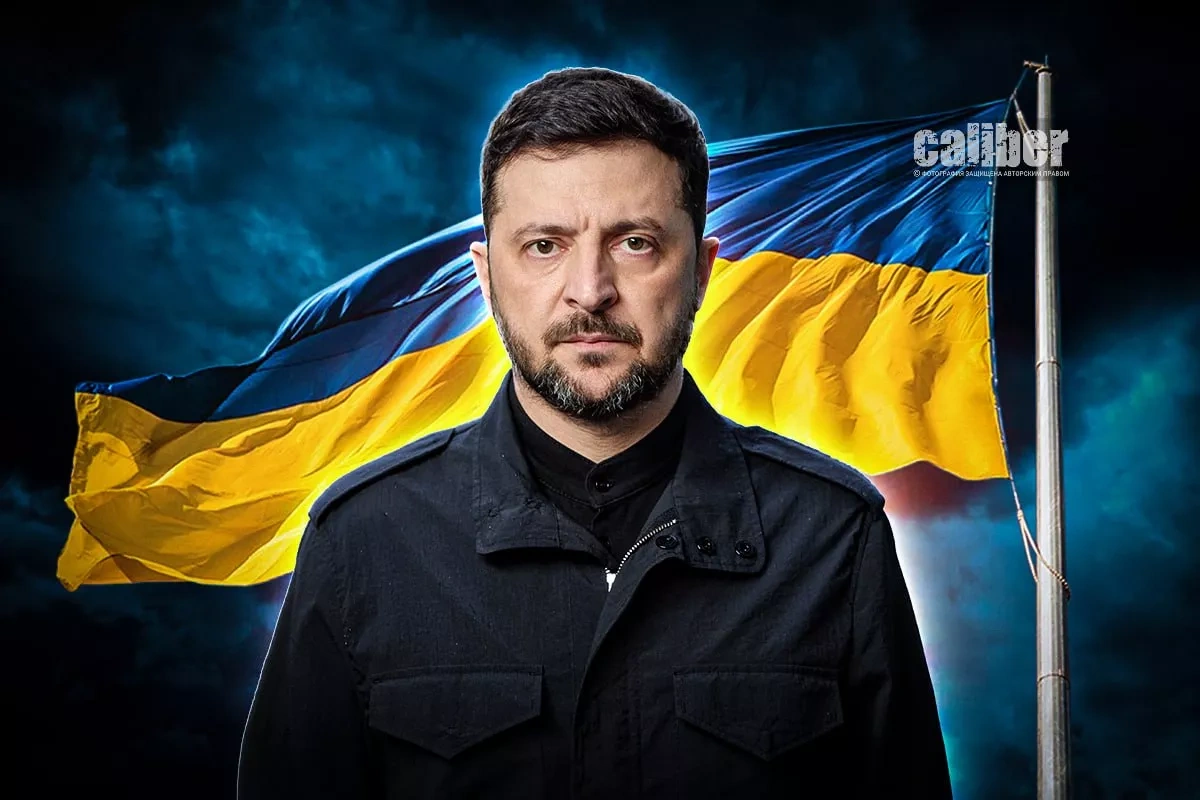
Thus, a total of 74% of respondents in one way or another place responsibility for corruption on the President of Ukraine, Volodymyr Zelenskyy, with 40% considering him fully responsible and 34% deeming him largely responsible. This means that, for the overwhelming majority of citizens, the question of who is the key figure within the system of corrupt practices has effectively been settled.
Attempts by the Ukrainian authorities to dilute this responsibility and shift the focus to the “systemic nature of the problem,” the role of law enforcement agencies, or the objective difficulties of wartime have clearly failed. Society has already moved past the stage where such arguments are seen as convincing, and today they appear more as justification. One of the key reasons for this perception has been the high-profile anti-corruption investigations of recent months.
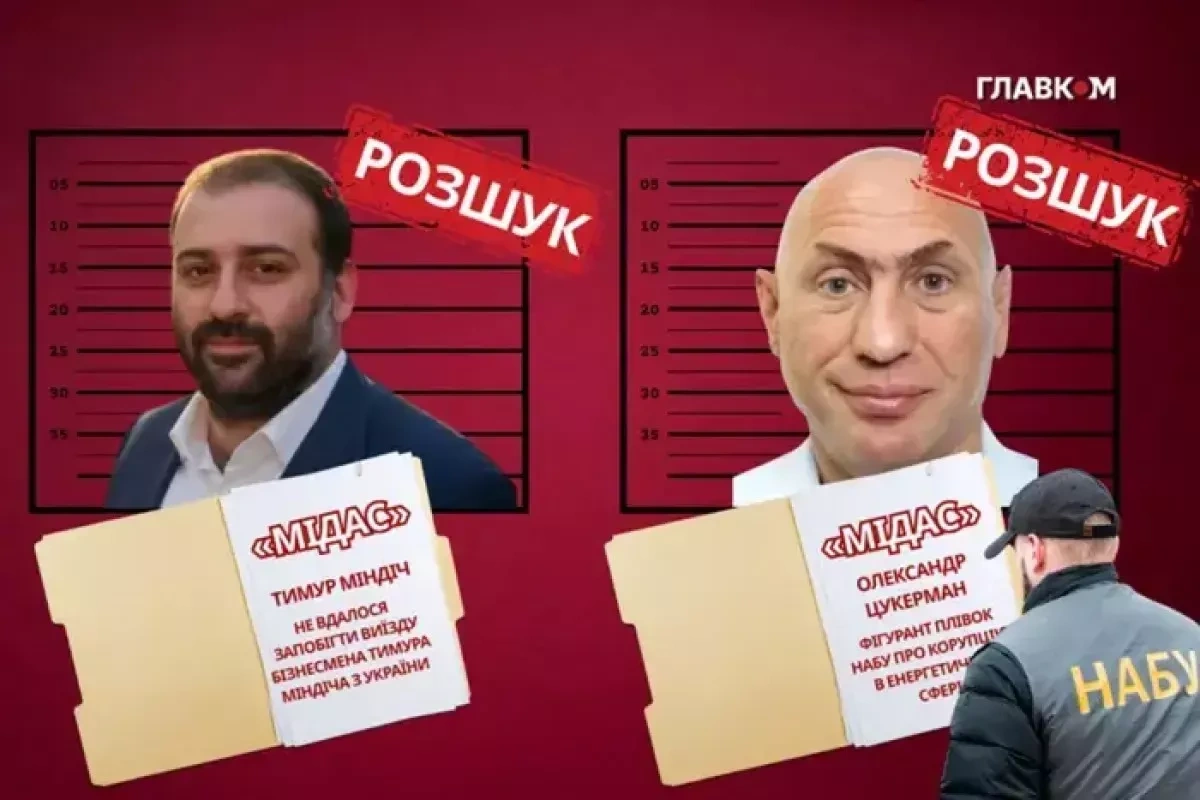
A particular resonance was caused by the so-called “Timur Mindich tapes.” These materials did not merely attract attention — they formed a durable public narrative in which corruption ceased to be an abstract phenomenon and acquired concrete names and connections. The recordings include references to names that are difficult to ignore: for example, mentions are made of “Vova” and “Andriy.” In a situation where the President of Ukraine has repeatedly emphasized publicly that within his close circle he is “just Vova,” such coincidences could not go unnoticed. The absence of a clear response from the head of state has only intensified suspicions.
Fuel was also added to the fire by an investigation conducted by the National Anti-Corruption Bureau of Ukraine (NABU) and the Specialized Anti-Corruption Prosecutor’s Office (SAPO), within which an organised group involved in laundering 460 million hryvnias through elite construction projects was exposed. This refers to the “Dynasty” cooperative in Kozyn, near Kyiv. According to information published by the media, individuals from the President of Ukraine’s closest circle are among the potential beneficiaries.
Even if one sets aside the legal dimension of the issue, the very emergence of such investigations and their broad public resonance has played its role. For a significant portion of Ukrainian society, a clear picture has formed in which the authorities are not merely failing to tackle corruption but are potentially part of it. In this sense, it can be argued that society has already delivered its verdict. And although it is not legally formalised, it has already taken root in the collective consciousness and will consequently have inevitable political consequences.
And what is especially important is that all of this is taking place against the backdrop of an ongoing war. While the war continues, many issues are pushed into the background; however, this does not mean they disappear. On the contrary, they accumulate. That is why the key factor in Ukraine’s future political development becomes the question of when and under what conditions the Russian–Ukrainian conflict will be “frozen.” This moment will inevitably become a transition point from a mobilisation-driven agenda to an agenda of internal accountability.
If Ukraine manages to secure favourable conditions and present the outcome of the conflict as a strategic victory, the current authorities will have a chance to offset the accumulated negative sentiment. In other words, victory could become the very political resource capable of “overriding” questions about corruption.
In this context, the role of information policy cannot be underestimated. The round-the-clock telethon, as well as a significant number of pro-government media outlets and bloggers, may play an important role in shaping the corresponding public perception. However, this scenario is only possible under one condition — a convincing result on the external front.
If the conflict is “frozen” on terms that Ukrainian society perceives as unfavourable or imposed, the situation may develop along a completely different trajectory. In that case, all accumulated grievances — from questions about war preparedness to accusations of ineffective use of international assistance — would not only come to the forefront but could also acquire the character of a political “tocsin.”
What is perceived today as a warning signal may tomorrow become the foundation of a broader crisis of trust. Through this lens, the results of the current survey should be viewed not as a static snapshot of public opinion, but as an indicator of future political processes. Ukrainian society has already drawn its conclusions, and the only question is when and in what form they will manifest themselves in political reality.