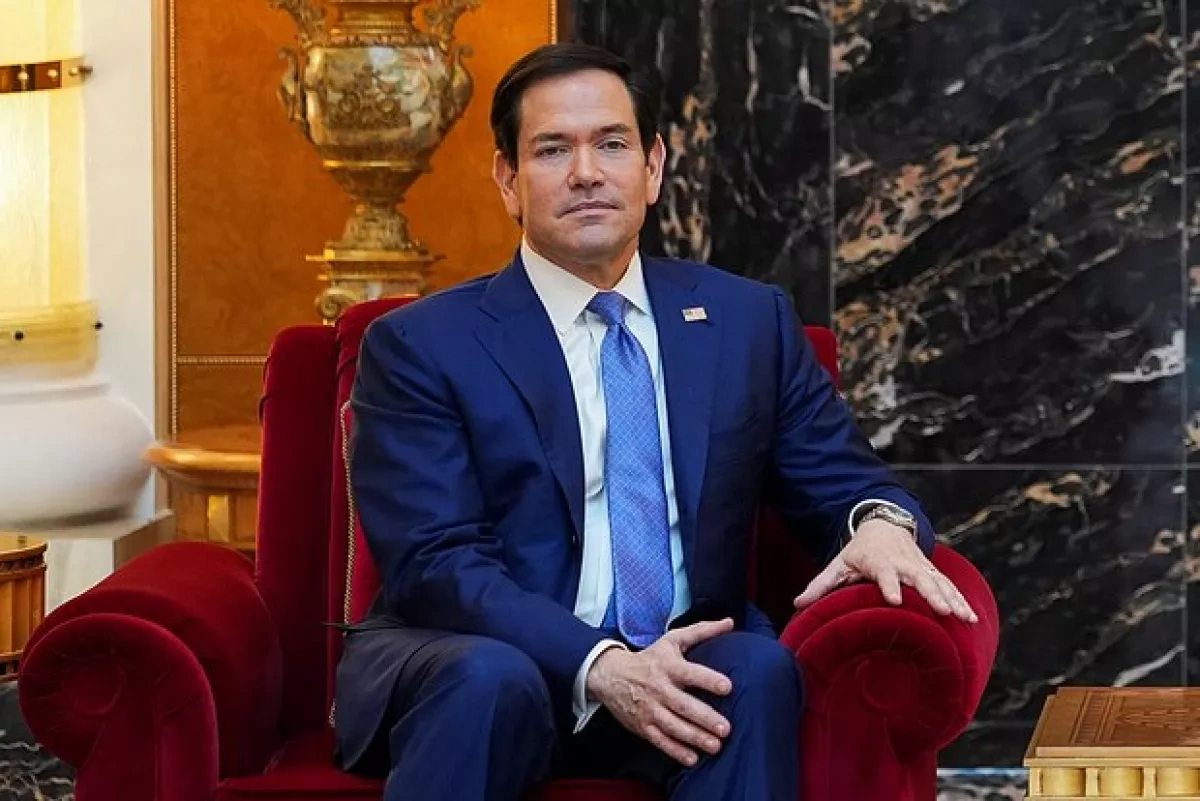
U.S. Secretary of State Marco Rubio sought to reassure Washington’s Arab Gulf allies as regional governments pursue compensation for damage caused by Iranian missile and drone attacks earlier this year.
Speaking after meetings with Gulf leaders, Rubio said Gulf states were seeking reparations for losses incurred during Iranian strikes that followed U.S. and Israeli military operations against Iran, according to U.S. media.
He noted that it remained unclear whether frozen Iranian assets could be used to fund compensation.
Rubio visited the United Arab Emirates, Kuwait and Bahrain this week, aiming to bolster confidence among U.S. partners that were targeted by Tehran but have largely remained outside ongoing U.S.-Iran peace negotiations.
Addressing foreign ministers from the six-member Gulf Cooperation Council, Rubio pledged that any future agreement with Iran would not undermine the security or economic interests of Gulf states.
The Gulf countries suffered significant fallout from the conflict, with Iranian retaliatory strikes reportedly killing at least 20 civilians and injuring hundreds across the region. Iran’s temporary closure of the Strait of Hormuz also disrupted energy exports, exposing vulnerabilities in economies heavily dependent on oil and gas revenues.
While most Gulf states welcomed a ceasefire reached after exports were severely affected in March and April, concerns remain that current negotiations may not adequately address Iran’s missile and drone capabilities or its support for regional armed groups, including the Houthis. Qatar, which is serving as a mediator, is the only Gulf state directly involved in the talks.
By Aghakazim Guliyev