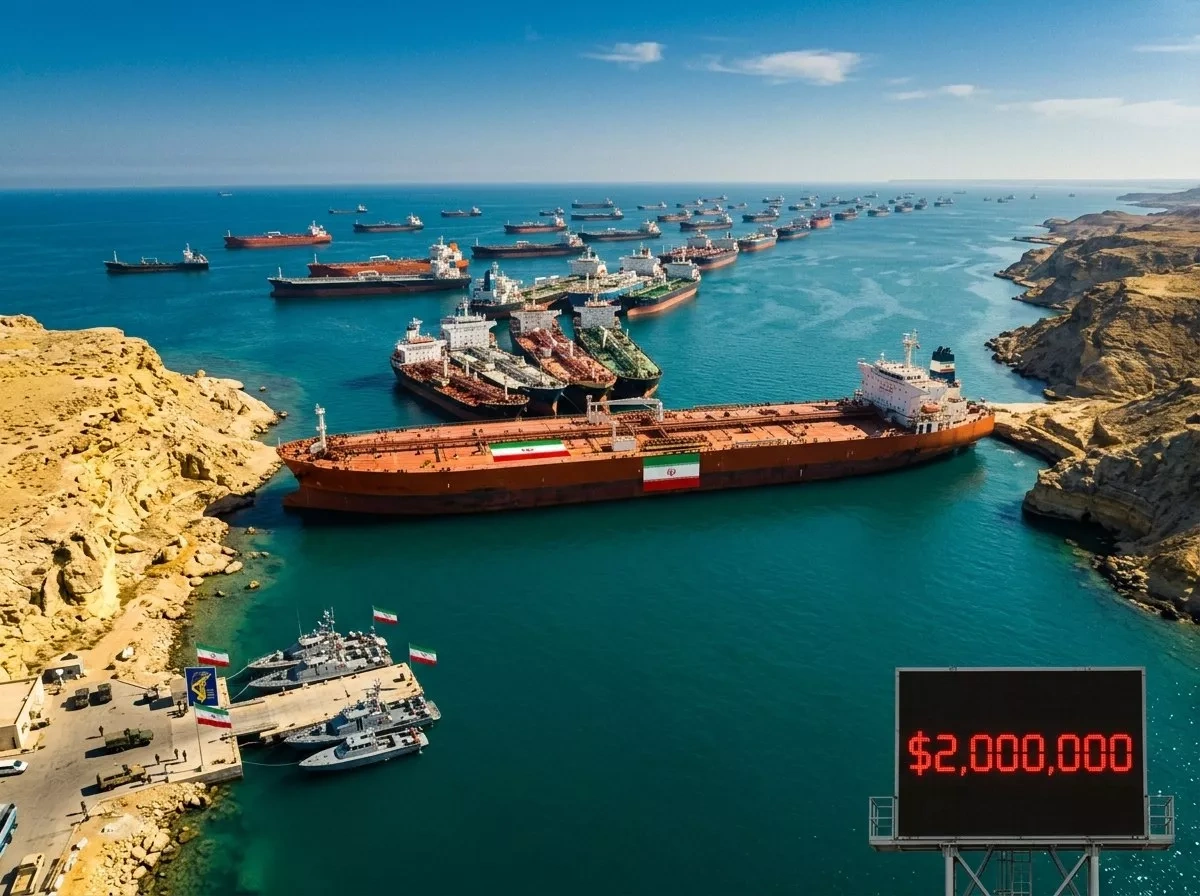
Iran is seeking to generate billions of dollars in annual revenue by introducing charges for services provided in the Strait of Hormuz, according to officials familiar with the proposal, as Tehran pushes for a greater role in managing one of the world's most important maritime trade routes.
Iranian officials estimate that fees for security, safety and environmental services in the strategic waterway could generate around $40 billion a year for participating countries. The proposal is being presented as a regional initiative, with Tehran seeking support from Gulf states as well as China, The Wall Street Journal reports.
According to officials, Iran has examined international models, including Türkiye's system of charging vessels a "gold franc" fee for transiting the Dardanelles.
Iranian officials said the proposal would involve sharing revenue with neighbouring Persian Gulf countries in an effort to secure regional backing.
"Everyone needs to know that management of the strait will never return to the way it was before," Iran's chief negotiator, Mohammad Bagher Ghalibaf, said during a visit to Oman on June 23, where he discussed the proposed arrangements with officials from the neighbouring country.
The proposal comes after a 60-day agreement between the United States and Iran ended recent hostilities and reopened the Strait of Hormuz to commercial shipping.
Under the agreement, Iran is responsible for clearing mines from the waterway and ensuring toll-free passage for commercial vessels during the 60-day period. The arrangement also gives Tehran a role in discussions over the future management of the strait, although Iran does not recognise international maritime law governing the waterway.
Ship traffic through the Strait of Hormuz has begun recovering. According to ship-tracking data, around 70 vessels transited the strait on June 24, the highest daily total since the conflict began. Before the war, an average of about 130 oil tankers passed through the chokepoint each day.
However, security concerns remain. On June 25, a cargo vessel reported being struck by an unidentified projectile near the coast of Oman, damaging the ship's bridge but causing no casualties, according to U.K. Maritime Trade Operations.
The proposal has drawn opposition from the United States.
U.S. Secretary of State Marco Rubio rejected the idea of charging vessels for using the international waterway during a visit to the Middle East on June 25.
"The reality is that no country on earth has the right to charge for the use of international waterways, and that will never be an acceptable condition of any deal," Rubio said during a stop in Bahrain.
Rubio added that Persian Gulf countries had rejected the idea of imposing charges on ships transiting the Strait of Hormuz.
By Sabina Mammadli