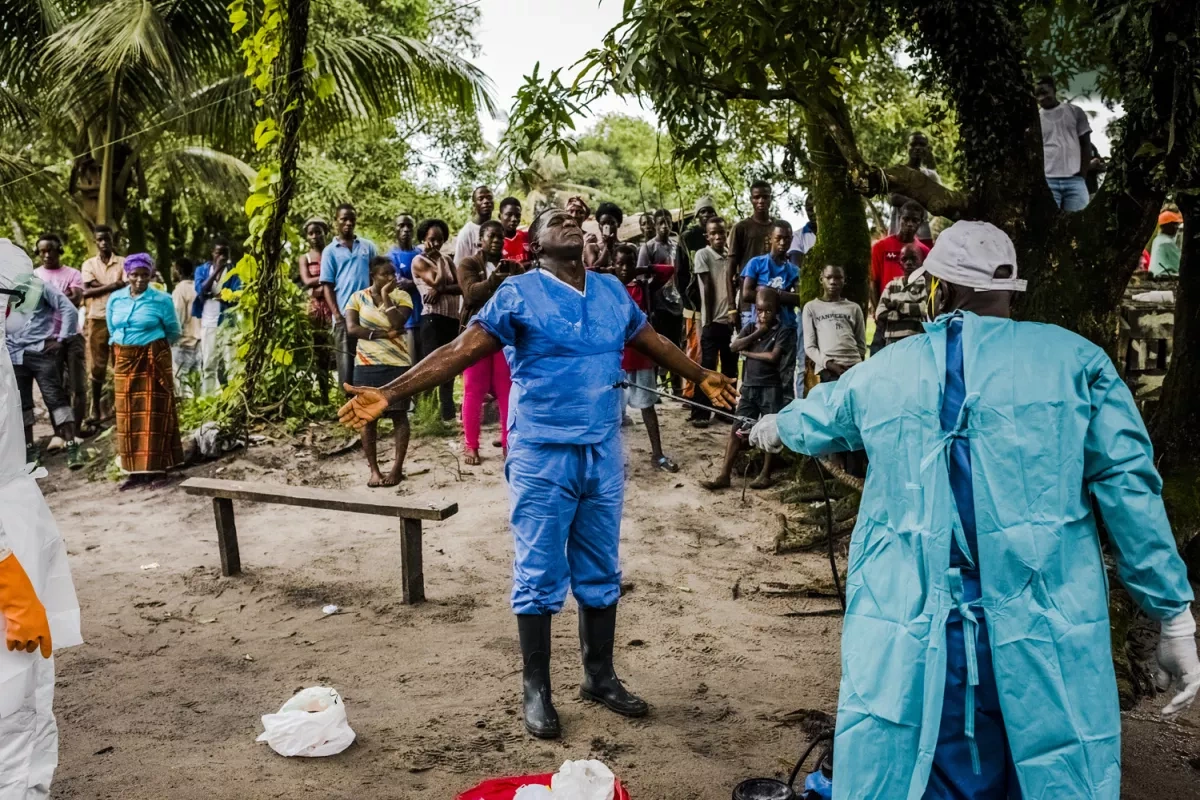
A fast-moving Ebola outbreak in East Africa has raised concerns that it could become one of the most severe recorded in recent history if response efforts do not accelerate. The trajectory of the epidemic will depend on a small set of critical factors that determine how quickly transmission can be identified, contained, and ultimately stopped.
The New York Times (NYT) has reported that while some progress is being made, significant structural and social barriers continue to slow the response.
One of the most immediate challenges is the limited reach of testing. Early in the outbreak, delays in identifying the Bundibugyo virus and shortages of testing equipment led to missed cases, meaning current figures likely underestimate the true scale of infections. Because early symptoms resemble malaria, delays in diagnosis make it harder for health workers to isolate patients and begin contact tracing.
Although Congo’s national biomedical research institute, supported by international partners, has expanded genetic testing and now processes many samples within a day, logistical problems persist. Specimens often travel hours over poor roads, and weak digital infrastructure slows the transmission of results. In some areas, internet connectivity was only recently established. Low trust in health systems and shortages of isolation facilities further discourage people from seeking testing.
The second major factor is contact tracing and isolation. In the absence of a vaccine or targeted treatment for this virus species, tracing exposed individuals remains the most effective containment tool. Health authorities aim to identify 95 percent of contacts, but conditions vary sharply across borders. Uganda is nearing that benchmark, while parts of eastern Congo struggle due to conflict, displacement camps, and mistrust.
Overall tracing coverage has improved to about 70 percent, yet thousands of contacts remain unmonitored. Fear of isolation, misinformation, and cultural concerns about burial practices reduce cooperation. As a result, some individuals avoid health services even when symptomatic, undermining containment efforts.
A third factor is the timeline for vaccines and treatments. Although Ebola vaccines and therapies exist, none are specific to the Bundibugyo strain driving this outbreak. The World Health Organisation is supporting clinical trials for new candidates, but deployment will likely take months. The Coalition for Epidemic Preparedness Innovation is investing more than $63 million in vaccine development, supporting four candidates adapted from existing platforms.
“Now what we need to do is adapt the designs we’ve got to Bundibugyo and scale up the manufacturing as quickly as possible,” Richard Hatchett, the chief executive of CEPI, said. Researchers are also testing treatments such as monoclonal antibodies, including MBP-134, which has shown strong results in animal studies and safety in humans. Oral antivirals like obeldesivir are also being explored for post-exposure prevention, though results will take time.
The fourth factor is the potential geographic spread. Global transmission is considered unlikely due to the virus’s transmission route through bodily fluids rather than airborne spread. However, regional movement remains a serious concern. The outbreak zone in eastern Congo includes highly mobile populations across conflict-affected provinces with about 15 million residents, at least one-third of whom are displaced. Cross-border trade and informal movement continue despite official closures. Tens of thousands cross daily between Congo, Uganda, and Rwanda, often through unofficial routes without screening. Dense displacement camps and weak sanitation further increase the risk.
Finally, uncertainty remains about the virus’s severity. Early indications suggest Bundibugyo may have a lower fatality rate than other Ebola strains, though data remain incomplete. Symptoms can resemble malaria and other common illnesses, delaying care and extending the period in which transmission can occur. “I think this also explains how it is spreading so fast,” said Dr. Babou Rukengeza, Save the Children’s Ebola response lead in the Congo. “It's clear that we are behind the outbreak.”
By Jeyhun Aghazada