BAKU, Azerbaijan, June 16. The Sustainable
Development Goals (SDGs) require a new financing architecture,
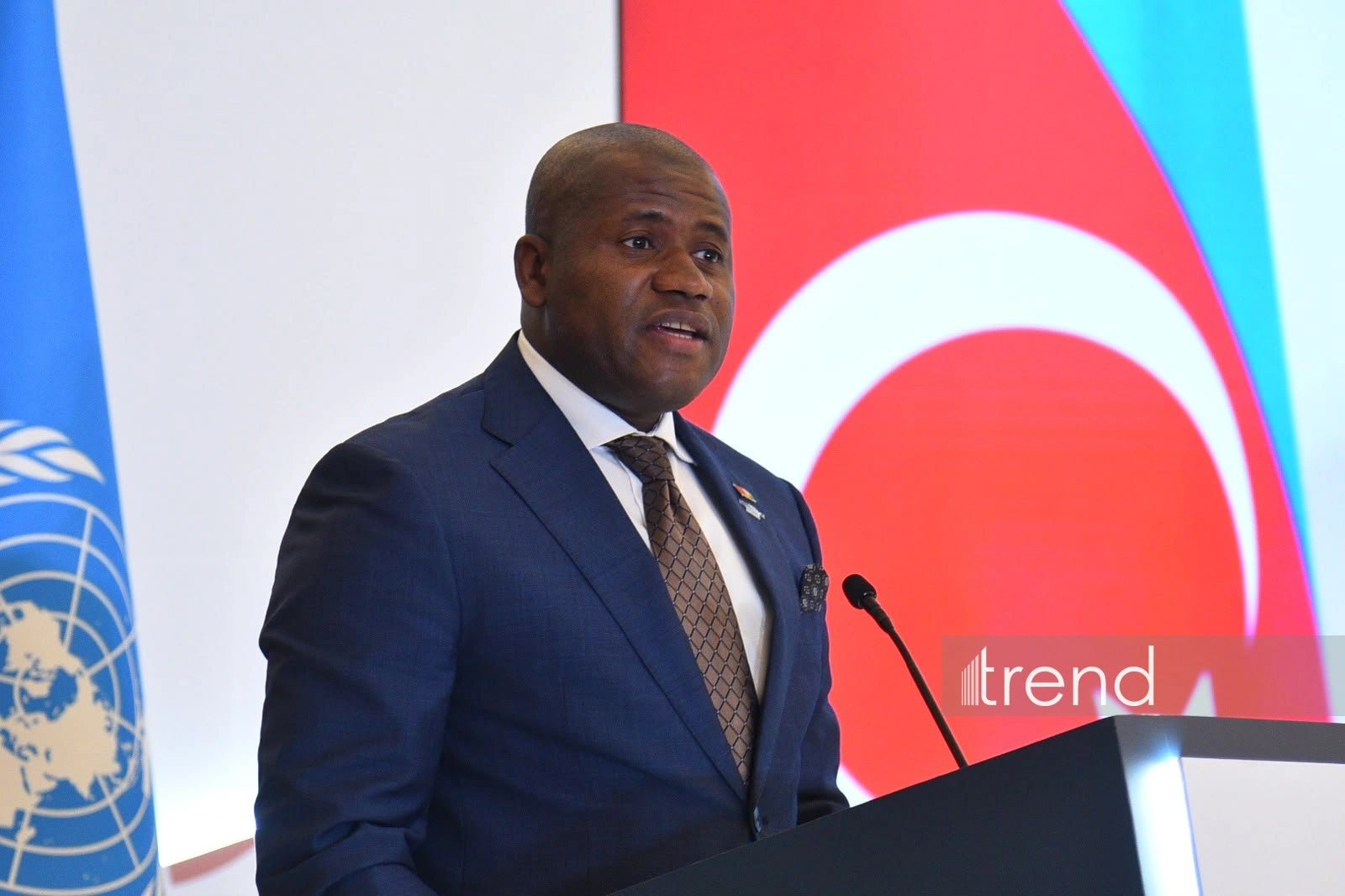
Minister of Planning, International Cooperation and Development of
Guinea, Ismael N'falla Nabe, said, Trend's correspondent reports from the
event.
He made the remark at the 8th SDG Dialogue “Innovative Financing
for Sustainable Development, Beyond Aid and Traditional ODA" within
the framework of the Islamic Development Bank (IsDB) Annual Meeting
in Baku.
"Achieving the SDGs is impossible without a transition to a new
financing architecture based on investment, innovation, and
regional integration, not just traditional international aid," he
said.
He emphasized that the global community is at a point where
existing financing models no longer meet the scale of modern
development challenges.
"Developing countries in the 21st century face problems that
cannot be solved with 20th-century tools. Today, it's not a
question of a lack of capital, but rather the ability to
effectively channel these resources toward sustainable development
goals," he noted.
The minister reiterated that financing the SDGs requires
fundamentally new approaches to mobilizing investment.
"The problem lies in our collective ability to structure
capital, mitigate risks, and channel it where it can create
long-term value," said Nabe.
He underscored that international development must shift from a
model based primarily on official aid to a system where investment,
partnerships, and innovative financial instruments play a key
role.
"Public finance alone is insufficient, and private capital alone
cannot provide the necessary scale. But together, they can become a
transformative force," the minister announced.
According to him, Guinea is implementing a long-term national
development strategy focused on structural transformation of the
economy.
"We are convinced that natural resources alone do not create
prosperity. It is created by institutions, human capital,
infrastructure, innovation, and an effective financial system," he
emphasized.
Nabe noted that the country strives not simply to attract more
resources, but to create a higher-quality financial architecture
capable of stimulating private investment, developing regional
value chains, and creating jobs.
He specifically highlighted the potential of innovative
financial instruments, including Islamic finance, digital
technologies, green finance, and trade finance.
"These instruments are not an alternative to traditional
development, but its future. They allow for expanded access to
capital, reduced investment risks, and accelerated structural
transformation of economies," the minister noted.
In conclusion, he emphasized that achieving the SDGs is only
possible through strengthened international and regional
cooperation.
"No country can achieve the Sustainable Development Goals alone.
We need to build a new financial architecture—publicly managed,
private sector-backed, digital, and regionally integrated," added
Nabe.