BAKU, Azerbaijan, June 15. Uzbekistan’s Central
Bank reported improved financial stability, lower inflation, and
stronger banking sector indicators in 2025.
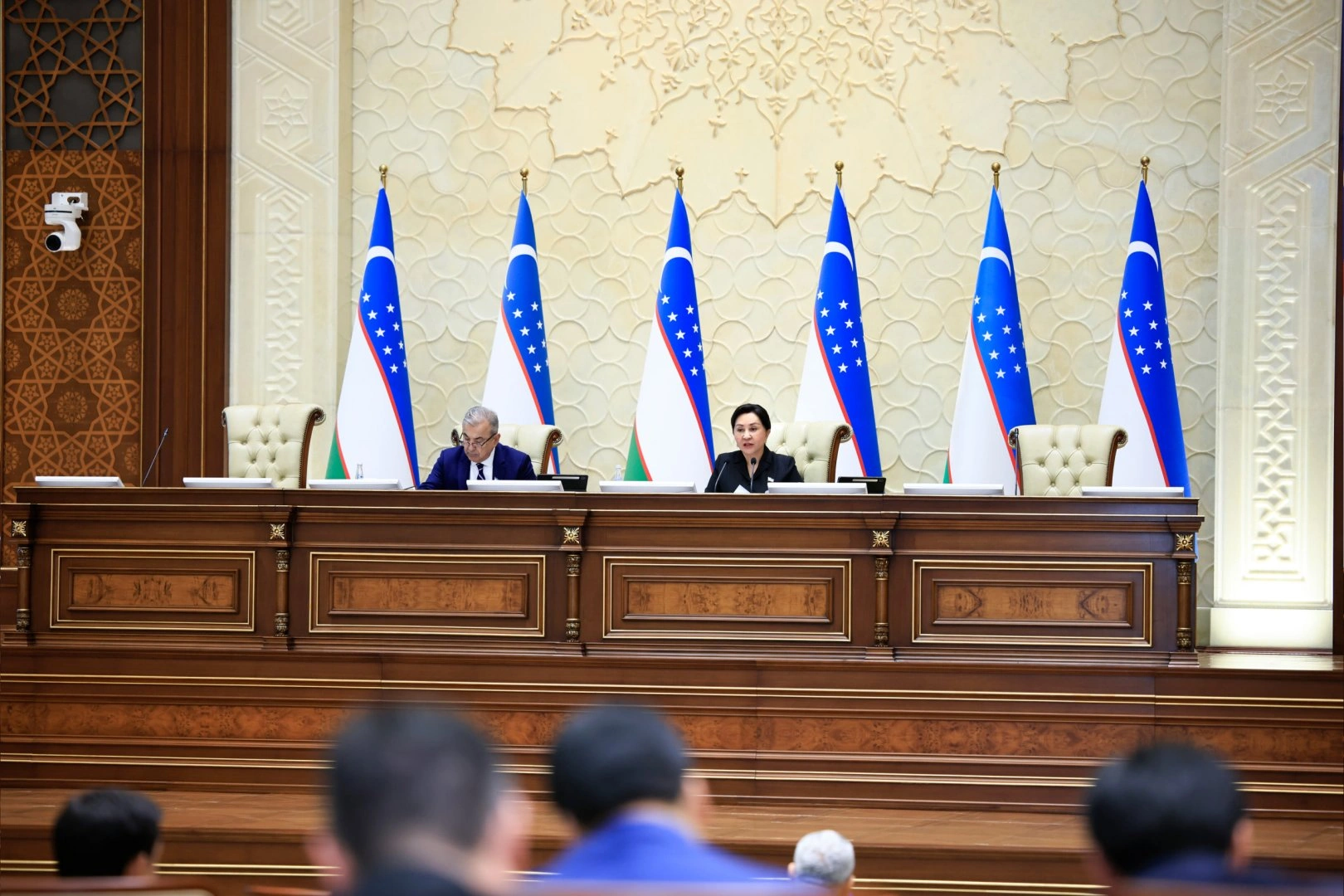
This was reflected in a statement published by the Senate of the
Oliy Majlis following the 16th plenary session of the Senate.
According to the Central Bank, its priorities in 2025 were
focused on strengthening the resilience of the banking system,
mitigating potential financial risks, and enhancing safeguards
against cyber threats and fraud in banking and payment operations.
The institution also aimed to promote household savings and support
the achievement of medium-term inflation targets.
At the same time, the Central Bank notes that last year,
particular attention was given to improving the operational
framework of monetary policy, strengthening its transmission
mechanism, managing liquidity in the banking system more
effectively, and ensuring that interest rates in money markets are
formed based on market principles.
Consequently, inflation in Uzbekistan declined from 9.8% to 7.3%
in 2025, while core inflation decreased from 7.3% to 5.7%,
signaling a stabilization of price pressures in the economy.
The Central Bank also reported a significant increase in
international reserves, which rose 1.6 times to $66.3 billion by
the end of the year. The value of the Bank’s securities portfolio
reached $1.5 billion, reflecting active reserve management.
During the year, around 330 trillion soms (about $27.5 billion)
in credit resources were allocated to households and businesses to
support economic activity.
The share of non-performing loans (NPLs) in the banking system
declined to 3% of the total loan portfolio, while coverage of
problem loans with provisions increased from 87% to 94%, indicating
stronger buffers against potential losses.
The Central Bank noted that banking sector capital adequacy
remained strong at 18.3%, while the liquidity coverage ratio stood
at 208% and the net stable funding ratio at 120%, underscoring the
system’s solid financial position.
The report also highlighted ongoing efforts to improve payment
infrastructure, expand cashless transactions, and strengthen
cybersecurity measures to reduce risks of cyberattacks and
financial fraud.
In the course of the plenary session, officials discussed
proposals to further enhance oversight of commercial banks, payment
institutions, and payment system operators, as well as measures to
strengthen cybersecurity and combat financial fraud.
Following the discussion, the Senate adopted a resolution
incorporating the proposed measures.
Overall, the data points to a more stable macro-financial
environment, providing a foundation for sustained economic growth
while reducing vulnerability to external and internal shocks.