BAKU, Azerbaijan, June 6. The history of
Azerbaijan is, in many ways, a history of constant interaction with
its neighbors. Located at the crossroads of Europe and Asia, the
South Caucasus and the broader Middle East, the country has long
stood at the intersection of trade routes, cultural exchanges, and
shifting geopolitical dynamics. Today, geography continues to play
a decisive role in shaping Azerbaijan’s foreign policy, with
relations with neighboring Georgia, Türkiye, Armenia, Iran, and
Russia remaining central to regional stability.
Among these relationships, Azerbaijan’s ties with Georgia stand
out as one of the most stable and pragmatic partnerships in the
region. Since the early years of independence, Baku and Tbilisi
have built cooperation largely on practical interests rather than
ideology. Both countries became key participants in major energy
and transport corridors linking the Caspian Sea to global markets.
Pipelines and infrastructure routes running through Georgian
territory have been critical for Azerbaijan’s energy exports, while
also strengthening Georgia’s role as a regional transit hub.
Over time, this cooperation expanded beyond energy into trade,
transportation, tourism, education, and cultural exchange. The
result is a durable partnership that has remained steady despite
broader regional uncertainty. In many ways, the Azerbaijan–Georgia
relationship is often cited as a working model of how neighboring
states can prioritize mutual benefit over divergence.
Relations between Azerbaijan and Türkiye are frequently
described as a strategic alliance, and for good reason. Shared
language roots, cultural proximity, and historical ties have
created a strong foundation for deep cooperation. Over the past
decades, this partnership has grown across nearly all areas — from
energy and transportation to defense and regional diplomacy.
Türkiye remains one of Azerbaijan’s closest allies on the
international stage, while Azerbaijan is widely regarded as a key
partner for Türkiye in the South Caucasus. Their coordination on
major regional projects has reinforced both countries’ influence
and connectivity across Eurasia.
Russia also remains an important actor in the South Caucasus,
with a long-standing role in the region’s political and security
architecture. Relations between Azerbaijan and Russia are
multi-layered, covering trade, energy, transportation, and regional
security issues. Despite the complexity of regional dynamics, both
sides maintain regular diplomatic engagement and a pragmatic
approach aimed at preserving functional cooperation across key
sectors.
Relations between Azerbaijan and Armenia have been shaped for
decades by conflict over Karabakh, one of the most enduring and
sensitive disputes in the post-Soviet space. In recent years,
however, a gradual shift has emerged toward dialogue and attempts
to redefine the basis of coexistence. Negotiations over border
delimitation, transport links, and a potential peace agreement
remain ongoing, reflecting a cautious but tangible movement toward
long-term stability.
Alongside this evolving political process, limited economic and
humanitarian contacts have also appeared. In particular, Azerbaijan
has begun supplying certain energy products, including diesel fuel,
to Armenia. While still modest in scale and highly sensitive
politically, such exchanges reflect the early stages of practical
engagement that exist even amid unresolved tensions.
Relations with Iran are defined by deep historical ties, a
shared border, and extensive economic and cultural interactions.
Like many neighboring states, Azerbaijan and Iran have experienced
both cooperation and disagreement over different issues.
Nevertheless, both sides continue to emphasize the importance of
maintaining dialogue and developing mutually beneficial cooperation
in areas such as trade, transport, and energy. Iran remains a
significant regional actor, and stable relations between the two
countries are widely viewed as an important factor for broader
South Caucasus stability.
The South Caucasus today remains a region where local dynamics
intersect with the interests of multiple external and regional
powers. In this environment, Azerbaijan’s ability to maintain
balanced and pragmatic relations with its neighbors plays a central
role in shaping both its foreign policy and regional stability.
Cooperation with Georgia, the strategic alliance with Türkiye,
sustained dialogue with Russia, the pursuit of peace with Armenia,
and constructive engagement with Iran together form the core of
Azerbaijan’s regional approach.
Ultimately, the future of the South Caucasus will depend less on
geography itself — which remains unchanged — and more on how states
choose to manage that geography. Whether borders become lines of
division or channels of cooperation will determine the region’s
trajectory for decades to come.
P.S.
History shows that strength matters most when it serves the
cause of peace rather than conflict. The principle of "Peace
Through Strength" is not about provoking confrontation, but about
being ready to defend stability, sovereignty, and legitimate
interests.
The South Caucasus today needs stability, mutual respect, and
good-neighborly relations. At the same time, for those who still
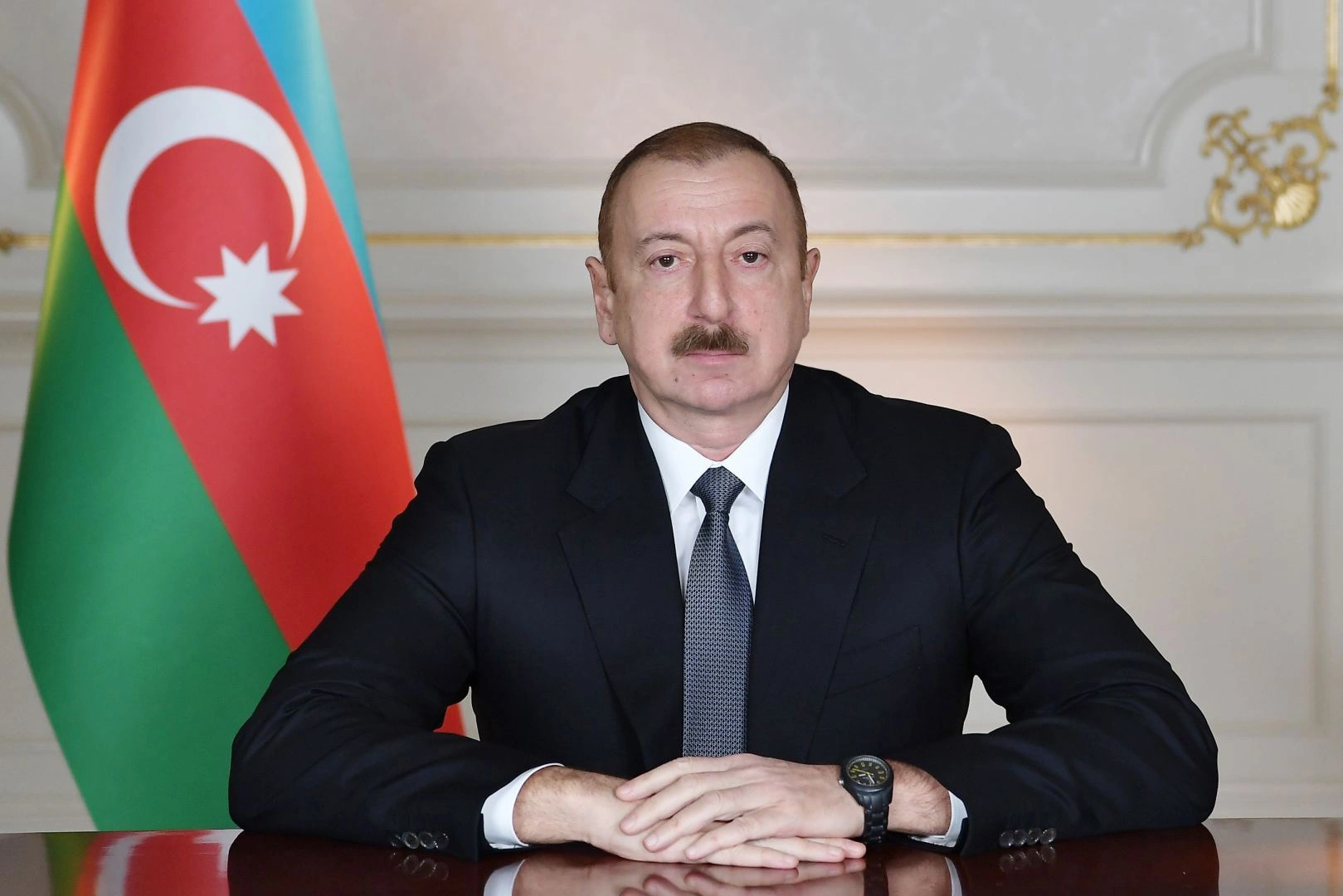
rely on aggressive rhetoric, the iron fist of President Ilham
Aliyev and the people of Azerbaijan is always ready to respond
decisively to anyone who threatens the peace and security of our
country. Be prudent. As a reserve officer, I can say with
confidence: peace is always more valuable than war, but it must be
firmly protected.