BAKU, Azerbaijan, June 4. The opening session
of Termiz Dialogue on Connectivity between Central and South Asia
highlighted discussions on regional connectivity, economic
cooperation, transport corridors, energy links, climate resilience,
and cultural and humanitarian engagement as key pillars of
interregional integration, Trend reports via the Institute for Strategic and
Interregional Studies under the President of Uzbekistan.
Eldor Aripov, Director of the Institute for Strategic and
Interregional Studies, described the Termiz Dialogue as a practical
implementation of President Shavkat Mirziyoyev’s initiative to
strengthen connectivity between Central and South Asia. He noted
that the concept has received broad international support,
including a 2022 UN General Assembly resolution that established a
long-term legal foundation for transregional cooperation.
Aripov said the platform has already produced tangible results,
contributing to trust-building and the development of practical
initiatives involving governments, international organizations, the
private sector, and civil society.
The agenda of the second session is structured around four main
tracks, including political dialogue and economic connectivity,
climate resilience, and cultural and humanitarian cooperation.
Particular attention is being given to expanding trade, developing
transport corridors, and strengthening energy cooperation across
the region.
During the session was emphasized that economic interdependence
plays a stabilizing role, helping reduce the risk of tensions while
fostering long-term cooperation through shared interests and
production networks.
Climate challenges were also a major focus, with participants
noting that Central and South Asia remain highly vulnerable to
climate change impacts, requiring coordinated regional responses
due to the transboundary nature of environmental risks.
The forum also addressed cultural and humanitarian cooperation,
highlighting historical ties, shared traditions, and long-standing
links between the two regions as a foundation for deeper
engagement, and is expected to conclude with a joint communiqué
outlining priorities for strengthening cooperation and advancing
regional connectivity between Central and South Asia.
More than 150 representatives from political, business, and
expert communities, as well as international organizations from
Europe, the CIS, South Caucasus, Asia-Pacific, the Middle East, and
the Americas, are participating in the event.
Among the partners are the United Nations Regional Centre for
Preventive Diplomacy for Central Asia, the UN Assistance Mission in
Afghanistan, the International Water Management Institute, the
Konrad Adenauer Foundation, the Berghof Foundation, PeaceNexus,
Search for Common Ground, Georgetown University, and others.
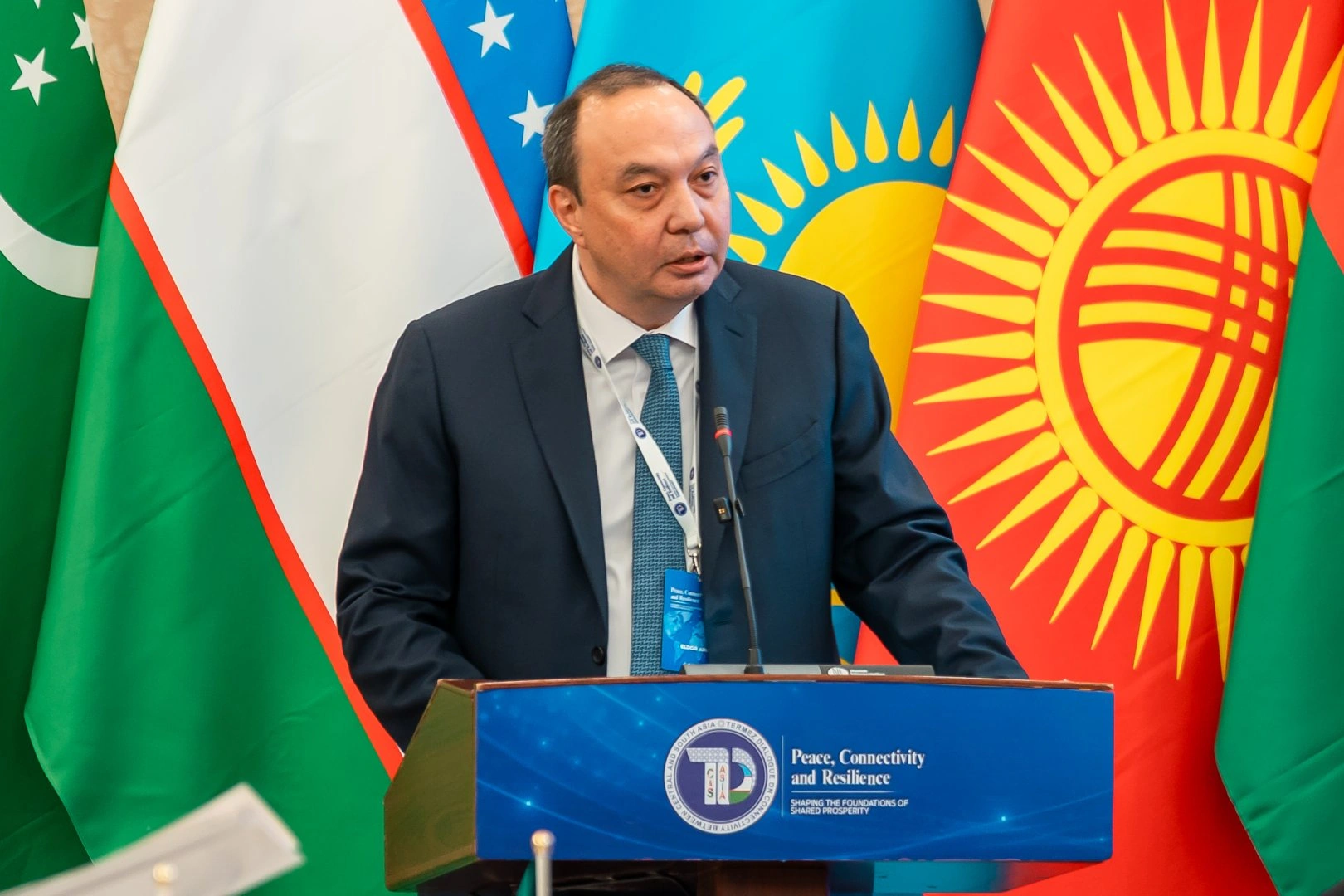
The second session of the Termiz Dialogue on Connectivity
between Central and South Asia opened in Tashkent on Wednesday,
bringing together policymakers, international organizations, and
experts under the theme “Peace, Connectivity, Resilience: Shaping
the Foundation of Shared Prosperity.” The forum is jointly
organized by the Institute for Strategic and Interregional Studies
under the President of Uzbekistan and the Ministry of Foreign
Affairs of Uzbekistan, in partnership with the Conference on
Interaction and Confidence Building Measures in Asia (CICA).