BAKU, Azerbaijan, May 25. Vice President for
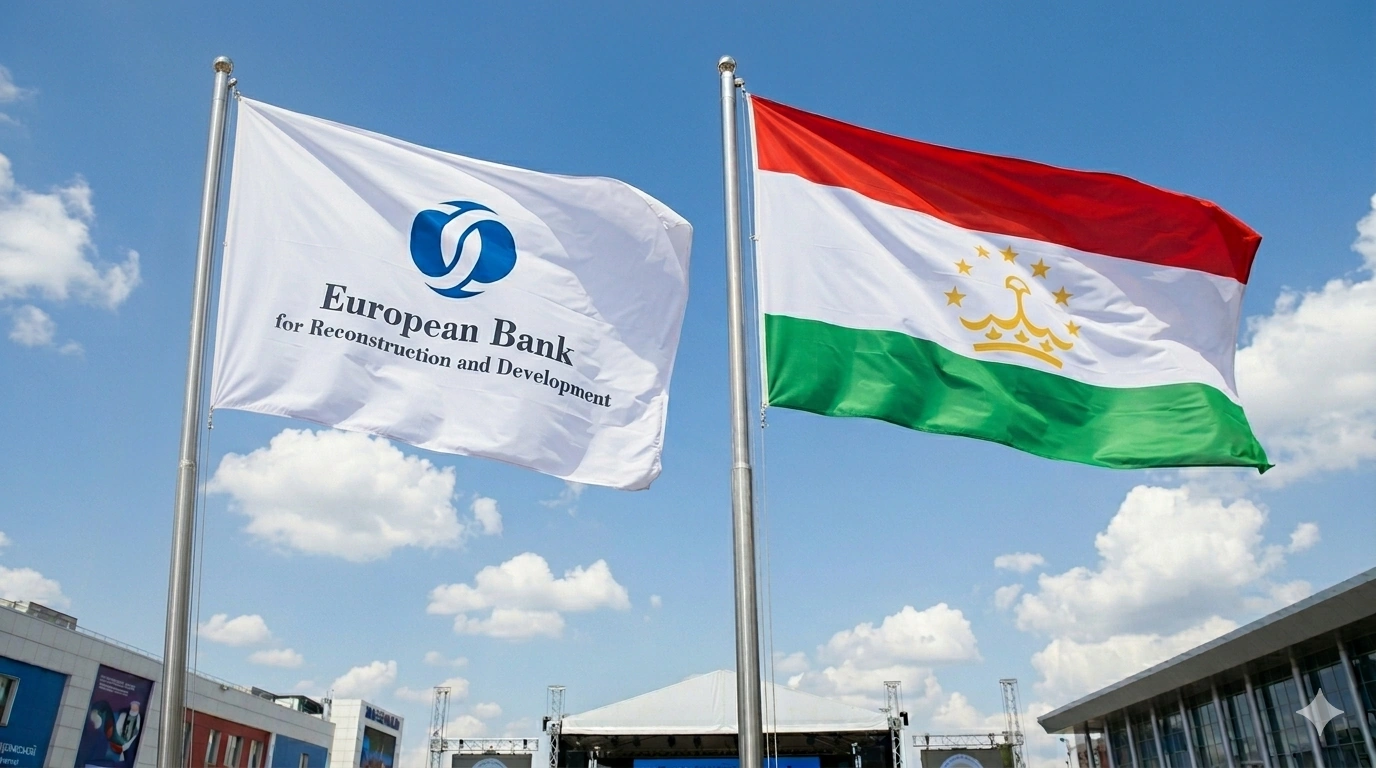
Policy and Partnerships at the European Bank for Reconstruction and
Development (EBRD) Mark Bowman will visit Tajikistan from May 25
through 28, where he is scheduled to hold talks with the country’s
Prime Minister, the leadership of the National Bank, and the
ministers of finance, energy, and industry, as well as participate
in a high-level international conference held within the framework
of the UN 2018–2028 Water Action Decade.
In addition to Dushanbe, the EBRD delegation will visit Khujand
to review the implementation of projects financed by the bank. To
date, the EBRD’s total investments in Tajikistan have exceeded 1
billion euros across 192 projects.
Bowman’s visit itself reflects a much broader process - the
gradual deepening of cooperation between the EBRD and Tajikistan,
which in recent years has moved beyond isolated infrastructure
financing. What is now taking shape is a sustainable model of
long-term engagement, in which energy, water resources, grid
modernization, and climate resilience are increasingly viewed as
part of a single strategic framework.
It is notable that energy and water management issues occupy a
central place on the agenda. For Tajikistan, this issue is of
systemic importance. The country possesses one of the largest
hydropower potentials in the region, while simultaneously facing
challenges related to aging infrastructure, high electricity
losses, and the need for large-scale grid modernization.
Against this backdrop, negotiations between Tajikistan’s
Ministry of Energy and Water Resources and the EBRD have
intensified in recent months. During talks between Minister Daler
Juma and EBRD Head in Tajikistan Holger Wiefel, the parties
discussed attracting concessional financing to reduce electricity
losses, developing solar generation capacity, and constructing
hydropower plants in the Zarafshan River basin. Particular
attention was also paid to mechanisms for attracting private
investors to the energy sector.
The financial architecture of cooperation is also becoming
increasingly sophisticated. The recent decision to allocate 49.6
million euros to Tajikistan for projects aimed at reducing
electricity losses in the Sughd and Khatlon regions demonstrates a
shift toward combined support mechanisms. Of this amount, 28
million euros will be provided as a 20-year loan at an interest
rate of 0.5% plus Euribor, while the remaining funds will be
allocated as a grant. Such schemes enable international financial
institutions to support infrastructure modernization while
simultaneously easing the debt burden on the national economy.
Currently, the EBRD’s portfolio in Tajikistan is estimated at
approximately 509 million euros and includes 73 projects. More
importantly, however, the bank is gradually expanding its presence
not only in state-led infrastructure initiatives, but is also
seeking to stimulate private sector participation. Although the
private sector currently accounts for only around 11% of the
portfolio, the very emphasis on this issue signals a changing
approach by international financial institutions toward the
country’s economy.
At the regional level, the growing interaction between Dushanbe
and the EBRD coincides with broader shifts taking place across
Central Asia. International financial institutions are increasingly
viewing the region as a promising platform for projects related to
the energy transition, water security, and transport connectivity.
In this context, Tajikistan - with its substantial water resources
and energy potential - has an opportunity to strengthen its role
within the region’s emerging infrastructure architecture.
Going forward, the development of relations between the EBRD and
Tajikistan could follow several scenarios. One scenario suggests
accelerated expansion of energy and infrastructure projects with
more active involvement of international private capital and the
development of renewable energy. Another scenario is linked to
preserving the current model, under which the main focus would
remain on modernizing existing networks and improving the
efficiency of the power system.
A further possibility is the gradual expansion of cooperation
beyond the energy sector into areas such as water management,
industrial modernization, and regional transport infrastructure. At
the same time, the future trajectory will depend both on
Tajikistan’s domestic economic policy and on the broader investment
strategies of international financial institutions in Central
Asia.