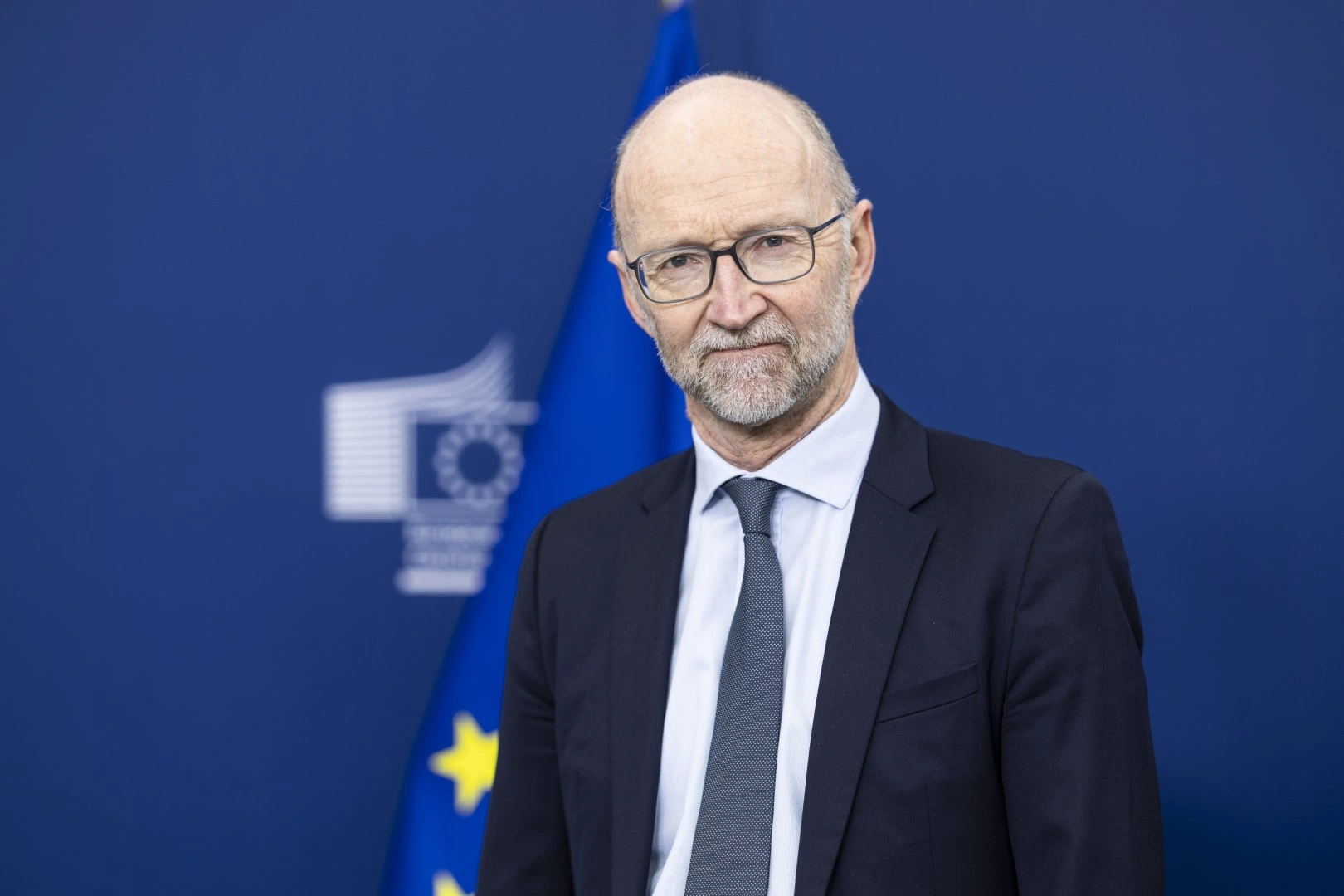
BAKU, Azerbaijan, May 22. The decision to focus
on housing for the 13th session of the World Urban Forum (WUF13)
could not be more timely and relevant, Head of the European
Commission Housing Task Force Matthew Baldwin said in an exclusive
interview with Trend on the sidelines of the 13th session of the
World Urban Forum (WUF13) in Baku.
"The housing crisis is not just about bricks and mortar. It is
affecting social cohesion, competitiveness, labour and educational
mobility, even our demographics and democracies. I hope that this
event will allow us to better understand the different factors
involved in triggering the crisis in so many different places, and
more importantly, to share knowledge and ways how the many
countries and regions around the world are tackling the different
dimensions of the challenges. The decision to focus on housing for
WUF13 here in Baku could not be more timely and relevant! And the
urban dimension is super important because we are seeing this major
housing affordability stress particularly in big cities across
Europe. From our side in the European Commission, we have now
delivered our European Affordable Housing Plan and look forward to
sharing our experiences and learning from other regions in the
world," he said.
Baldwin noted that in Europe, housing policy is primarily the
responsibility of Member States, regions and cities and local
authorities who have been working hard to find the right national
and local solutions.
"The Housing Task Force was established in 2025 under the
leadership of Commissioner Dan Jørgensen, who has delivered a
powerful message to the opening WUF13 Dialogue session, is all
about how we can help EU countries and cities to help tackle the
housing crisis by adding EU value. We have now adopted the
first-ever European Affordable Housing Plan last December which
aims to help scale up the supply of affordable housing, mobilise
financing, enable the necessary reforms and help the most
vulnerable people particularly the young, and never forgetting the
unacceptable scourge of growing numbers of homeless people," noted
the head of the Housing Task Force.
Speaking about EU's efforts to balance affordability,
sustainability, and energy efficiency in housing policy, Baldwin
pointed out that it’s not such a difficult balance to strike.
"Energy efficiency is a core affordability measure. Renovating
the worst-performing buildings reduces energy bills and improves
health and comfort, which supports affordability. By mobilising
funding and protecting vulnerable households we can leverage and
blend finance so that renovation and new construction are
investable for providers and affordable for residents. The goal is
to avoid a transition where costs fall unfairly on those least able
to pay. Through the European Housing Alliance, we will help
establish and disseminate best practices which can cut emissions
from buildings and improve their resilience while keeping costs
under control. But we must always remember that as for all housing
policies, sustainability and affordability must be delivered in a
way that makes sense locally," he explained.
Baldwin went on to add that there is massive diversity within
Europe, and obviously even greater diversity at the global
level.
"So we are certainly not arguing that what works in Europe will
necessarily work everywhere. But here are some ideas that may have
general application. All actors need to work together on housing
challenges specific to their local context. We learned that there
is no one-fits-all solution, but cooperation can help to find
examples that may help locally. Sharing good practices and helping
each other is therefore paramount. This is why we have recently
launched the European Housing Alliance that support these
objectives to enable cooperation between Member States, cities,
regions, other EU institutions and stakeholders. At EU-level, we
are at the beginning of this journey, the implementation of the
many actions identified by the European Affordable Housing Plan to
support local housing provision has begun and I strongly believe
that events like WUF13 help us all get our new ideas out there.
Europe’s housing crisis is heavily an urban one, so I hope there
are some lessons from our experiences for rapidly urbanising
regions globally, too," noted the head of the Housing Task
Force.
Baldwin said it is clear that substantially increasing the
supply of affordable housing will require a strong role for the
private sector.
"Public sector involvement remains essential, particularly for
the most vulnerable segments of the population, including those
unable to afford to pay the rent and at risk of homelessness. In
these cases, at the lower end of the housing spectrum, attracting
private investment is particularly challenging. But we can do more
to leverage patient, responsible capital. And we have to, because
all the public investment in the world will never be enough. There
are growing numbers of teachers, nurses, firemen and police
officers who are in steady jobs, but cannot meet their needs in the
market – but in this new segment, public support can be focused on
leveraging private investment. Accordingly, the role of public
intervention may shift away from reliance on capital-intensive
grants towards a broader set of financial instruments, including
guarantees and subsidised loans. In any case, all of us need to
think through simplified procedures, and regulatory flexibility. We
need to make it easier to supply affordable housing," he
explained.
Baldwin pointed out that international cooperation is going to
be very important in finding the right answers to the housing
challenges confronting this global housing crisis.
"We have been mainly thinking about how to address the crisis in
Europe, but every once in a while it is great to get out and
understand the many aspects of the housing crisis in different
countries like Azerbaijan, so it is a great opportunity to learn
from our wonderful hosts as well. It is such a pleasure to be in
beautiful Baku where the welcome has been very warm and friendly,"
he concluded.