The long period of relative peace that followed World War II rested on two transformative ideas: that wars of aggression are unacceptable and that empires must come to an end. Yet although the world has avoided another catastrophic war between great powers since then, some analysts now warn that this era may be drawing to a close.
According to a contributor to the Foreign Affairs magazine, the warning signs are everywhere: interstate and civil wars have multiplied in recent years, causing immense suffering worldwide. In one of the publication's latest articles, it describes how major powers themselves have engaged in wars of aggression, including Russia’s war on Ukraine and the joint US-Israeli war against Iran.
Nuclear-armed states are modernising and expanding their arsenals, arms-control agreements have eroded, and even nuclear facilities have become military targets. Countries large and small are rearming at a pace not seen since the 1980s, it points out, while across conflicts ranging from Ukraine and Palestine to Sudan and Iran, diplomacy has become fragmented, weak, and reactive.
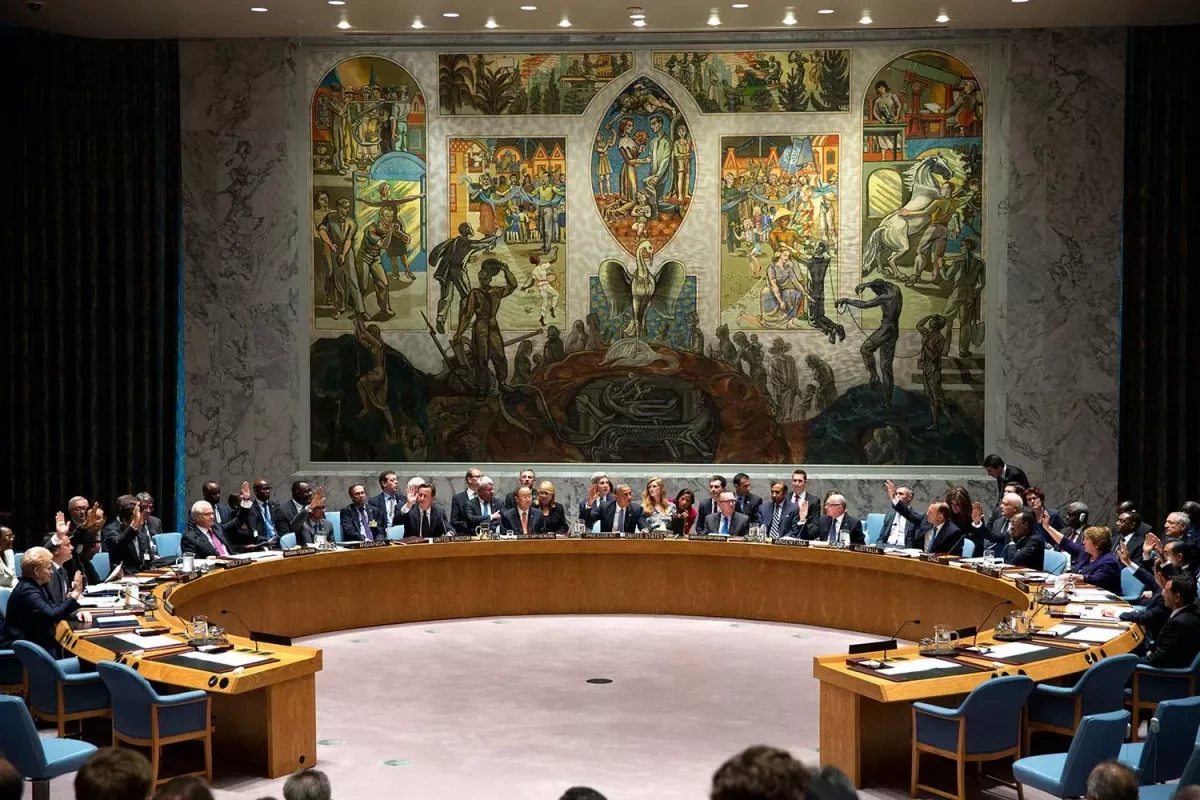
As the article recalls, the first founding principle emerged from the devastation of two world wars that together killed roughly 100 million people. The second grew out of centuries of colonial rule and the struggles for self-determination across Asia, Africa, and Latin America. Both ideas were formally embedded in the United Nations Charter, signed in San Francisco in June 1945.
At the same time, Foreign Affairs concludes that the United Nations has largely failed to play a meaningful peacemaking role. Many observers blame the crisis on the collapse of the so-called liberal or rules-based international order.
However, the analysis argues that this interpretation confuses two distinct concepts: the liberal international order itself did not create the long peace and, in important ways, actually weakened the two core principles on which that peace depended.
“The real disaster is the abandonment of the twin convictions of no war and no empire by states and publics alike, caused not by the American retreat but by an erosion of the international moral leadership and collective memory that once sustained them. It’s a crisis of imagination produced by a compound amnesia, not just of war and empire but also of the extraordinary peacemaking successes of an earlier United Nations.
Recovering that lost history and rebuilding the politics (and only then, the institutions) that once placed the twin convictions at the centre of global thinking are the essential first steps toward a new, peaceful global order,” the piece states.
The author contends that today’s emerging multipolar world — in which no single power can dominate international politics — resembles the earlier United Nations era from roughly 1955 to 1990 more than the past several decades of American global supremacy.
The recent US-Israeli war against Iran may, in this view, foreshadow future conflicts: interstate wars in which exhausted combatants seek what policymakers now call an “off-ramp.” Historically, the article argues, UN secretaries-general often played a crucial role in precisely these moments, helping warring sides de-escalate while reinforcing the international taboo against aggressive war and the principle that imperial domination must not return
According to the analysis, rebuilding the United Nations into an institution capable of fulfilling that role again will require more than bureaucratic reform. Instead, it calls for a revival of the two founding convictions through political leadership willing to defend them, a future UN secretary-general prepared to put them into practice, and renewed public demand for a world defined by neither war nor empire.
“Past UN peacemaking was possible not because the institutions were perfect—they never were—but because the convictions animating those institutions were politically alive, defended and advanced by states and peoples determined to keep them at the heart of international relations,” the author observes.
By Nazrin Sadigova