Beijing has wrapped up its latest round of high-level diplomacy with a major superpower. Russian President Vladimir Putin’s visit to the Chinese capital comes just a week after U.S. President Donald Trump’s own trip to the Chinese capital at a significant time in the world of geopolitics. While Putin and Chinese leader Xi Jinping publicly emphasized the strength of their partnership, analysts say Moscow likely left disappointed after failing to secure a final agreement on a crucial gas pipeline project.
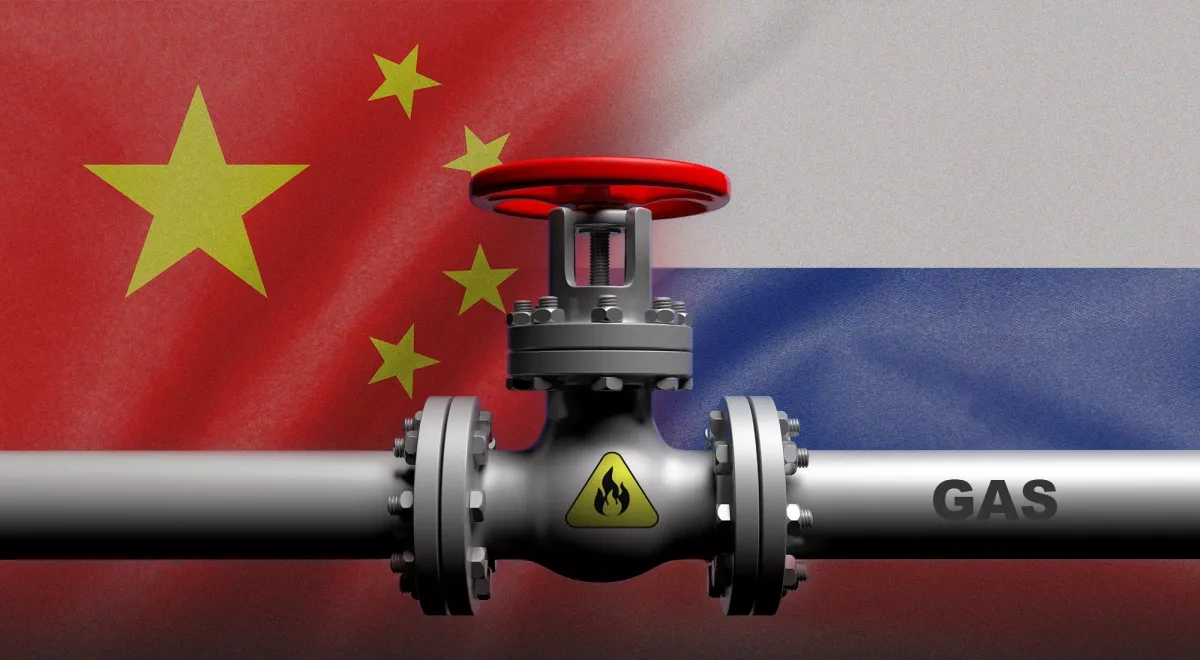
Russia has been eager to move forward with Power of Siberia 2, a massive pipeline designed to send additional volumes of Russian natural gas from western Siberia to northern China via Mongolia. For the Kremlin, the project is especially important, now least as it seeks to offset the collapse of much of its European gas business following significant sanctions by the West, according to industry analysts cited in an Al Jazeera article.
Moscow and Beijing signed a memorandum of understanding on the energy project last year, but China appears to be in no hurry to finalize the deal. Experts say disagreements over pricing likely remain unresolved, while Beijing is also wary of becoming too dependent on Russian fossil fuels.
Although the Kremlin said the two sides had reached a “general understanding on the parameters” of the project during talks in Beijing, industry observers noted there was still no indication of a binding final agreement.
Power of Siberia 2
The pipeline was originally proposed under a different route and name — the Altai Gas Pipeline — before evolving into the current Power of Siberia 2 project. The new route would transport Russian gas from western Siberia through Mongolia into northern China, with a planned annual capacity of 58 billion cubic meters.
That volume would account for nearly half of China’s projected growth in gas demand over the next decade and roughly a quarter of the expected increase in global gas demand overall. The project would also rival Nord Stream 1 — one of Russia’s former flagship export routes to Europe — which had a capacity of 55 billion cubic meters per year.
For the United States, now the world’s largest exporter of liquefied natural gas (LNG), a major increase in Russian pipeline gas flowing into China could become a significant competitive challenge.
For China, Russian pipeline gas would offer a more secure alternative to LNG imports delivered by sea. Much of China’s LNG supply currently passes through vulnerable maritime chokepoints such as the Strait of Hormuz and the Strait of Malacca.
Even so, analysts caution that major obstacles remain before the project can move ahead.
Large pipeline projects take years to complete. Construction on the original Power of Siberia pipeline began after a 2014 agreement, with first deliveries starting in 2019 and full operating capacity only reached in 2024.
Although Power of Siberia 2 would be slightly shorter and would not require the development of entirely new gas fields, it would still cross Mongolia, adding another layer of political and logistical complexity. Analysts say the construction timeline could easily stretch close to a decade, despite Gazprom's extensive experience with building such massive pipelines.
Lurking concerns
Following Putin’s meeting with Xi, Kremlin spokesman Dmitry Peskov told Russian media: “The president said during the talks that, overall, there is already a shared understanding of the main parameters for Power of Siberia 2.”
“There is agreement on the route and on how the project will be built. Some details still need to be finalised, but in general, such an understanding is already in place,” he said, while acknowledging that no timetable had been agreed upon.
For Russia, the benefits would extend beyond gas exports themselves. The project could generate major revenues for Gazprom as well as broader economic gains for Russian pipeline construction firms, steel pipe manufacturers, and steel producers.
However, analysts told the Qatari outlet that Russia’s weakened negotiating position has given China significant leverage. Beijing is reportedly pushing for heavily discounted prices linked to Chinese domestic benchmarks, while Moscow needs higher prices to justify the enormous infrastructure investment.
Experts also note that even a fully operational Power of Siberia 2 would not fully replace Russia’s pre-2022 gas export volumes or revenues from Europe. However, it could accelerate the shift toward a more fragmented and regionalized global gas market built around long-term geopolitical partnerships rather than fully globalized LNG trade.
According to Al Jazeera's reporting, the project is ultimately about more than economics. It also reflects a broader strategic effort by Russia and China to deepen economic ties and reduce reliance on what both governments increasingly describe as an unstable Western-led international order.
During this week’s summit, Xi highlighted that broader geopolitical alignment, praising the “unyielding relationship” between Beijing and Moscow.
“We have been able to continuously deepen our political mutual trust and strategic coordination with a resilience that remains unyielding despite trials and tribulations,” Xi said.
By Nazrin Sadigova