BAKU, Azerbaijan, May 21. Millions of young
people around the world live in inadequate housing, live in
informal settlements, or face the increasing impacts of climate
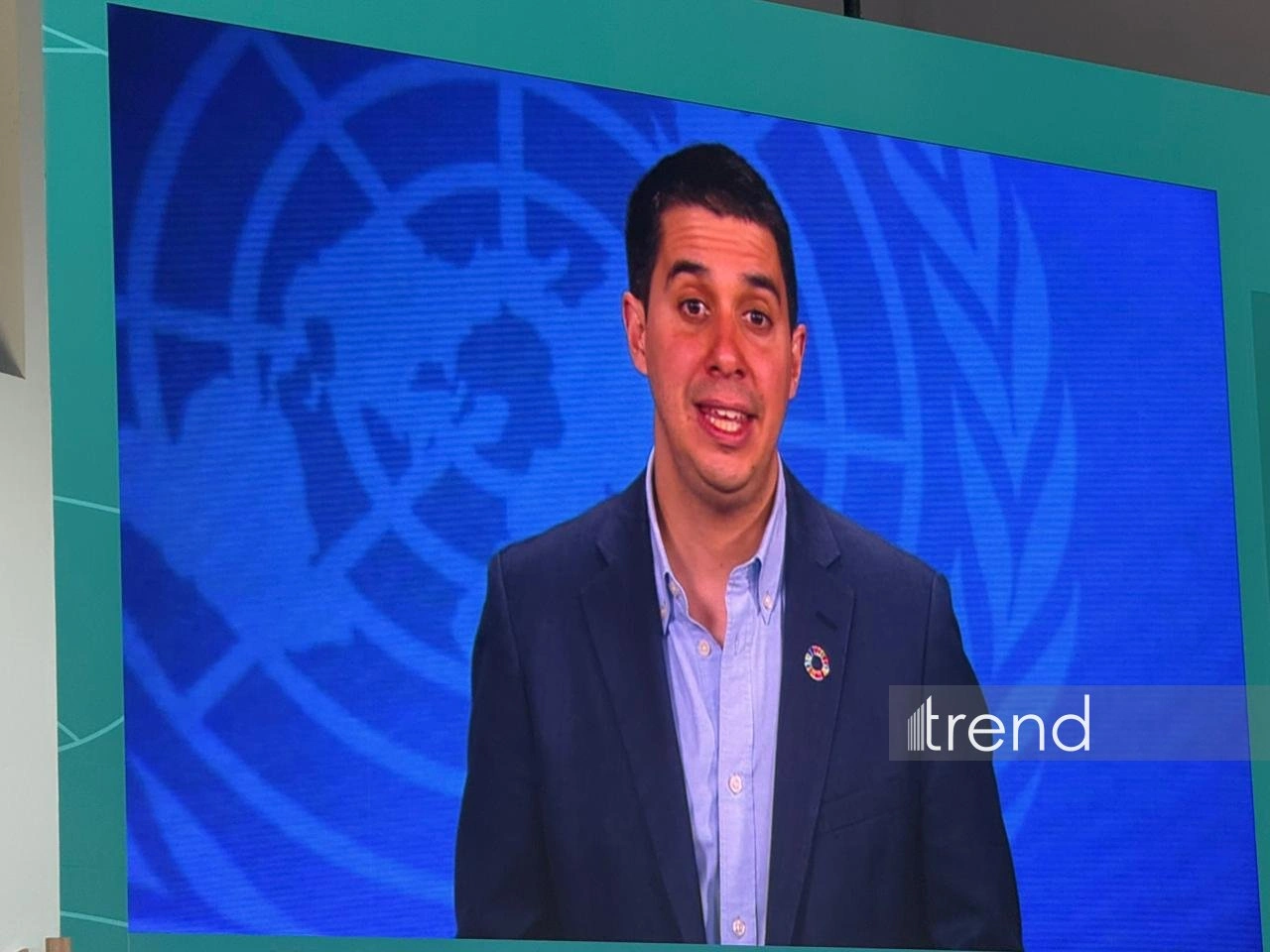
change in their neighborhoods, which must change, UN Assistant
Secretary-General for Youth Affairs Felipe Paullier said at a
roundtable event titled "Children and Youth" within the framework
of WUF13 in Baku, Trend
reports.
Paullier noted that every young person deserves a home that
provides a sense of safety, dignity, and hope.
"Every city, every community, and every neighbourhood has a
responsibility to make this possible. That means investing in
affordable housing, ensuring access to essential services, and
creating safe, inclusive public spaces where all children and young
people can thrive," the official explained.
According to him, homes alone aren't enough.
"A livable city for young people must be healthy, inclusive, and
full of opportunities. It must have adequate and affordable
housing, clean air and green spaces, where mobility and essential
urban services are safe and accessible, and where young people are
connected to quality education, decent work opportunities and
digital opportunities," he said.
The UN official stressed that young people around the world are
already leading the way.
"They are implementing innovative approaches, organizing and
rebuilding their communities in bold and creative ways.
What young people need most is real power — real participation
in shaping decisions based on institutions and systems.
That's why today I appeal to politicians, city leaders, and
institutions: please listen to young people, invest in their
solutions and institutionalize their meaningful participation in
urban planning and governance processes, not just as beneficiaries,
but as partners, because when we shape cities with young people, we
are not just building infrastructure. We are building trust,
building resilience and building our shared future," he added.
Today marks the fifth day of WUF13 in Baku.
The first day included a ministerial meeting dedicated to the
New Urban Agenda, a ministerial roundtable, assemblies for women
and civil society, business sessions, and discussions on urban
prosperity. An official ceremony marking the raising of the UN and
Azerbaijani flags also took place.
The second day stood out for the inaugural Leaders' Summit,
featuring high-level discussions on the global housing crisis,
urbanization policy, and urban resilience. Concurrently, the
opening of the Mexico City pavilion took place, serving as a
significant platform for expanding cooperation with the Latin
American region and preparing for WUF14.
The third day of WUF13 featured a comprehensive program of
events covering the global housing crisis, the formation of safe
and inclusive cities, climate resilience, artificial intelligence
and urban governance, green urbanization, social equity, and
sustainable transport.
One of the highlights of the third day was the signing of a
sister-city memorandum between the Azerbaijani city of Shusha and
the Turkish city of Trabzon.
The fourth day of WUF13 featured a broad program of events
dedicated to urbanization, climate change, inclusive urban
development, housing policy, and sustainable governance.
One of the important events of the UN Special Program for the
Economies of Central Asia (SPECA) Cities Forum, held on the fourth
day, was the announcement of Almaty’s official accession to the
“Declaration of Intent on the Establishment of the SPECA Smart
Climate-Resilient Cities Forum.”
Also, for the first time in WUF history and at Azerbaijan’s
initiative, the “WUF13 NGO Forum: Global Partnership and
Decision-Making” was held.
WUF13, which has attracted more than 40,000 registered
participants from 182 countries, will continue until May 22. Held
under the theme “Housing the world: Safe and resilient cities and
communities,” the forum brings together governments, international
organizations, experts, and representatives of civil society to
strengthen global cooperation in the field of sustainable urban
development.