BAKU, Azerbaijan, May 21. The smart cities
established across Karabakh and Eastern Zangezur function as a
clear visual model of Azerbaijan's green energy concept and
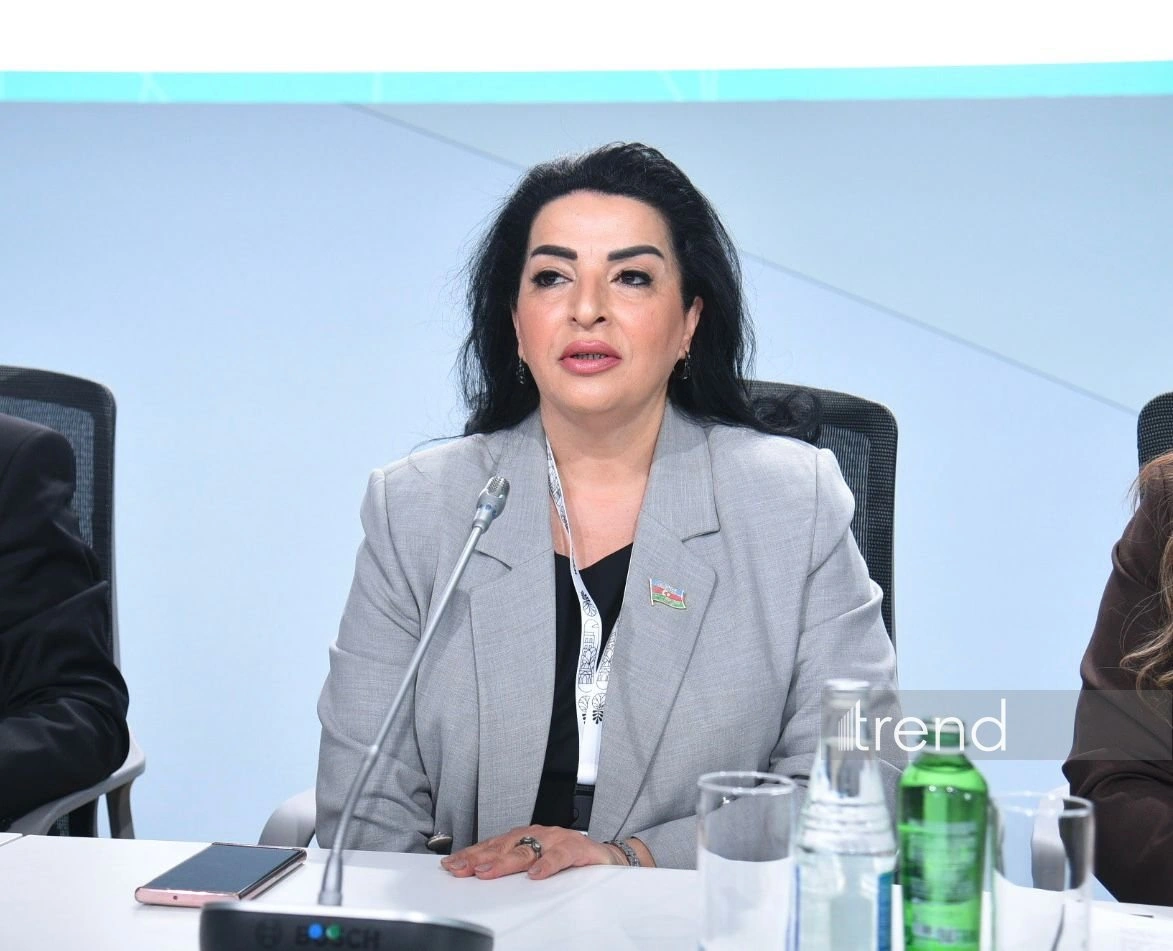
progressive sustainable development frameworks, Fatma Yildirim,
Member of the Azerbaijani Parliament, said, Trend reports.
The lawmaker made the remarks during a panel discussion titled
"Developing Azerbaijan’s First National Sustainability Standard:
The Sustainable Practices Standard (SPS)" held within the framework
of the 13th session of the World Urban Forum (WUF13) in Baku.
According to her, sustainable development currently operates far
beyond a standard environmental concept, serving instead as a
foundational pillar for macroeconomic expansion, corporate social
responsibility, and efficient governance.
Yildirim noted that escalating climate change impacts, rapid
global urbanization, and resource-driven conflicts collectively
underscore the pressing necessity of engineering future development
models strictly upon the principles of long-term resilience.
She emphasized that hosting the global urban forum in Baku
carries unique strategic significance, as sustainability issues
occupy a primary position on the international agenda. According to
the MP, the new regulatory metrics introduced during the session
represent a crucial milestone, offering a systematic mechanism to
transition international sustainability principles into concrete
local operations for the first time.
"This standard will drive the formation of deeply accountable
and resilient operational frameworks spanning multiple
sectors—ranging from tourism networks and public municipal spaces
to the broader service industry," she pointed out.
Yildirim concurrently stressed the importance of continually
modernizing the national legislative base in areas concerning
environmental protection, the transition to a sustainable economy,
municipal resource management, and energy efficiency. She
highlighted that sustainable development must evolve past being
merely a component of state policy and legal systems, cementing
itself as a daily civic culture within society.
"Preserving our natural environment, practicing rational
resource allocation, ensuring social inclusion, and fostering a
shared sense of accountability form the indispensable core of a
strong and resilient society," the lawmaker concluded.
Today marks the fifth day of WUF13 in Baku.
The first day included a ministerial meeting dedicated to the
New Urban Agenda, a ministerial roundtable, assemblies for women
and civil society, business sessions, and discussions on urban
prosperity. An official ceremony marking the raising of the UN and
Azerbaijani flags also took place.
The second day stood out for the inaugural Leaders' Summit,
featuring high-level discussions on the global housing crisis,
urbanization policy, and urban resilience. Concurrently, the
opening of the Mexico City pavilion took place, serving as a
significant platform for expanding cooperation with the Latin
American region and preparing for WUF14.
The third day of WUF13 featured a comprehensive program of
events covering the global housing crisis, the formation of safe
and inclusive cities, climate resilience, artificial intelligence
and urban governance, green urbanization, social equity, and
sustainable transport.
One of the highlights of the third day was the signing of a
sister-city memorandum between the Azerbaijani city of Shusha and
the Turkish city of Trabzon.
The fourth day of WUF13 featured a broad program of events
dedicated to urbanization, climate change, inclusive urban
development, housing policy, and sustainable governance.
One of the important events of the UN Special Program for the
Economies of Central Asia (SPECA) Cities Forum, held on the fourth
day, was the announcement of Almaty’s official accession to the
“Declaration of Intent on the Establishment of the SPECA Smart
Climate-Resilient Cities Forum.”
Also, for the first time in WUF history and at Azerbaijan’s
initiative, the “WUF13 NGO Forum: Global Partnership and
Decision-Making” was held.
WUF13, which has attracted more than 40,000 registered
participants from 182 countries, will continue until May 22. Held
under the theme “Housing the world: Safe and resilient cities and
communities,” the forum brings together governments, international
organizations, experts, and representatives of civil society to
strengthen global cooperation in the field of sustainable urban
development.