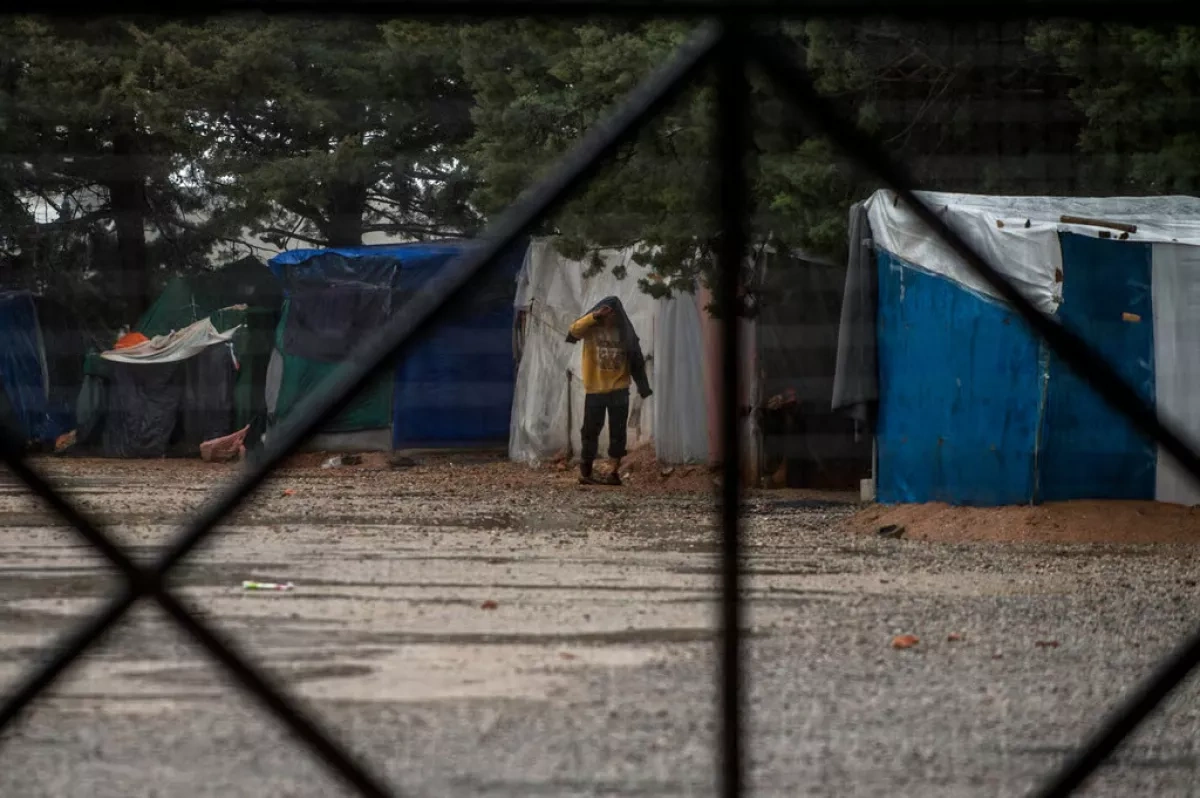
European prosecutors are investigating how Greece used European Union funds to build migrant reception centers during the Covid-19 pandemic, amid allegations that contracts were awarded without public tenders and at costs far exceeding comparable projects, according to POLITICO.
The investigation by the European Public Prosecutor’s Office (EPPO) focuses on the construction of two migrant accommodation facilities between 2020 and 2021 — one in Malakasa, north of Athens, and another in Sintiki in the northern Serres region.
According to two Greek officials familiar with the inquiry, cited anonymously by POLITICO, the contracts were granted directly to private companies without competitive bidding and ultimately cost around €11.3 million — roughly 15 times more expensive than similar EU-funded projects.
The case adds to mounting scrutiny facing Greece’s conservative New Democracy government, which has already faced several investigations linked to the alleged misuse of EU funds.
The EPPO declined to comment directly on the ongoing investigation.
“The EPPO does not comment on ongoing investigations,” a spokesperson said when contacted by POLITICO. “This is in order not to endanger the possible ongoing procedures and their outcome. Whenever we can say something about any of our investigations, we will do so proactively.”
The controversy centres on emergency migrant infrastructure projects launched during a period when Greece argued it was under pressure to quickly expand accommodation capacity.
At the height of Europe’s migration crisis in 2015, Greece’s Aegean islands became one of the main entry points for migrants and refugees arriving from the Middle East. Until 2019, camps were largely built under the supervision of the International Organization for Migration. The Greek government later assumed responsibility for overseeing such projects.
Opposition parties had already raised concerns in parliament in 2020 over the direct award of the contracts. The government defended the decision at the time, citing urgent needs caused by migration pressures and the pandemic.
However, official data from the United Nations High Commissioner for Refugees showed that migrant arrivals to Greece fell sharply in 2020 to around 15,696 people, compared to 74,649 the previous year.
“The project was audited back then both by the European Commission and Greece’s audit office and received a positive report,” a senior official from Greece’s Ministry of Migration and Asylum administration in 2020 told POLITICO.
One of the contracts under investigation concerns the expansion of the Malakasa camp, intended to host 1,500 migrants transferred from the islands. The contract, awarded in April 2020 to an Athens-based company without a public tender, initially covered basic maintenance work worth €4.3 million. According to POLITICO, the project later received at least five extensions and an additional supplementary contract worth €1.7 million.
A second contract, involving the Sintiki camp in northern Greece, was awarded in July 2020 to a technical company based in Kavala. Initially valued at €3.6 million, the project also underwent multiple extensions, adding another €1.7 million to the final cost.
An internal document from an international migration organisation operating in Greece, cited by Kathimerini newspaper, reportedly described the costs as excessive compared to similar EU-funded facilities.
“The EU has financed very similar actions that were completed in the same timeframe [or even shorter] for an amount that was 15 times lower than the one paid by the MoMA [Greek Ministry of Migration and Asylum],” the document stated.
According to the same document, comparable projects cost around €270 per beneficiary, while the Malakasa facility allegedly reached €23,900 per person.
By Sabina Mammadli