BAKU, Azerbaijan, May 20. The scale of
destruction in the territories of Azerbaijan liberated from
occupation can be described by the term “urbicide,” and the total
area of the devastated territories is comparable to the size of
Lebanon, Farid Shafiyev, Chairman of the Center for International
Relations Analysis, said, Trend reports.
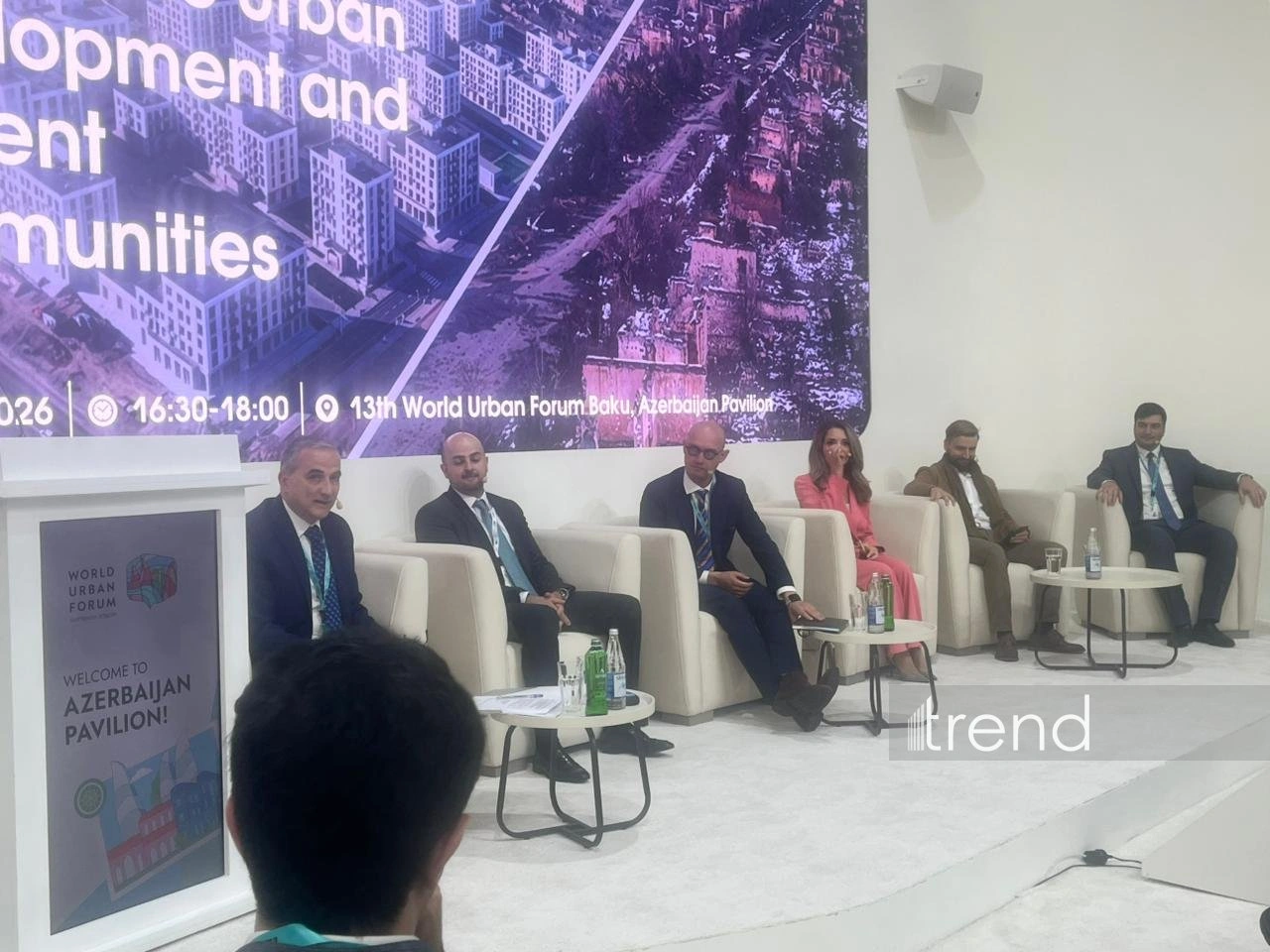
Shafiyev made the remark at the international panel discussion
“Revival and Urbicide: Sustainable Urban Development and Resilient
Communities,” held as part of WUF13.
He noted that the event was attended by representatives of the
government, academia, public figures, and experts, and that the
discussions focused primarily on issues of urban destruction and
reconstruction. “One of the main topics of interest to our center
within the framework of this forum is the problem of urbicide. The
scale of urbicide that Azerbaijan has faced is comparable to the
territory of a country like Lebanon,” he said.
Furthermore, Shafiyev emphasized that images of the liberated
territories, taken in 2021, clearly demonstrated the scale of the
destruction.
“These images were not from Hollywood movies, but from real
life. A few months later, upon visiting these territories, we
encountered completely destroyed cities and villages. Over the past
five years, a completely new landscape has emerged in these
territories.
“Today, these areas feature restored settlements,
infrastructure, and power and gas lines. Azerbaijan has gained
significant experience in this field. The concept of urbicide is
one of the topics that has received the most attention in academic
literature over the past 25 to 30 years,” he added.
Today, the fourth day of the WUF13 conference is taking place in
Baku.
The first day included a ministerial meeting dedicated to the
New Urban Agenda, a ministerial roundtable, assemblies for women
and civil society, business sessions, and discussions on urban
prosperity. An official ceremony marking the raising of the UN and
Azerbaijani flags also took place.
The second day stood out for the inaugural Leaders' Summit,
featuring high-level discussions on the global housing crisis,
urbanization policy, and urban resilience. Concurrently, the
opening of the Mexico City pavilion took place, serving as a
significant platform for expanding cooperation with the Latin
American region and preparing for WUF14.
The third day of WUF13 featured a comprehensive program of
events covering the global housing crisis, the formation of safe
and inclusive cities, climate resilience, artificial intelligence
and urban governance, green urbanization, social equity, and
sustainable transport.
WUF13, which has attracted more than 40,000 registered
participants from 182 countries, will continue until May 22. Held
under the theme “Housing the world: Safe and resilient cities and
communities,” the forum brings together governments, international
organizations, experts, and representatives of civil society to
strengthen global cooperation in the field of sustainable urban
development.