BAKU, Azerbaijan, May 20. Integration of
"green/blue" infrastructures and strengthening of cross-border
cooperation are considered essential for the sustainable
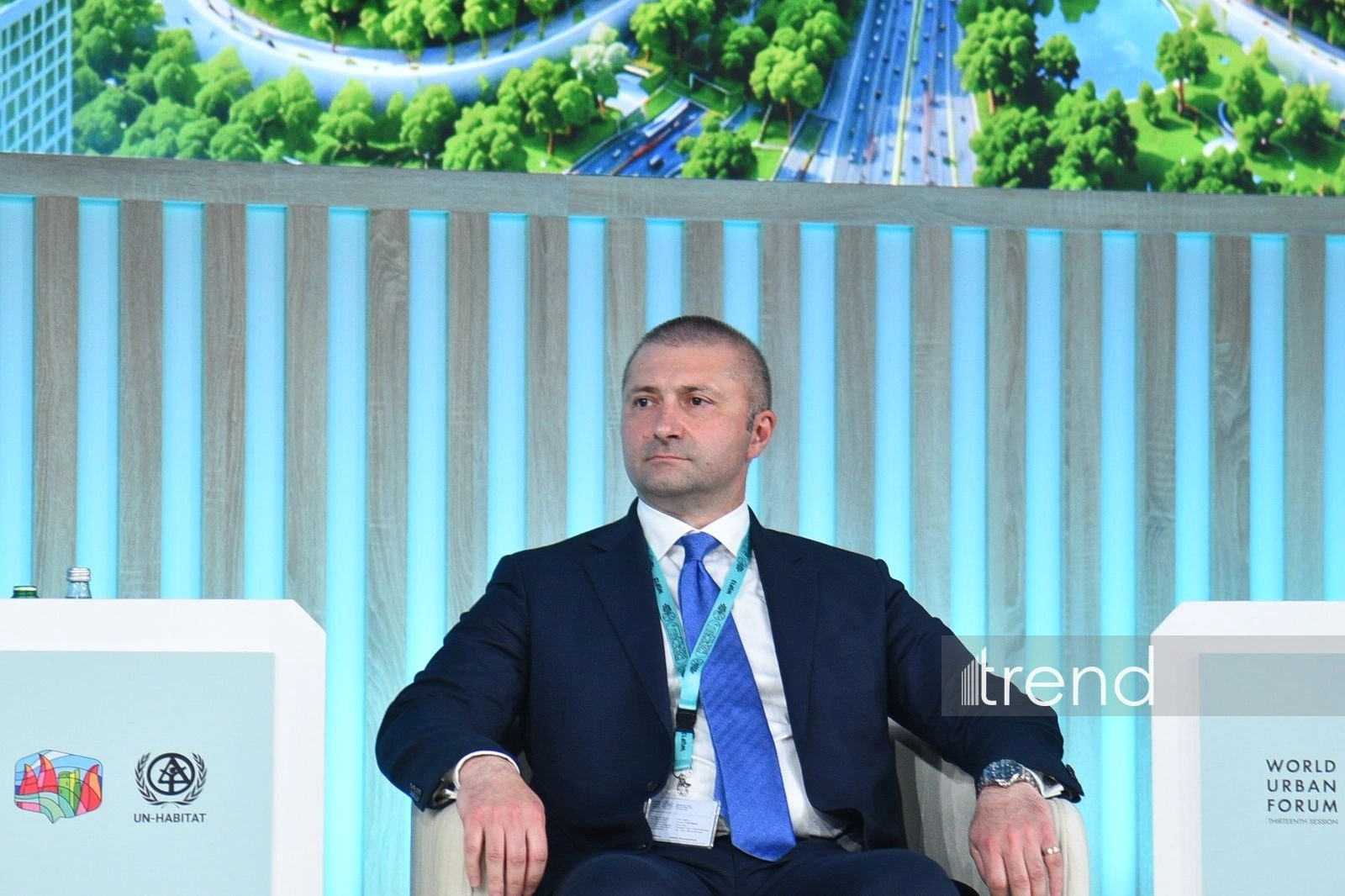
development of coastal cities in the Caspian region, UNEP Regional
Coordinator for Europe, Mahir Aliyev, said at an event "Breathing
Life into the New Urban Agenda: Integrating Air Quality and Green
Infrastructure for Resilient Cities" within the framework of the
13th session of the World Urban Forum (WUF13) in Baku, Trend reports.
He noted that forming human settlements around water bodies -
rivers, lakes, and seas - isn't accidental, and this is the
historical basis of the "green-blue connection" concept.
According to him, there is a natural interaction between cities
located on the coast of the Caspian Sea, which plays an important
role both in terms of ecology and urban planning.
Aliyev pointed out that the development of cities directly
affects the Caspian Sea, and, at the same time, the sea itself
directly affects cities.
"The growth of cities, the expansion of infrastructure, the
growth of industry and housing are affecting the Caspian Sea. At
the same time, the sea regulates the climate, performs a cooling
function, and provides natural ecosystem services," he
explained.
He emphasized that environmental problems in the Caspian region
are not only local in nature, and impacts from other regions also
complicate the situation. Therefore, solving the issue requires
political will, a legal framework, and international
cooperation.
"The Tehran Convention is an important legal mechanism that
unites the political commitments of the five littoral states to
protect the environment of the Caspian Sea. This framework allows
for the transformation of science-based approaches into policy, and
policy into concrete action plans," he said.
The UNEP official added that integrated coastal zone management
is one of the main directions of sustainable development in the
Caspian region. According to him, this approach strengthens both
the ecological and socio-economic sustainability of cities.
He highlighted that as a result of climate change, serious
problems such as sea level rise, dust storms, desertification and
impacts on biodiversity arise in the Caspian region, and adaptation
measures must be taken against these risks.
"We must strengthen the sustainability of both natural and urban
infrastructures based on scientific knowledge. The goal is to
ensure human health, well-being and sustainable life for future
generations," Aliyev stressed.
Today marks the fourth day of WUF13 in Baku.
The first day included a ministerial meeting dedicated to the
New Urban Agenda, a ministerial roundtable, assemblies for women
and civil society, business sessions, and discussions on urban
prosperity. An official ceremony marking the raising of the UN and
Azerbaijani flags also took place.
The second day stood out for the inaugural Leaders' Summit,
featuring high-level discussions on the global housing crisis,
urbanization policy, and urban resilience. Concurrently, the
opening of the Mexico City pavilion took place, serving as a
significant platform for expanding cooperation with the Latin
American region and preparing for WUF14.
The third day of WUF13 featured a comprehensive program of
events covering the global housing crisis, the formation of safe
and inclusive cities, climate resilience, artificial intelligence
and urban governance, green urbanization, social equity, and
sustainable transport.
WUF13, which has attracted more than 40,000 registered
participants from 182 countries, will continue until May 22. Held
under the theme “Housing the world: Safe and resilient cities and
communities,” the forum brings together governments, international
organizations, experts, and representatives of civil society to
strengthen global cooperation in the field of sustainable urban
development.