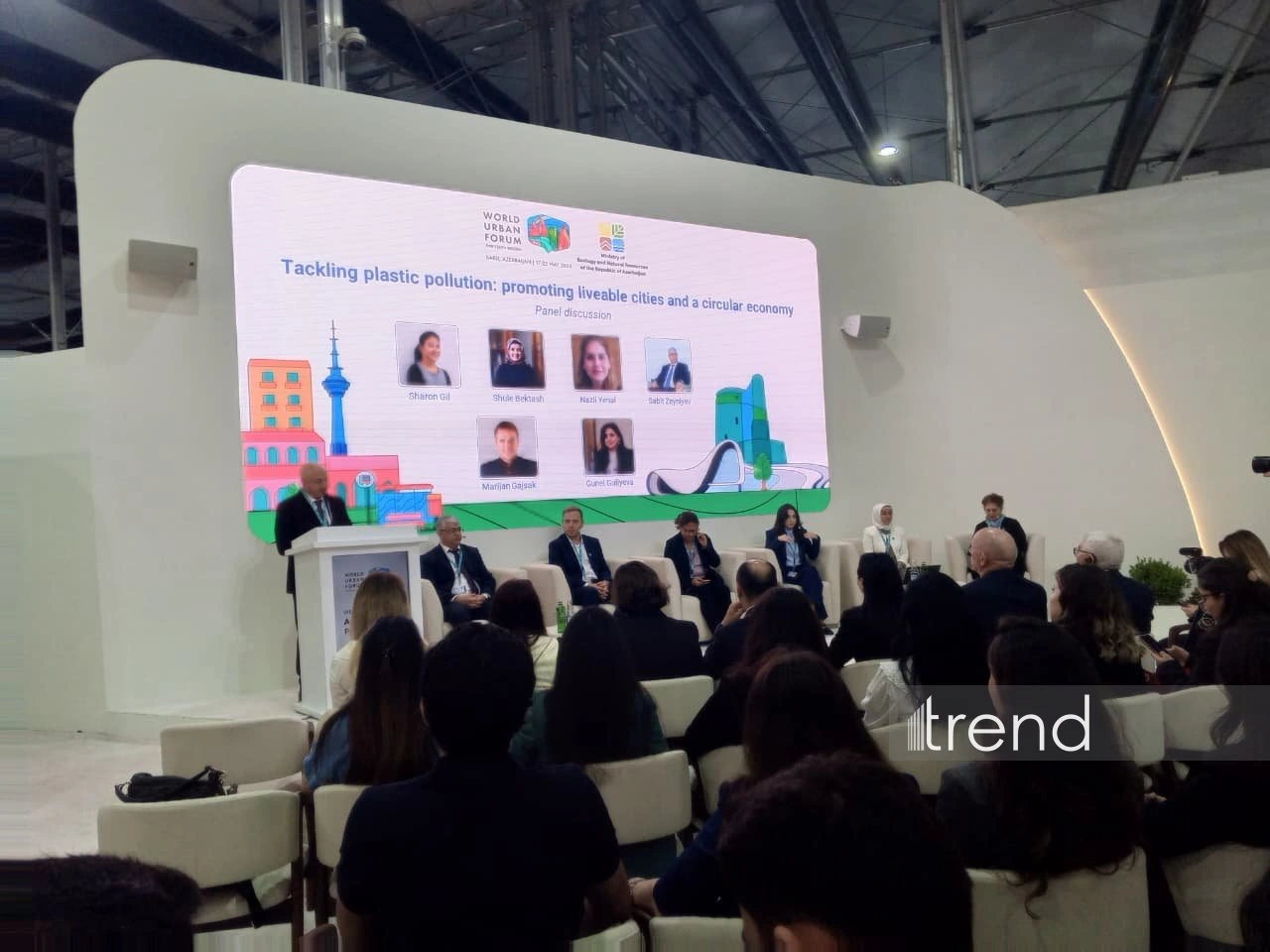
BAKU, Azerbaijan, May 20. Work is continuing in
Azerbaijan to improve the household waste management system for the
period from 2027 through 2030, Vugar Karimov, the Deputy Minister
of Ecology and Natural Resources of the Republic of Azerbaijan,
said, Trend
reports.
He made the announcement at the session “Tackling plastic
pollution: promoting liveable cities and a circular economy” held
as part of WUF13 in Baku.
According to him, a specialized waste management agency has also
been established in the country, and issues of environmental
sustainability and reducing plastic pollution remain among the top
priorities.
Karimov noted that over 430 million tons of plastic are produced
worldwide each year, yet only about 10 percent is recycled.
Furthermore, he emphasized that the growing volume of plastic
waste causes serious damage to the environment and contributes to
climate change. The deputy minister added that over the past 15
years, the use of plastic packaging in Azerbaijan has increased
fivefold.
According to him, environmental education and raising awareness
of these issues in schools and universities are also of particular
importance.
“To address global challenges, we must make strategic,
future-oriented decisions today. WUF13 is an important platform for
discussing such issues,” Vugar Karimov added.
Today, the fourth day of the WUF13 conference is taking place in
Baku.
The first day included a ministerial meeting dedicated to the
New Urban Agenda, a ministerial roundtable, assemblies for women
and civil society, business sessions, and discussions on urban
prosperity. An official ceremony marking the raising of the UN and
Azerbaijani flags also took place.
The second day stood out for the inaugural Leaders' Summit,
featuring high-level discussions on the global housing crisis,
urbanization policy, and urban resilience. Concurrently, the
opening of the Mexico City pavilion took place, serving as a
significant platform for expanding cooperation with the Latin
American region and preparing for WUF14.
The third day of WUF13 featured a comprehensive program of
events covering the global housing crisis, the formation of safe
and inclusive cities, climate resilience, artificial intelligence
and urban governance, green urbanization, social equity, and
sustainable transport.
WUF13, which has attracted more than 40,000 registered
participants from 182 countries, will continue until May 22. Held
under the theme “Housing the world: Safe and resilient cities and
communities,” the forum brings together governments, international
organizations, experts, and representatives of civil society to
strengthen global cooperation in the field of sustainable urban
development.