BAKU, Azerbaijan, May 19. By 2032,
Azerbaijan''s total renewable energy capacity is expected to reach
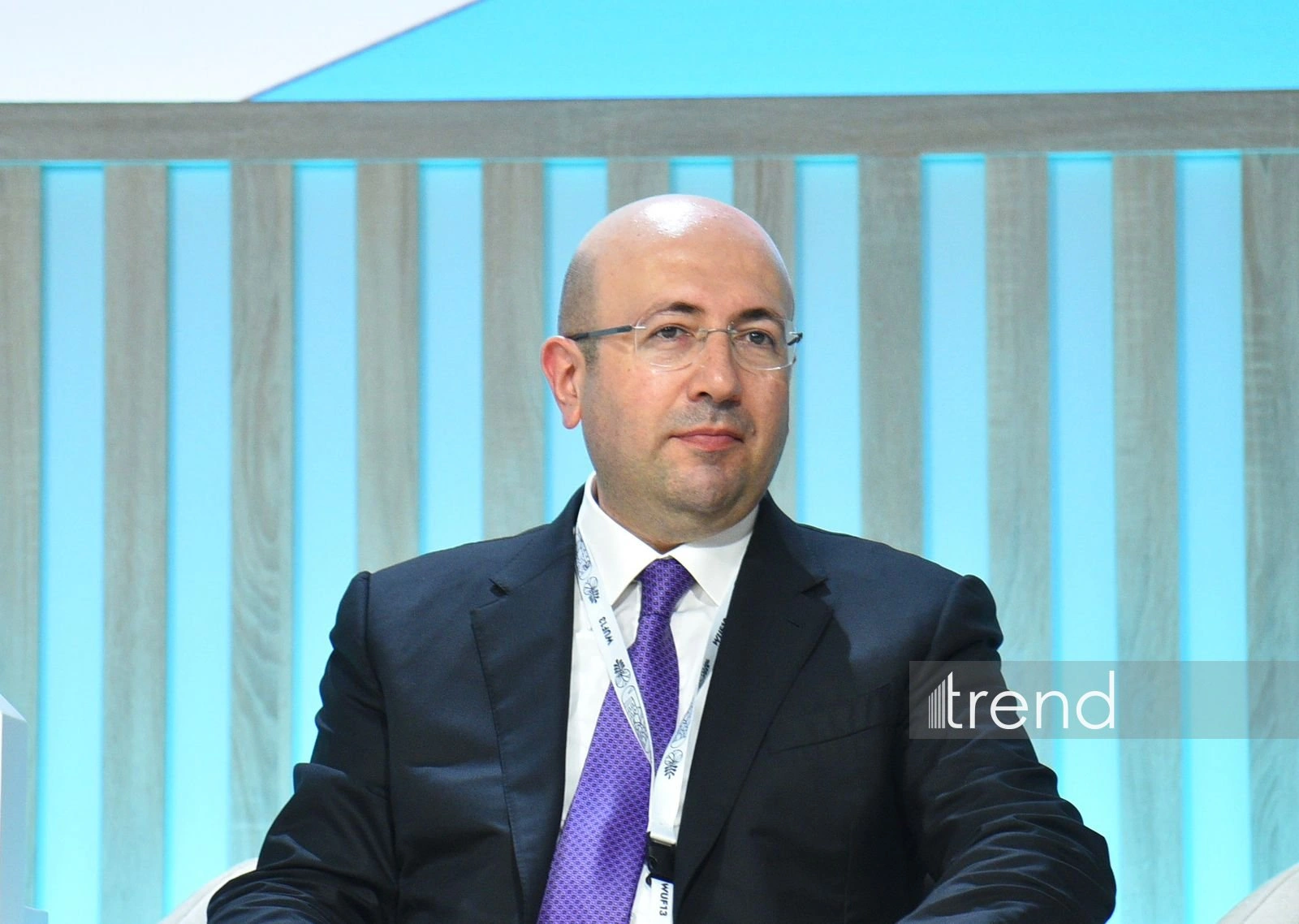
8 gigawatts, Anar Guliyev, National Coordinator of the 13th session
of the World Urban Forum (WUF13) and Chairman of the State
Committee for Urban Planning and Architecture, said Trend reports.
The chairman made the remarks during the "High-Level Energy and
Urban Dialogue of D-8 Countries" panel session held within the
framework of the forum in Baku.
He added that Azerbaijan aims to advance discussions on safe,
resilient, and sustainable cities while exploring practical
solutions for inclusive urban development at WUF13. Guliyev noted
that cities serve as the primary engines of mobility, trade, and
innovation.
"At the same time, they account for approximately 70% of global
emissions and more than two-thirds of global energy consumption.
This places cities at the center of the fight against climate
change, making the planning, designing, and building of urban
environments more critical than ever," he said.
The WUF13 national coordinator emphasized that increasing energy
efficiency and strengthening climate resilience form an integral
part of Azerbaijan's urban planning policy.
"Green construction and energy-efficient buildings have become
one of the main pillars of our urban development strategy. This
reflects our position that a sustainable urban future depends on
reducing the long-term environmental impact of construction and
infrastructure. The transition to green construction represents not
only an environmental necessity but also an economic opportunity.
Investments in energy-efficient buildings and sustainable
infrastructure reduce operating costs, improve the quality of life,
attract investment, stimulate innovation, and create new jobs,
thereby contributing to long-term economic sustainability," Guliyev
noted
Guliyev added that this approach remains closely aligned with
the country's clean energy transition strategy.
"Projects such as the Shafag Solar Power Plant and the
Khizi-Absheron Wind Power Plant will increase the share of
renewable energy in Azerbaijan's energy mix from 7% to
approximately 38%. By 2032, the country's total renewable energy
capacity is expected to reach 8 gigawatts," he stated.
He also highlighted the significance of the large-scale
restoration and development processes underway in the liberated
territories of Azerbaijan.
"Following the liberation of Karabakh and surrounding areas,
Azerbaijan launched an ambitious reconstruction process in regions
that suffered severe destruction over many years. Cities and
villages, social infrastructure, transport networks, energy
systems, and public services are undergoing complete rebuilding.
Our goal involves not just restoring lost infrastructure, but
establishing a new development model for the post-conflict period
based on the 'build back better' principle, national climate
commitments, and sustainable development goals," Guliyev
explained.
The third day of the 13th session of the World Urban Forum
(WUF13) is underway in Baku.
On the first day, a ministerial meeting dedicated to the New
Urban Agenda, a roundtable of ministers, assemblies of women and
civil society, business sessions, and discussions on urban
well-being were held. A ceremony for raising the flags of the
United Nations and Azerbaijan also took place within the framework
of the forum.
The second day of the forum drew attention with the first-ever
Leaders Summit. High-level discussions on the global housing
crisis, urbanization policy, and urban resilience were held that
day. At the same time, the Mexico City pavilion was inaugurated
within the framework of WUF13. The pavilion was presented as an
important platform for expanding cooperation with the Latin
American region and preparing for WUF14.
WUF13, which has attracted more than 40,000 registered
participants from 182 countries, will continue until May 22. Held
under the theme “Housing the world: Safe and resilient cities and
communities,” the forum brings together governments, international
organizations, experts, and representatives of civil society to
strengthen global cooperation in the field of sustainable urban
development.