BAKU, Azerbaijan, May 19. Reconstruction
efforts in Azerbaijan’s Karabakh and East Zangezur economic regions
are being carried out based on a unified territorial development
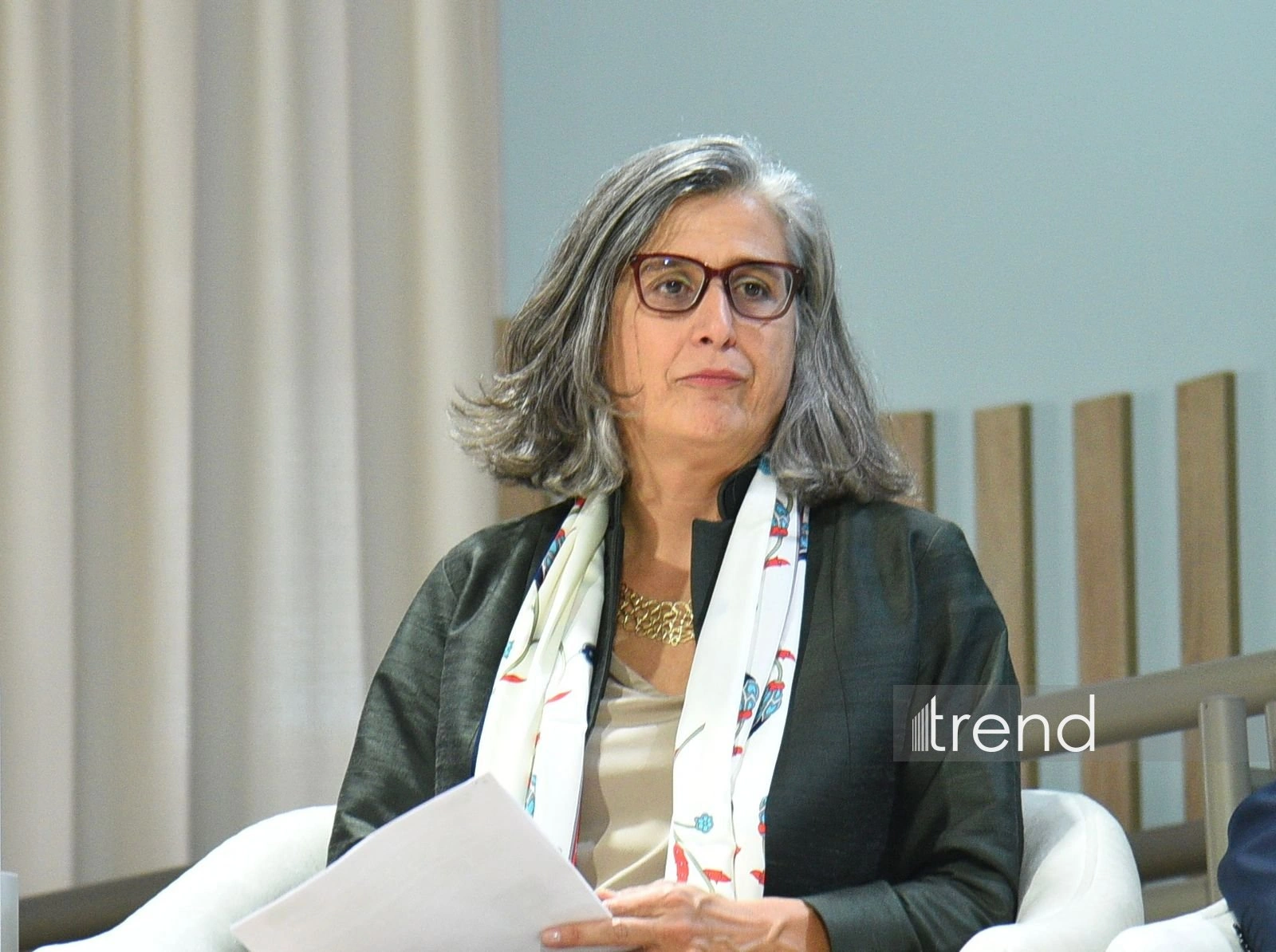
vision, Anacláudia Rossbach, executive director of the United
Nations Human Settlements Programme (UN-Habitat), said during an
event held as part of the World Urban Forum (WUF13) in Baku,
Trend reports.
Speaking at a panel titled “Cities at the Center of
Connectivity: Urban Reconstruction and Regional Cooperation,”
Rossbach said urban planning should be carried out alongside the
development of entire territories rather than focusing solely on
individual cities.
She noted that when connections between urban and rural areas
are considered at the earliest stages of planning, rural
communities gain access to markets and services, while cities
benefit from food systems, water resources and labor supplied by
surrounding regions.
According to Rossbach, transport corridors should serve not only
as transit routes but also as pillars for broader territorial
development.
“When planning cities, we must plan entire territories,” she
said. “When investing in transport corridors, investment should
also be directed toward the communities located along those routes
— their housing, markets, services, land and livelihoods.”
Rossbach emphasized that this approach is particularly important
in post-conflict settings.
“Azerbaijan’s reconstruction and redevelopment efforts in the
Karabakh and East Zangezur economic regions are facing these
challenges on a large scale,” she said.
Recalling her visit to the region during the National Urban
Forum held last October, Rossbach said one of the most impressive
aspects was the integration of housing, public services, digital
connectivity and green energy networks within a single territorial
framework.
“The goal here is not simply to rebuild cities and towns
separately, but to restore a functional human geography,” she
added.
Rossbach also stressed that communities located along regional
transport, energy and digital corridors should be viewed not merely
as transit zones, but as assets worthy of long-term investment.
WUF13 is being held in Baku from May 17 to 22 under cooperation
between UN-Habitat and the Azerbaijani government.
Held under the theme “Housing for All: Safe and Sustainable
Cities and Human Settlements,” the forum brings together
governments, experts, communities and international partners to
discuss housing and sustainable urban development challenges.
In the mean time, the third day of the 13th session of the World
Urban Forum (WUF13) is underway in Baku.
On the first day, a ministerial meeting dedicated to the New
Urban Agenda, a roundtable of ministers, assemblies of women and
civil society, business sessions, and discussions on urban
well-being were held. A ceremony for raising the flags of the
United Nations and Azerbaijan also took place within the framework
of the forum.
The second day of the forum drew attention with the first-ever
Leaders Summit. High-level discussions on the global housing
crisis, urbanization policy, and urban resilience were held that
day. At the same time, the Mexico City pavilion was inaugurated
within the framework of WUF13. The pavilion was presented as an
important platform for expanding cooperation with the Latin
American region and preparing for WUF14.
WUF13, which has attracted more than 40,000 registered
participants from 182 countries, will continue until May 22. Held
under the theme “Housing the world: Safe and resilient cities and
communities,” the forum brings together governments, international
organizations, experts, and representatives of civil society to
strengthen global cooperation in the field of sustainable urban
development.