BAKU, Azerbaijan, May 19. The future of cities
is built on the principle of creating greater value while consuming
less energy, which is primarily achieved through green technologies
and energy efficiency; and the process of reconstructing
territories liberated from occupation is a prime example of this
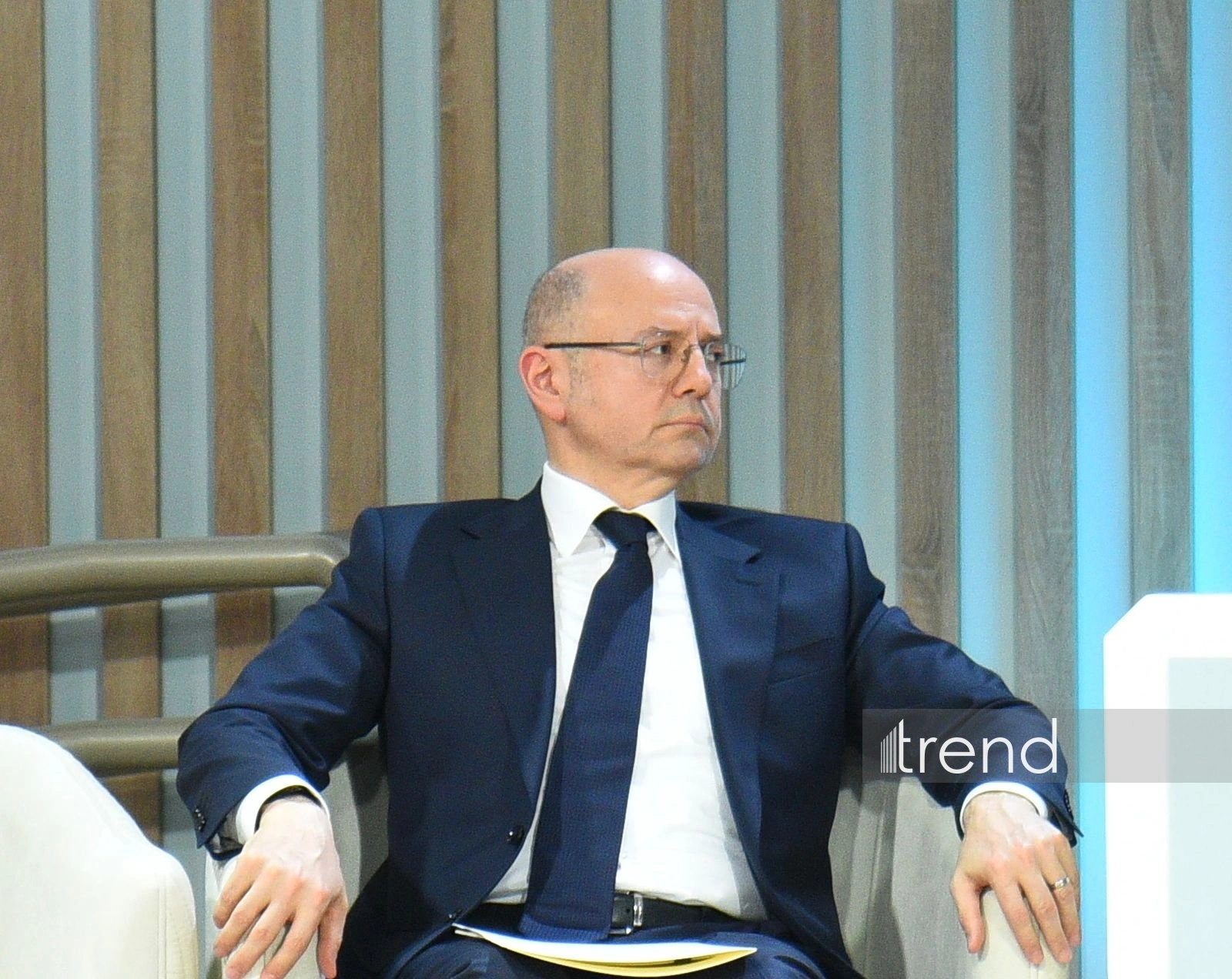
approach, Azerbaijan’s Minister of Energy Parviz Shahbazov said,
Trend reports.
He made the statement at an event titled “Cities at the Heart of
Connectivity: Urban Reconstruction and Regional Cooperation” held
as part of WUF13 in Baku.
The minister noted that a unified concept of “smart cities,”
“smart villages,” “green energy zones,” and digital management
systems is being implemented in these territories:
“President Ilham Aliyev’s declaration of Karabakh and Eastern
Zangezur as ‘green energy zones’ to achieve ‘net-zero emissions’ by
2050 is part of this strategic concept. Currently, there are 38
hydroelectric power plants with a total capacity of 307 MW
operating in these territories; construction of solar power plants
with a capacity of 340 MW is underway; solar panels with a total
capacity of 7 MW have been installed on rooftops; and feasibility
studies are being conducted for a 240 MW wind power plant.”
Shahbazov added that by 2030, the plan is to commission 1,650 MW
of renewable energy capacity, which will reduce greenhouse gas
emissions by approximately 2 million tons annually.
Parviz Shahbazov noted that this model is now being extended to
the Nakhchivan region, and Azerbaijan is becoming a strategic hub
for energy and environmentally friendly power connections between
Europe, Central Asia, and the Middle East.
The minister added that this approach is further strengthened by
the development of the Middle Corridor and the Zangezur Corridor
and is shaping a new architecture of interregional energy and
digital connectivity.
“Successful cities are no longer defined by their size, but by
their sustainability, innovation, integration, and connectivity,”
the minister added.
Meanwhile, the third day of the 13th session of the World Urban
Forum (WUF13) is underway in Baku.
On the first day, a ministerial meeting dedicated to the New
Urban Agenda, a roundtable of ministers, assemblies of women and
civil society, business sessions, and discussions on urban
well-being were held. A ceremony for raising the flags of the
United Nations and Azerbaijan also took place within the framework
of the forum.
The second day of the forum drew attention with the first-ever
Leaders Summit. High-level discussions on the global housing
crisis, urbanization policy, and urban resilience were held that
day. At the same time, the Mexico City pavilion was inaugurated
within the framework of WUF13. The pavilion was presented as an
important platform for expanding cooperation with the Latin
American region and preparing for WUF14.
WUF13, which has attracted more than 40,000 registered
participants from 182 countries, will continue until May 22. Held
under the theme “Housing the world: Safe and resilient cities and
communities,” the forum brings together governments, international
organizations, experts, and representatives of civil society to
strengthen global cooperation in the field of sustainable urban
development.