BAKU, Azerbaijan, May 19. An accessible
environment is fundamental to the realization of the rights of
people with disabilities to education, employment, healthcare, and
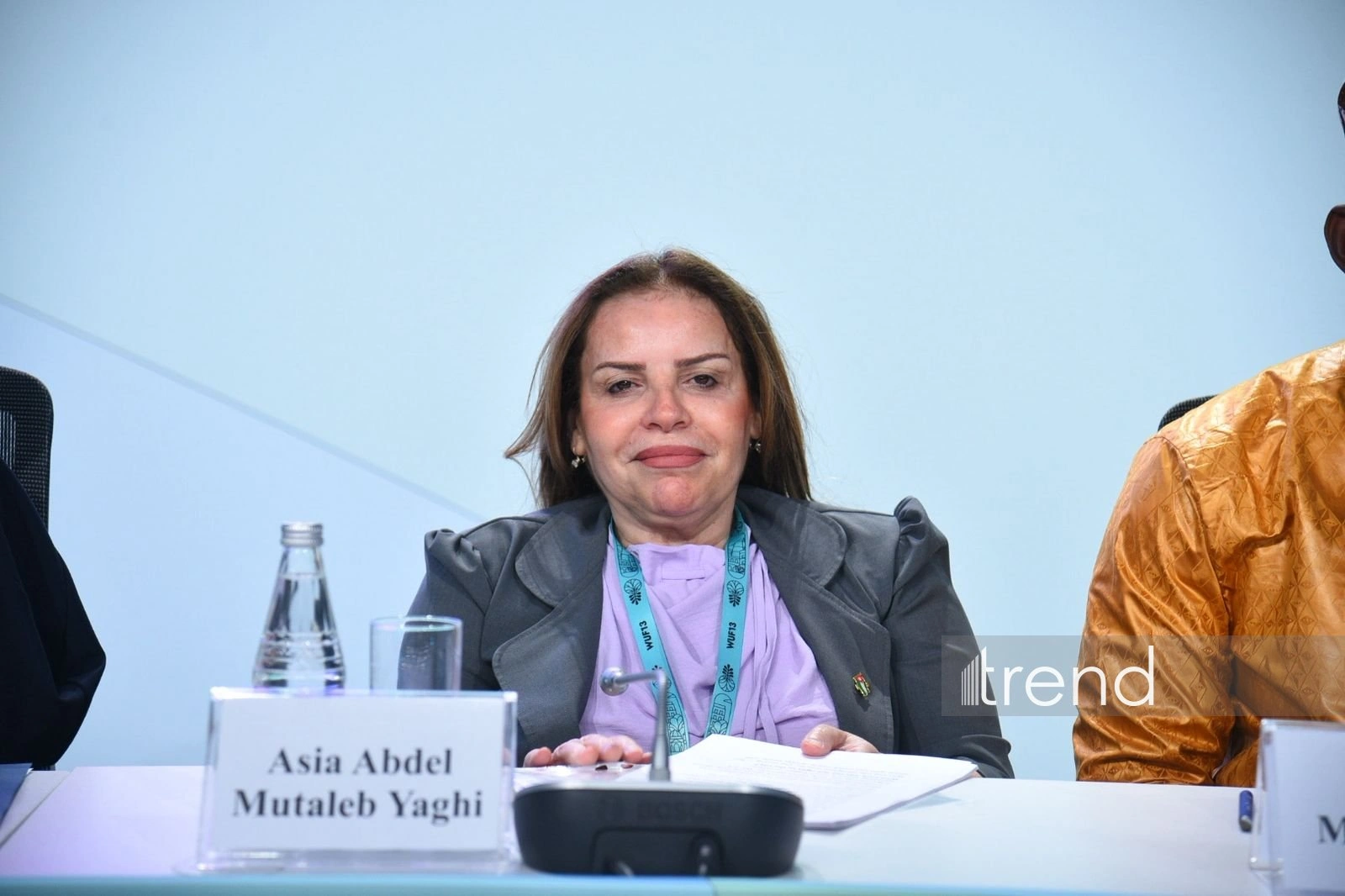
participation in public life, President of the Jordanian "I am
Human" Society for Rights of Persons with Disabilities, Asia Abdel
Mutaleb Yaghi, at the event "Inclusive Cities and Independent
Living for People with Disabilities," held as part of the World
Urban Forum (WUF13) in Baku, Trend reports.
According to her, accessibility for people with disabilities is
not merely a matter of technical standards or legal requirements,
but a fundamental condition for the realization of human
rights.
"Without an accessible environment, it is impossible to talk
about the right to education, work, health, or the right to
participate in cultural and social life," she said.
Yaghi emphasized that when designing cities, constructing roads,
public buildings, and transport systems, the needs of all people,
including those with various physical, sensory, and cognitive
disabilities, must be taken into account.
According to her, this is the basis of the concept of universal
design, which entails creating products and environments usable by
all people without the need for additional adaptations or
specialized solutions.
She noted that the photo exhibition "Accessibility Myths:
Invisible Barriers of Modern Urban Development," presented as part
of the event, allows visitors to see the city through the eyes of a
person with a disability and highlight hidden barriers that often
go unnoticed in everyday life.
The third day of the 13th session of the World Urban Forum
(WUF13) is underway in Baku.
On the first day, a ministerial meeting dedicated to the New
Urban Agenda, a roundtable of ministers, assemblies of women and
civil society, business sessions, and discussions on urban
well-being were held. A ceremony for raising the flags of the
United Nations and Azerbaijan also took place within the framework
of the forum.
The second day of the forum drew attention with the first-ever
Leaders Summit. High-level discussions on the global housing
crisis, urbanization policy, and urban resilience were held that
day. At the same time, the Mexico City pavilion was inaugurated
within the framework of WUF13. The pavilion was presented as an
important platform for expanding cooperation with the Latin
American region and preparing for WUF14.
WUF13, which has attracted more than 40,000 registered
participants from 182 countries, will continue until May 22. Held
under the theme “Housing the world: Safe and resilient cities and
communities,” the forum brings together governments, international
organizations, experts, and representatives of civil society to
strengthen global cooperation in the field of sustainable urban
development.