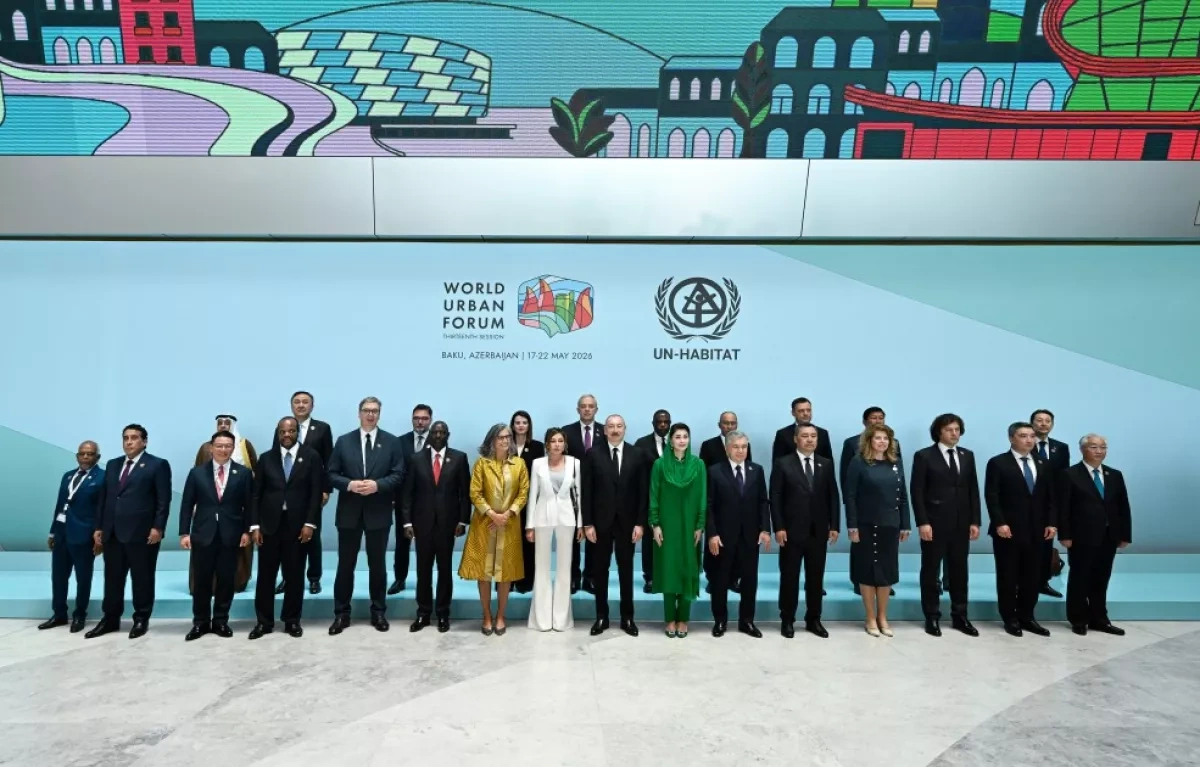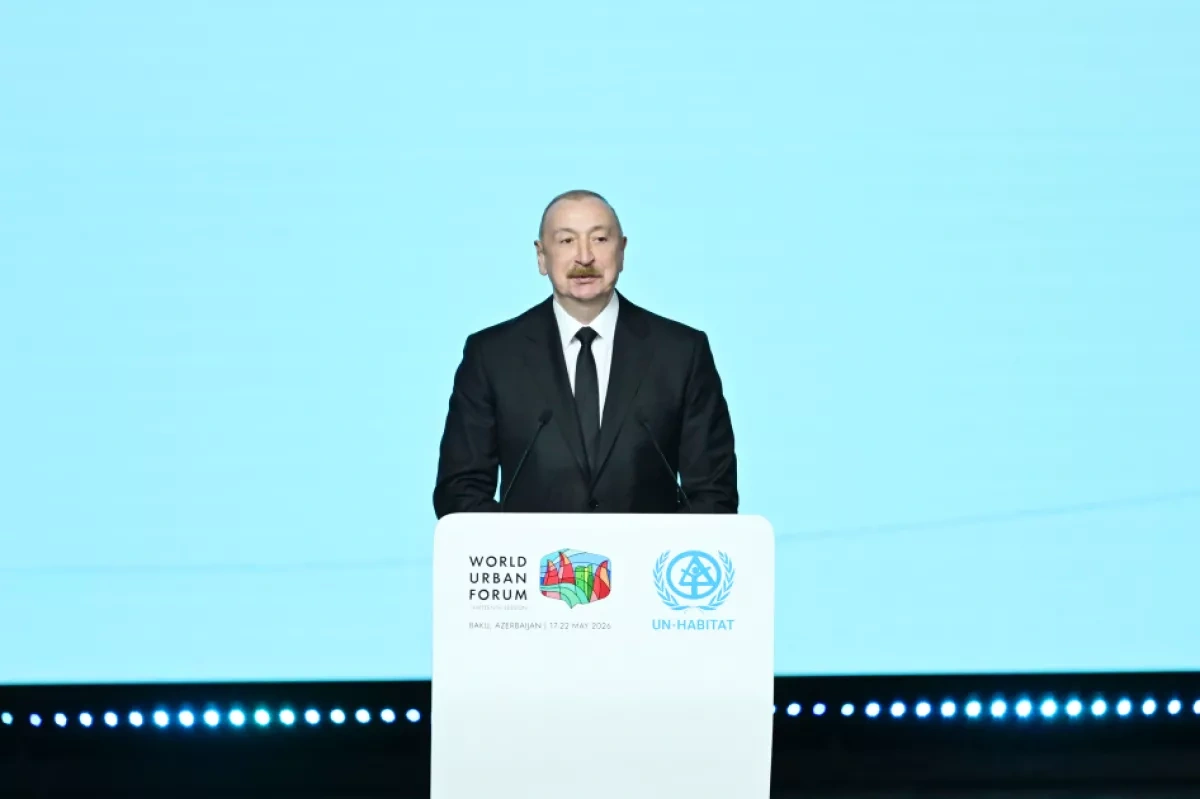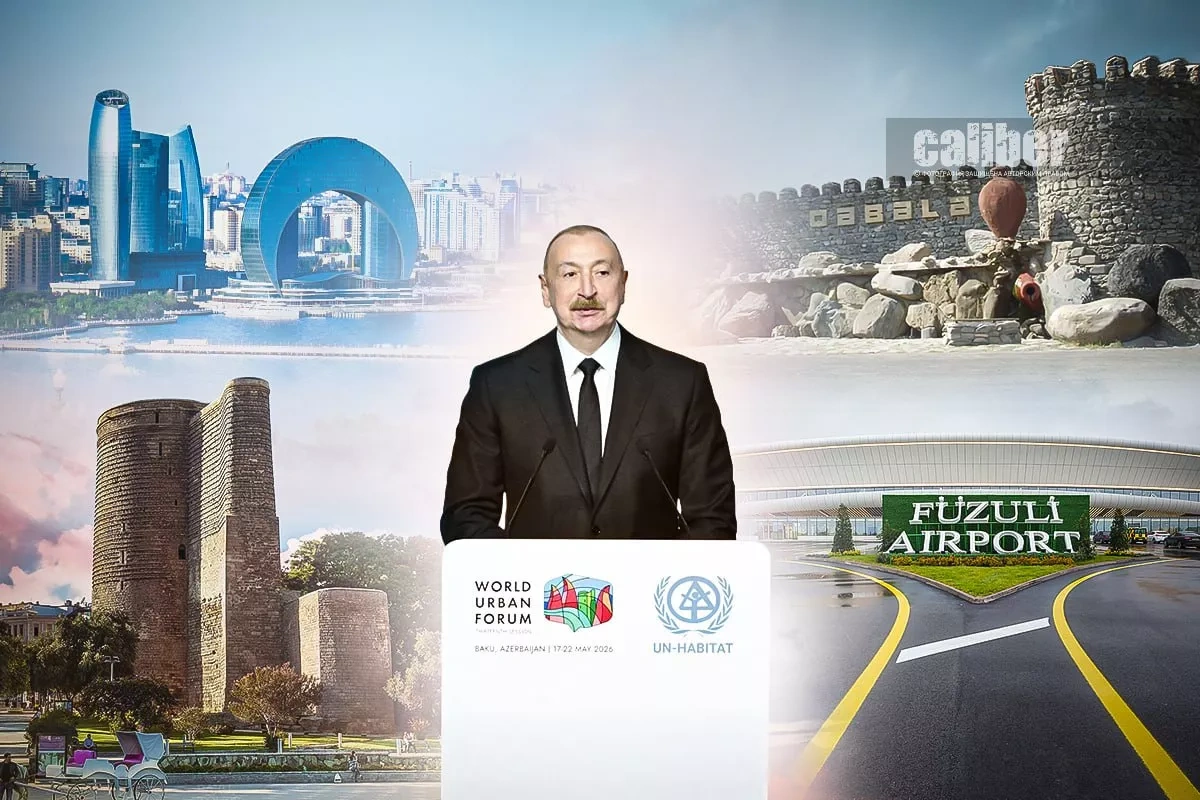
“Everyone can go and see, get inside, and touch.” In this seemingly ordinary phrase from President Ilham Aliyev’s speech at the opening ceremony of the 13th session of the World Urban Forum (WUF13), there was more political meaning than in any formal declaration on heritage. At that moment, the President of Azerbaijan was speaking about Azerbaijani architectural monuments—from the 743 AD mosque in Shamakhi to the Maiden Tower of the 12th century.
The point of contact, the materiality of stone, the physical accessibility of a monument—these were the ideas being emphasised. A nation’s right to consider a land its own is confirmed not only by maps, but also by the fact that ancestral monuments still stand there and can be seen by everyone.
Aliyev structured his speech like an unfolding map with precisely placed coordinates. Shamakhi, once the capital of the Shirvanshahs’ state, the birthplace of the 14th-century poet Nasimi, and home to one of the oldest mosques in the world, built in 743. Nakhchivan, once the capital of the Atabegs’ state, the birthplace of the architect Ajami Nakhchivani and his 12th-century Momine Khatun Mausoleum. Ganja, associated with the poet and philosopher Nizami Ganjavi. Gabala, the former capital of Caucasian Albania. The church in the village of Kish near Shaki, which, according to the head of state, “is probably one of the oldest in the world.” Shusha, which remained under occupation for nearly 30 years, is now being rebuilt almost from scratch.
In this enumeration, there were no accidental words: each toponym is tied to a century, each century to a specific building, each building to a name recognisable in the global cultural atlas. It is an inventory of civilisational presence, laid out before an audience that includes UN-Habitat officials, presidents, and ministers—over 45,000 registered participants from 182 countries at the event.
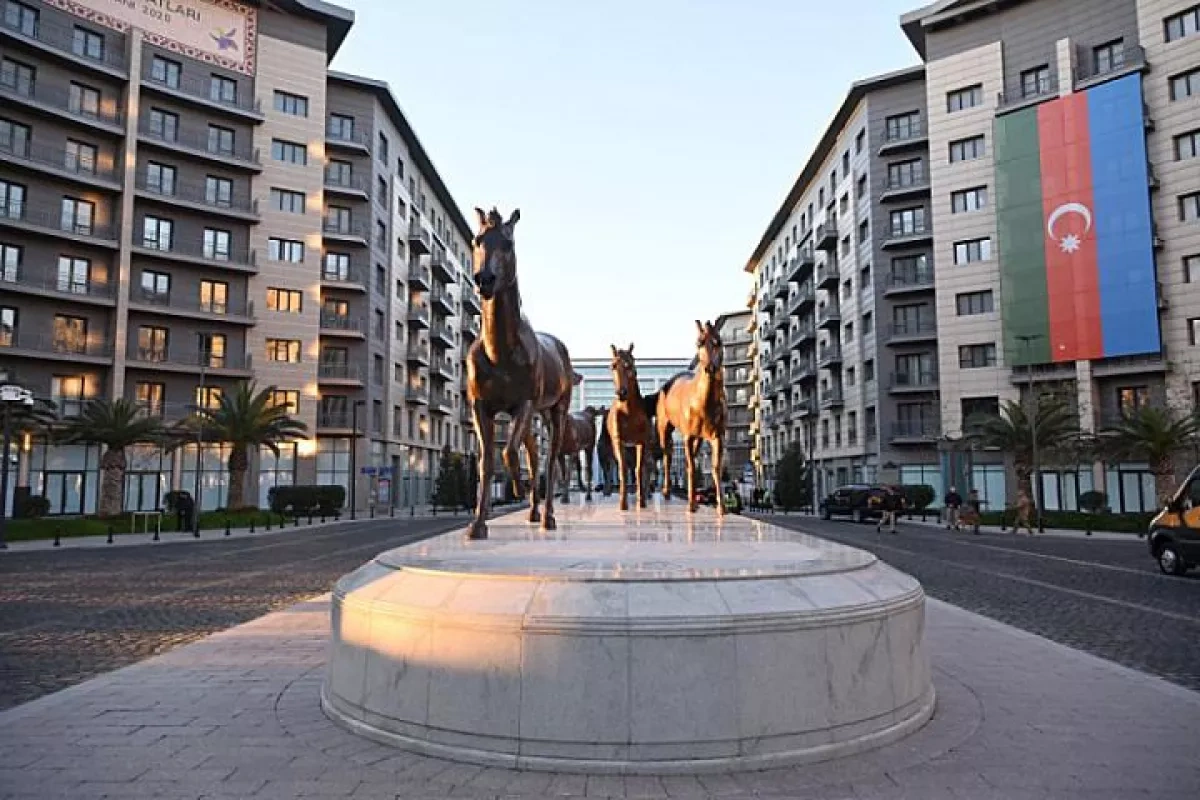
The Baku section of Aliyev’s speech was built around a metaphor of stitching together epochs. “If you walk past the ancient walls of the Old City of Baku and simply cross the street, you will find yourself in the completely modern environment of the Baku Boulevard, which used to be 3 kilometres long and now extends to more than 15 kilometres of a seaside promenade.” One step across the road—and thousands of years of history are woven into the fabric of everyday urban life.
The President of Azerbaijan described this as a “natural harmony in Baku, between old and new.” This formulation is not merely complimentary; it speaks to how the state relates to its own chronology: nothing is demolished in the name of the new, and nothing is frozen at the expense of the living city.
Azerbaijan, in essence, uses this example to articulate a norm of engagement with heritage that many capitals are still only approaching.
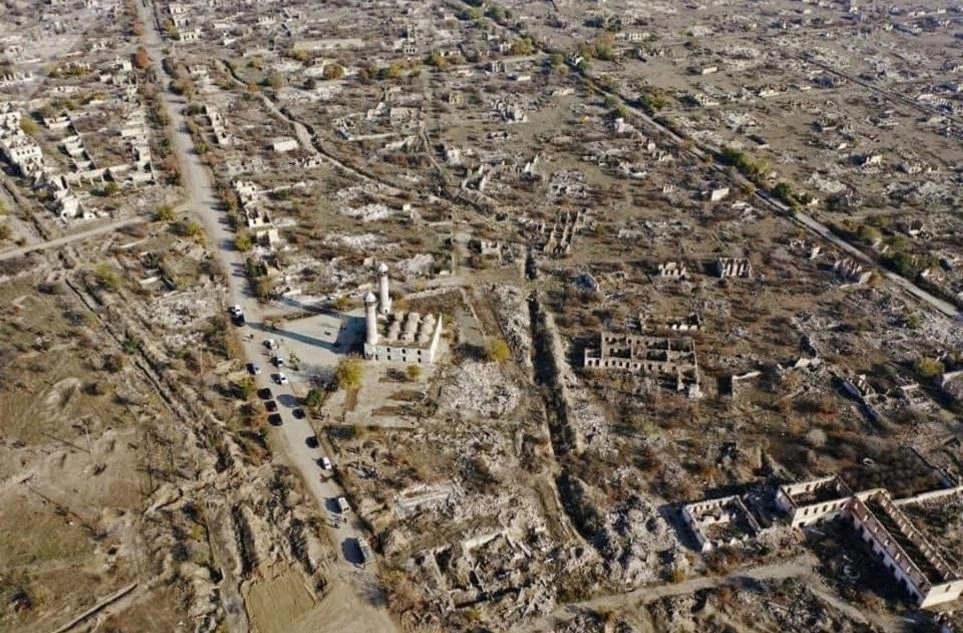
Aghdam under occupation
Aghdam today
And it is precisely within this logic that Aghdam appears in the middle of Baku’s narrative. The comparison to Hiroshima is explicit: “International observers and visitors compared, for instance, Aghdam with Hiroshima. They called it the Hiroshima of the Caucasus because this city just did not exist. It was totally leveled to the ground.”
What follows is a clarification that is more important than the comparison itself: “and unlike Hiroshima, it was done not in one day as a result of an atomic bomb, but it was done during 30 years of occupation, when the buildings—historical buildings, public buildings, and houses—were just dismantled and completely destroyed.”
Hiroshima was a single flash. Aghdam was three decades of systematic dismantling. And there is another turn that Aliyev does not state explicitly but which is readable in his words: Hiroshima was rebuilt after 1945 by the Japanese—on their own land, with their own hands. Aghdam is now being rebuilt by Azerbaijanis—on their own land, with their own hands. The symmetry shifts from metaphorical to political.
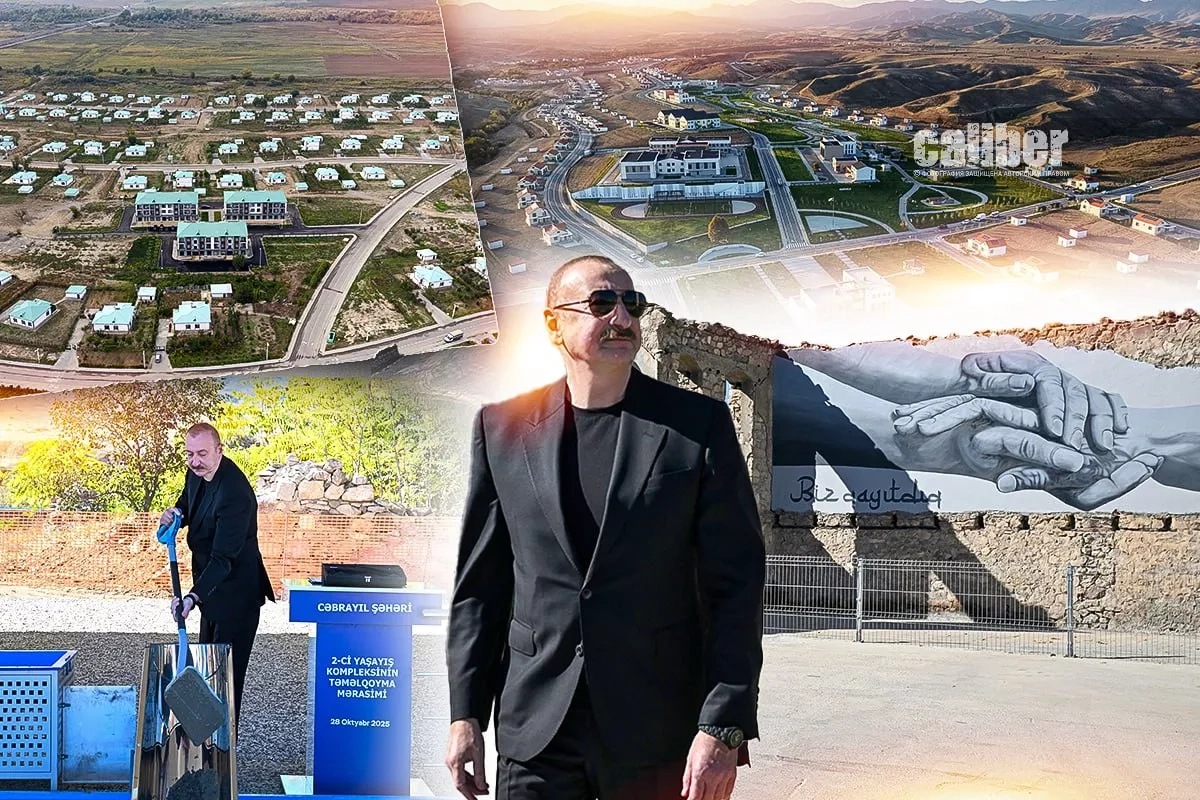
The figures in the speech were self-explanatory. “435 bridges have been built out of 500,” and, as the President noted, all of this was done “along with power stations, along with water supply, water storage facilities, houses, schools, hospitals, three international airports, railroads, and this was done only in five years.” 85,000 Azerbaijanis are already living in the formerly occupied territories.
In academic literature on post-conflict reconstruction, there is a common assumption that such a scale takes decades to materialise: Bosnia has still not fully been rebuilt, and Lebanon continues to live with the ruins of a civil war that ended 40 years ago. The Azerbaijani case does not fit into this framework. Aliyev states this without triumphalism, but also without caveats: five years—and territories that lay in ruins for nearly thirty years are being rebuilt from the ground up.
Above the numbers lies a legal and moral formula: people are returning because they were “deprived of their fundamental right, the right to live on their own land.”
The second half of the speech once again returns us to Baku. If in the first part every name carried history, here every district carries transformation. “Baku was the first city in the world where oil was produced back in 1846,” the President recalled. “And throughout these 180 years, almost all these years, there was zero respect for environmental protection.”
He then moved to toponyms that may mean little to a foreign ear, but speak volumes to Azerbaijanis: “Black City,” Bibiheybat, Boyukshor. The “Black City,” indeed blackened by soot, has been turned into the “White City.” Boyukshor and Bibiheybat are no longer open-air oil dumps: 100 parks and squares have been created, 19 have been renovated, alongside electric buses, metro expansion, and micro-mobility solutions.
Here Aliyev shifts into a language that is immediately legible to any UN-Habitat delegate—the language of sustainable development indicators. The message is that Baku has already travelled a
COP29
WUF13
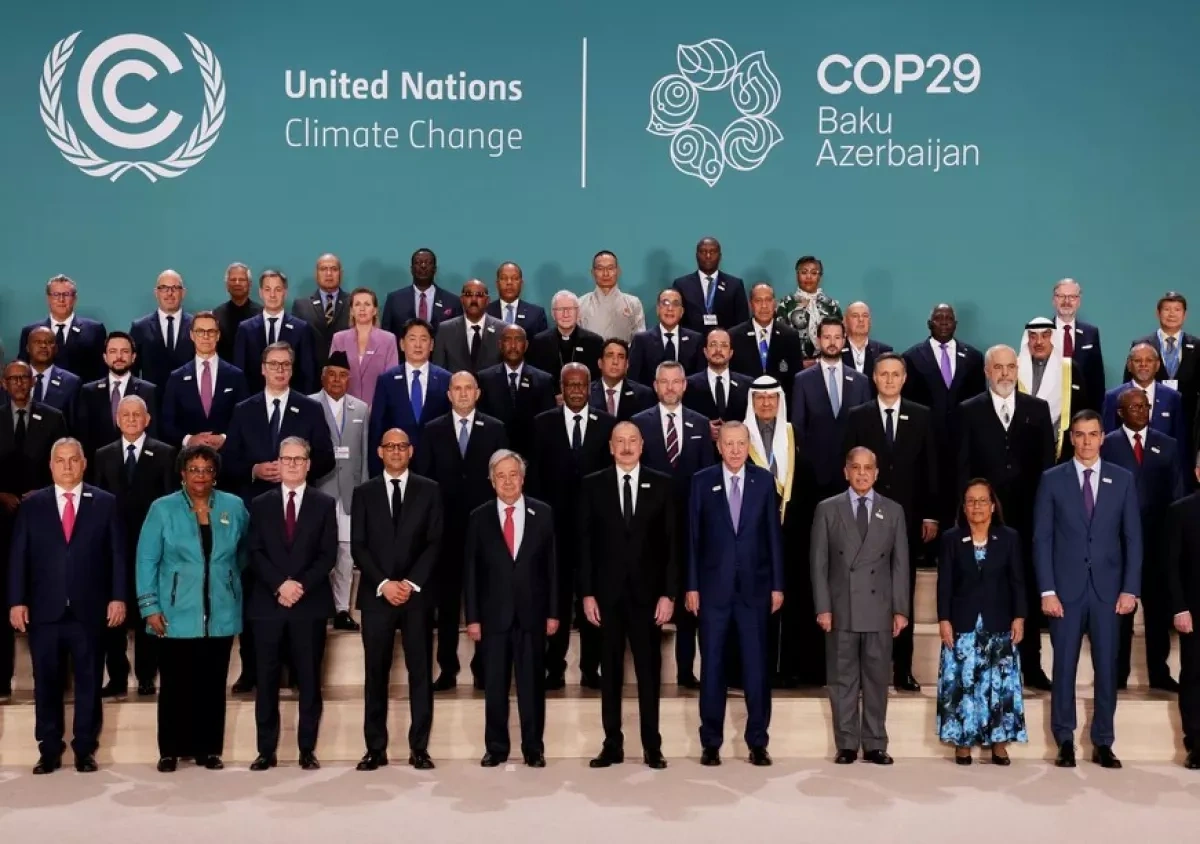
The most significant statement in the speech came in its very first line. Aliyev described WUF13 as “the second biggest international event ever held in Azerbaijan after COP29,” and expressed hope that “the outcome of WUF13 will be as successful as COP29.” This is not a factual remark—it is a positioning.
The climate summit in November 2024 became a test that Baku passed despite a coordinated campaign of discrediting from parts of Western capitals and segments of the non-governmental sector. At the time, it was written that Azerbaijan had nothing to offer, that negotiations would stall, and that the agenda would collapse. The negotiations did not stall, the agenda did not collapse, and Baku gained a reputation as a platform where outcomes are achieved that often prove elusive elsewhere.
The World Urban Forum becomes a consolidation of that result. If COP29 was about agenda-setting, WUF13 is about implementation and urban practice. Azerbaijan is placing itself on a single trajectory: a climate mandate followed by a mandate to speak on sustainable cities.
Aliyev’s speech contains a transparent but not always obvious subtext for guests. By listing ancient cities and immediately juxtaposing them with construction sites in Karabakh and East Zangezur, the President merged two chronologies into one. The eighth century and the twenty-first, the mosque in Shamakhi and the airport in Fuzuli, the Momine Khatun Mausoleum and the reservoir in Karabakh—all are placed within a single narrative framework.
It is a story of a people capable of building and preserving, and of a state that has learned to demonstrate this through tangible sites. Delegates of UN-Habitat were effectively shown a ready-made case study: what a civilisation looks like when its arguments are grounded in land and can be touched with one’s own hands.
In conclusion, Aliyev added a touch of humour: “I can also speak as a guide for Baku, but I think it would be better for you to see everything with your own eyes.” The remark was polite and entirely serious at once. When a country is presented through its cities—alive, ancient, and simultaneously modern—there is little else that needs to be said.