BAKU, Azerbaijan, May 18. The 13th session of
the World Urban Forum (WUF) in Baku can strengthen the
international cooperation around sustainable urban development,
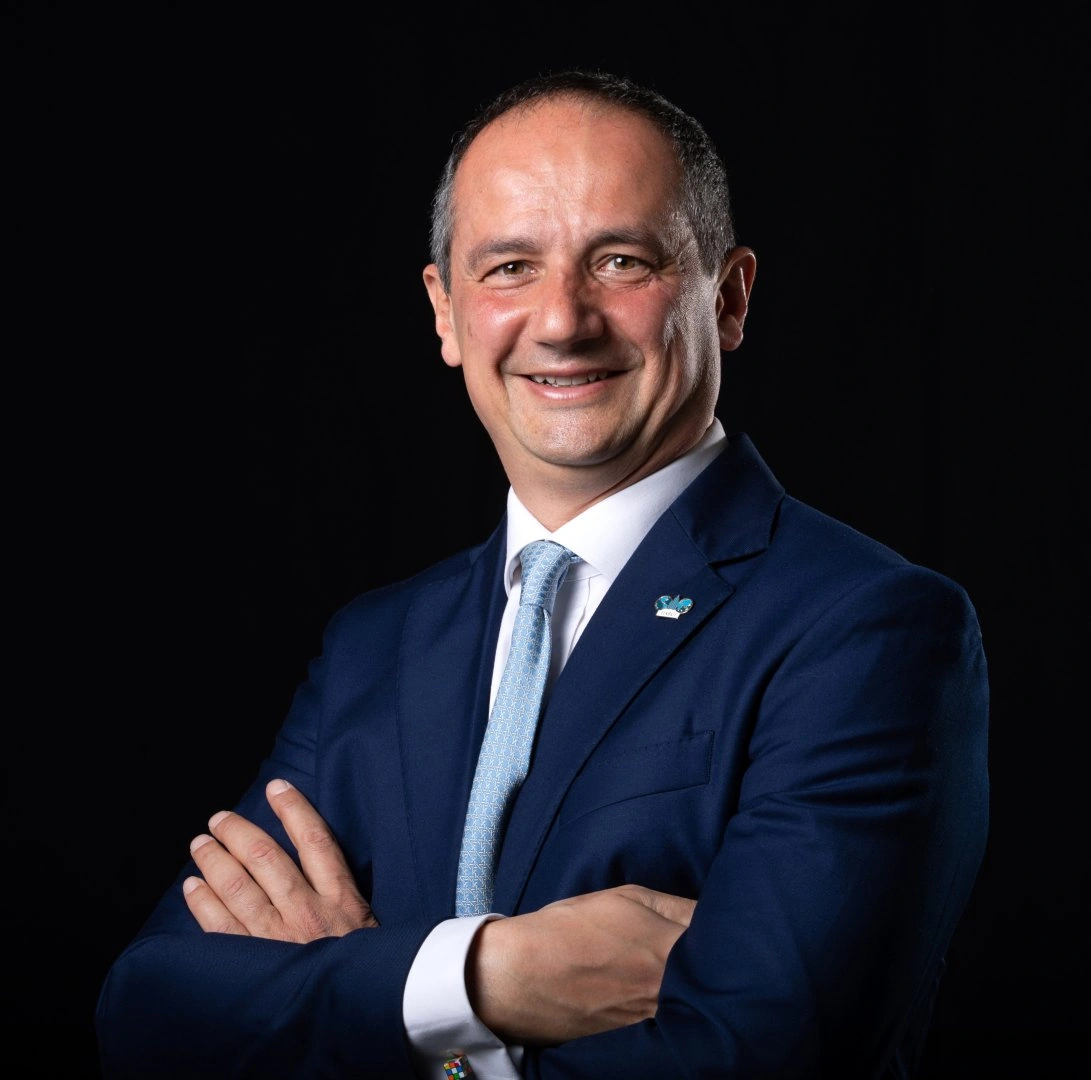
World President of the FIABCI (International Real Estate
Federation) Antonio Campagnoli said in an exclusive interview with
Trend on the sidelines of the forum.
He noted that FIABCI’s main priority at WUF13 is to reinforce
the role of the real estate sector as a strategic partner in
achieving sustainable, inclusive and resilient urban
development.
“As a global federation representing professionals and
stakeholders from more than 83 countries, FIABCI strongly believes
that cities can no longer be developed through isolated approaches.
We advocate for integrated collaboration between public
institutions, private investors, local communities, academia and
international organizations,” noted Campagnoli.
He pointed out that at WUF13, FIABCI will particularly focus
on:
- affordable and accessible housing;
- urban regeneration and mixed-use development;
- climate resilience and ESG integration;
- public-private-people partnerships (PPP models) and in
particular, public-private-people- policy - people partnerships (5P
models);
- sustainable investment frameworks capable of generating both
economic and social value.
“We also believe that the implementation phase is now the key
global challenge. The world already has many strategies and
visions; the next step is transforming them into operational and
financially viable projects,” said Campagnoli.
He went on to add that the real estate sector plays a central
role because it directly shapes how people live, work, move and
interact within cities.
“Real estate is not only about buildings. It is about creating
urban ecosystems capable of improving quality of life, social
cohesion and economic opportunities. Today, the sector must evolve
from a purely transactional perspective toward a long-term
stewardship model. This means integrating environmental
sustainability, social inclusion, accessibility, energy efficiency
and community engagement into development strategies. The private
sector can also accelerate innovation by bringing managerial
capacity, investment resources and implementation expertise to
urban projects that otherwise risk remaining only theoretical
ambitions,” Campagnoli explained.
He believes that one of the biggest challenges is the growing
imbalance between housing demand and affordability.
“In many countries, middle-income families are increasingly
excluded not only from property ownership but also from quality
rental markets. At the same time, sustainability requirements are
becoming more complex and costly, especially in relation to energy
transition and building adaptation. Another major challenge is
financing. Sustainable urban transformation requires long-term
capital, regulatory clarity and bankable project structures. There
is also a need to reduce fragmentation between urban planning,
infrastructure, social policies and investment frameworks. Cities
must be approached as integrated systems rather than disconnected
sectors.
Finally, geopolitical instability, inflation, demographic
changes and climate-related risks are significantly impacting
investment decisions worldwide,” added Campagnoli.
The World President of FIABCI noted that cooperation requires
moving beyond traditional consultation models toward genuine
co-creation processes.
“International organizations can provide global frameworks,
knowledge-sharing platforms and policy guidance, while the private
sector can contribute operational expertise, innovation and
implementation capacity. FIABCI strongly supports multi-stakeholder
approaches where local authorities, communities, investors and
international institutions work together from the earliest stages
of project development. We also believe that public-private
partnerships must increasingly evolve into “public-private-people
partnerships,” ensuring stronger community participation and social
legitimacy. In this context, platforms such as WUF are extremely
important because they create opportunities for dialogue between
actors that do not always interact within traditional institutional
structures,” he noted.
Campagnoli believes that emerging markets have a unique
opportunity because they can integrate sustainability and
innovation directly into their growth models without necessarily
repeating the mistakes of older urban systems.
“Countries such as Azerbaijan can position themselves as
strategic hubs connecting Europe, Central Asia and the Middle East,
while promoting new approaches to urban development, infrastructure
and real estate investment.
There is strong international interest in:
- green and resilient urban infrastructure;
- smart cities and digital integration;
- affordable housing models;
- tourism and hospitality regeneration;
- energy-efficient developments;
- mixed-use and community-oriented projects.
The key factor is creating transparent, stable and
implementation-oriented ecosystems capable of attracting long-term
institutional investment. WUF13 in Baku represents an important
opportunity to showcase these ambitions and to strengthen
international cooperation around sustainable urban development,” he
concluded.