BAKU, Azerbaijan, May 17. There is a need to
understand the issue of construction costs a bit more deeply, the
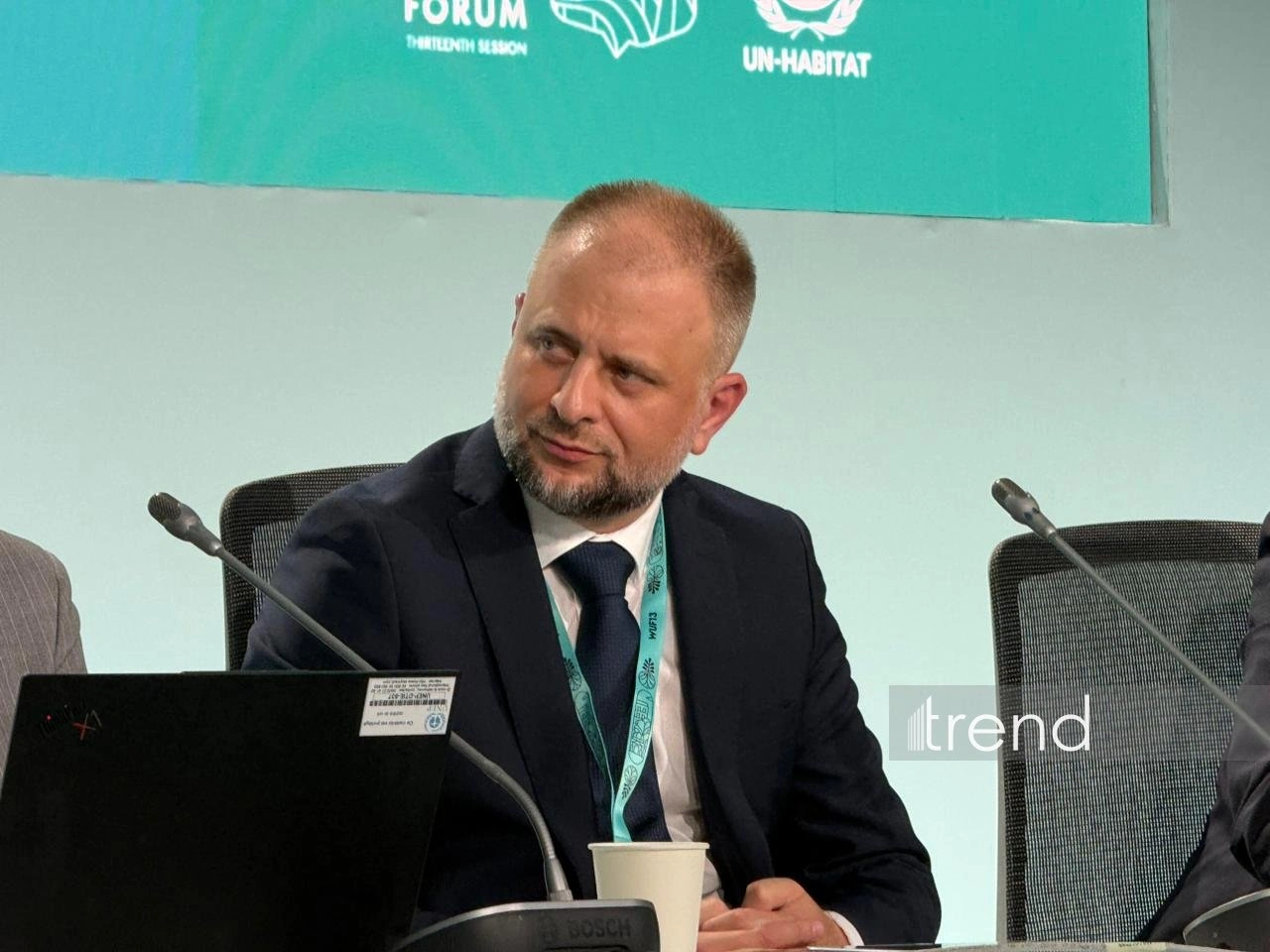
CEO of Holcim Azerbaijan, Sergio Stoikov, said during his speech at
Business Assembly session titled "Private Sector Leadership Across
the Housing Value Chain: Delivering Results Against the Odds," held
within the framework of WUF13 in Baku, Trendhttp://trend.az reports.
In our sector, we consider not only the initial investment but
the total costs that will arise throughout the entire operational
lifespan of the building.
According to him, carrying out cheap construction by investing
less capital at the beginning does not mean that the building
actually ends up costing less.
"We must also calculate maintenance costs, as well as the energy
costs required for cooling or heating the house. If the total cost
ends up being higher in the end, this can no longer be considered
affordable housing," Stoikov said.
The CEO noted that his company does not look solely at the price
of construction materials and services, but rather examines four
key elements that affect the total cost of construction.
"The first issue is smarter design. The most sustainable cubic
meter of concrete is the one that is not used at all. Traditional
construction means large beams, massive columns, and the use of a
lot of concrete, which is not always efficient. We must move away
from a mass-construction approach to a design-based approach," he
explained.
"The second direction is the availability of local, low-carbon
materials. We believe that cement and concrete will retain their
importance as they are sustainable, scalable, and locally available
materials. The key question is how to make them low-carbon."
Sergio Stoikov emphasized that low-carbon emission cement
products are already available in Azerbaijan, and these materials
allow for a reduction of carbon emissions by up to 50% in road
infrastructure construction.
"At the same time, we want to promote the wider use of
construction and demolition waste as an alternative to natural raw
materials. This is also economically important because it reduces
logistics costs, the impacts of an unstable supply chain, and
volatility in energy prices," the CEO noted.
"The third direction is industrialized productivity. Affordable
housing requires speed, quality, and the smart management of
resources. Traditional construction methods are typically slow,
generate waste, and yield inconsistent results in terms of quality.
The solution lies in the wider use of industrially produced dry
mixes and ready-mix concrete. Furthermore, digitalization in
construction is considered a new stage in terms of sustainability
and affordability."
"For example, 3D printing technology is already being used in
East Africa. With this technology, it is possible to build the
walls of a standard two- or three-bedroom house in less than 24
hours. This significantly reduces both construction time and
financial costs, ensuring that houses reach the market faster," he
added.
"Lastly, we talk about the durability and life-cycle value of
the building. The cheapest investment in the initial phase does not
always mean affordable housing in the long term. In such
situations, low-income families suffer the most," Stoikov
concluded.