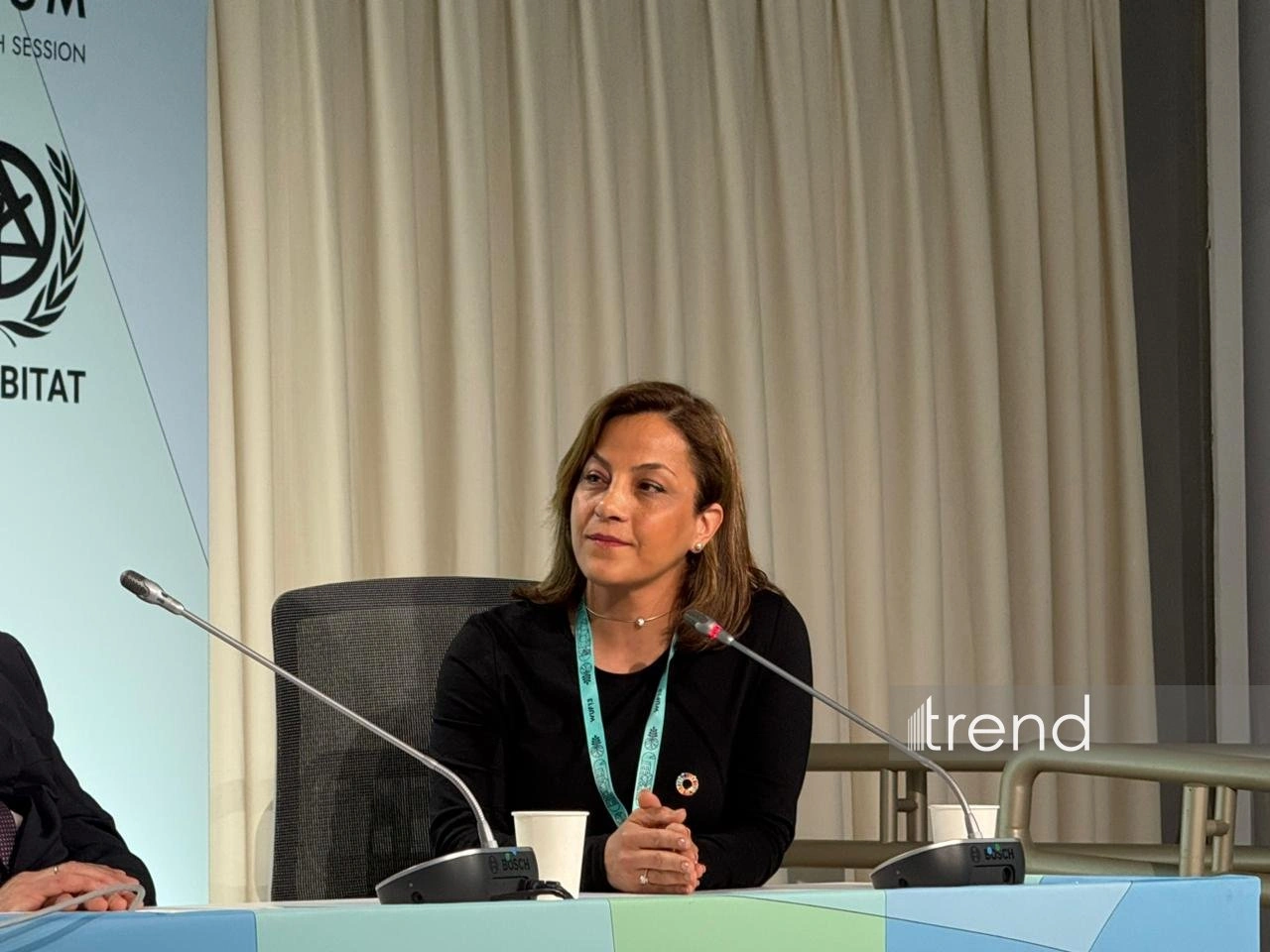
BAKU, Azerbaijan, May 17. The main shift will
occur when green infrastructure begins to be perceived not as a
visual and architectural addition, but as a measurable climate
infrastructure, the CEO of SmartSylvan, Parisa Kloss, said during
her speech at the Business Assembly session titled "Private Sector
Leadership Across the Housing Value Chain: Delivering Results
Against the Odds," held within the framework of WUF13 in Baku,
Trend reports.
According to her, in many housing projects currently, green
elements are added at the final stage of the process. Typically,
these are part of the landscaping budget and become one of the
first areas to be cut when costs rise.
The CEO noted that real change will be possible when "green
infrastructure" is evaluated based on the same measurement criteria
as other components of the housing value chain. The key here is to
place people at the center of the measurement.
"For instance, the main criteria should include indicators such
as how much heat is reduced in places where people wait, move, and
gather; how much shade is provided during peak heat impacts; how
much cooling costs are lowered; how health risks are mitigated; and
how long-term asset value is preserved," Kloss said.
"The core transformation does not happen through technology
alone. This change becomes possible when the business model,
operational model, and financing logic can be applied on a large
scale. 'Green infrastructure' becomes a commercially viable model
when it is evaluated not just as an expense item, but as a
performance element."
She pointed out that this issue is vital because affordable
housing should not mean housing that is exposed to climate risks.
Housing is not just about providing shelter; it is also about
creating a space where people can live safely, comfortably, and
with dignity.
Parisa Kloss emphasized that the problem is not the lack of a
business model for "green infrastructure."
"The problem is that this business model is often hidden within
other budget areas such as energy, healthcare, sustainability, and
long-term asset value," she explained.
"A very crucial point is frequently overlooked. Affordable
housing does not simply mean cheap construction. It also requires
creating spaces that will remain livable over time."
"For example, as heat stress increases, courtyards, entrance
areas, and open spaces become part of the overall performance of
the housing. If these spaces become unusable during the summer
months, the living environment loses its value, no matter how cheap
the construction was," the CEO added.
"The commercial opportunity does not lie solely in adding more
greenery. The main goal is to create measurable climate performance
systems that construction companies, housing providers, and
municipalities can plan and manage as part of the housing value
chain," Kloss concluded.