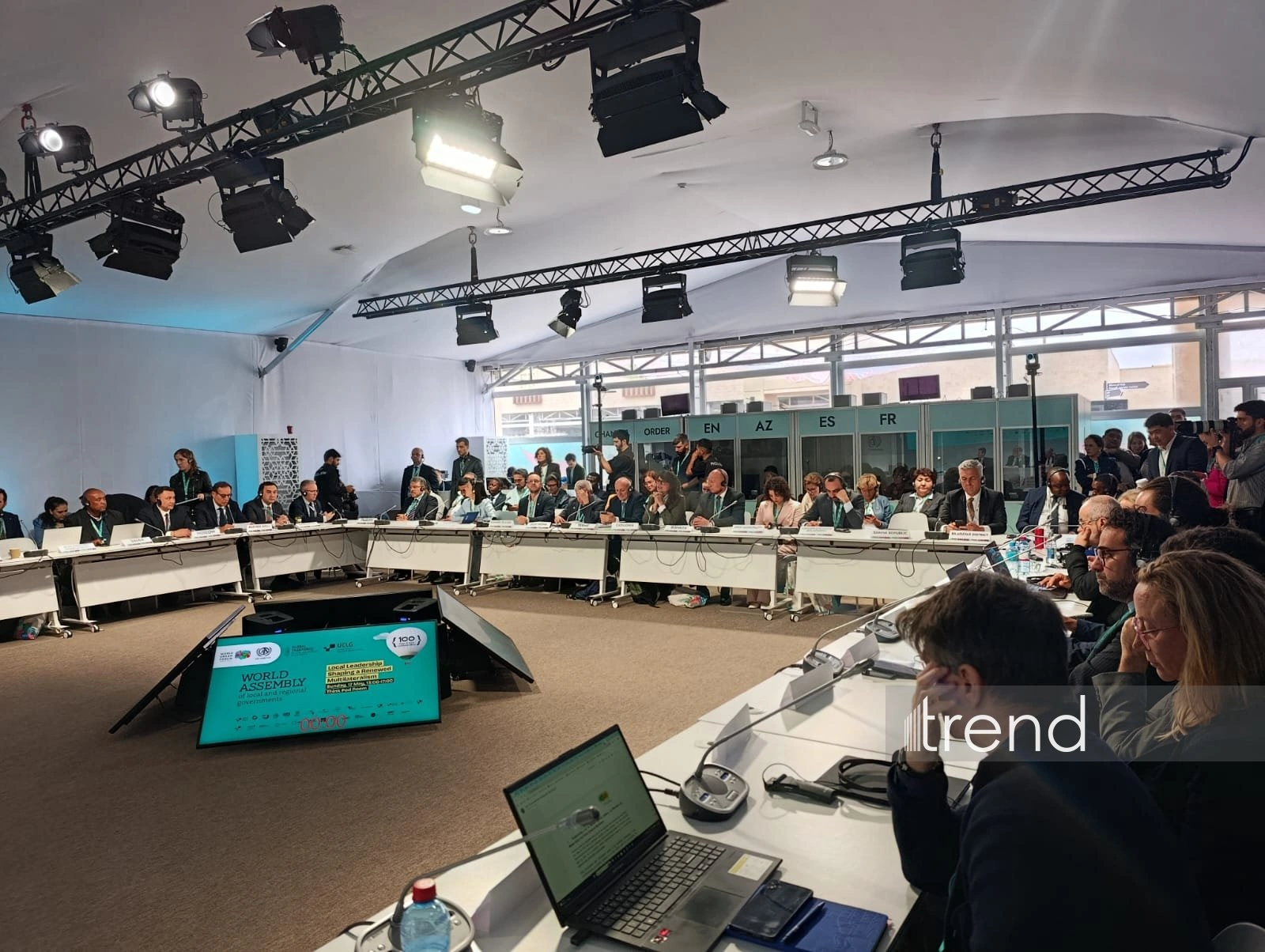
BAKU, Azerbaijan, May 17. A territorial
approach can only be effective through real interaction between
national and subnational authorities, the National Director for
Territorial Planning of Uruguay, Paola Florio, said during the
World Assembly of Local and Regional Governments: Local Leadership
Shaping a Renewed Multilateralism, held within the framework of the
13th World Urban Forum (WUF13) in Baku, Trend reports.
"Real transformations happen on the ground, and it is the local
authorities, who are part of the national system, that in many
cases develop and implement public policies directly affecting
people's lives," Florio said. "The challenges we face—such as
access to housing, inequality, climate change, urban degradation,
environmental protection, and resilience—cannot be resolved solely
by external or national policies."
According to her, this requires comprehensive and coordinated
implementation across different levels of government.
"In this process, territorial planning has taken center stage
and has become an essential part of the government's ministerial
work. For Uruguay, territorial planning is not just a technical or
regulatory tool; it is a strategic public policy aimed at
sustainable development, the prevention of conflicts, inequality,
and territorial imbalances, as well as a more just and efficient
use of land and resources. It is also a fundamental tool for
aligning housing policies," she noted.
Florio pointed out that Uruguay's experience demonstrates that a
territorial approach can only be effective when there is genuine
interaction between national and subnational authorities, alongside
proper coordination with social, academic, and humanitarian
structures.
"Such interaction must not remain merely an institutional
aspiration. It must transform into a concrete tool for planning,
investing, and operating territories with greater resilience," she
concluded.