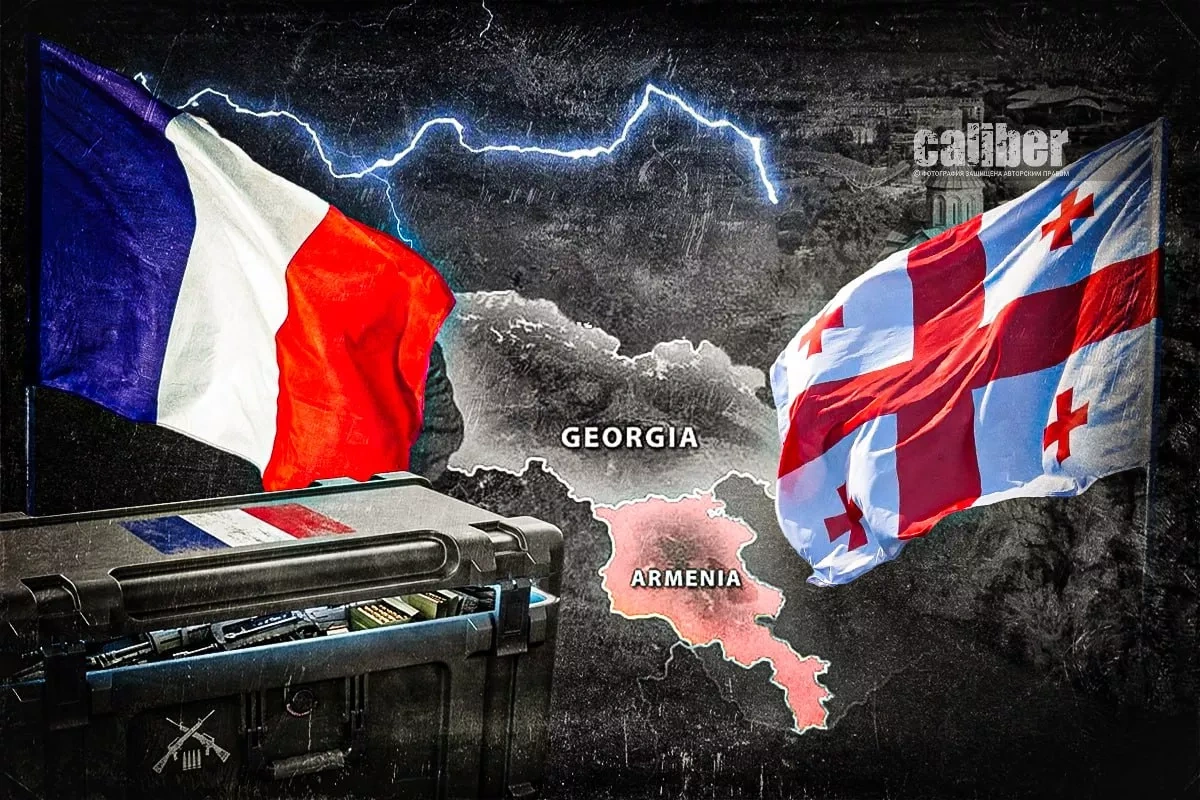
Paris continues to take anti-Georgian actions. On May 11, 2026, the Foreign Affairs Committee of the French National Assembly adopted a resolution on Georgia in the presence of former President Salome Zourabichvili, who had specially arrived in Paris. There is nothing new in the document — it repeats the ultimatums and demands of the European Union authorities and France itself, which were already put forward in 2024 and have since begun to be forgotten.
The resolution “condemns the authoritarian course of the Georgian government,” calls for the repeal of the law on “foreign influence,” and expresses “concern over the deterioration of the democratic situation in the country following the parliamentary elections of October 2024,” which are also described as having involved “irregularities.”
In addition, the document demands the “immediate release of political prisoners,” support for civil society, and the introduction of sanctions against Bidzina Ivanishvili and his allies.
The resolution also expresses concern that “Georgia is being used as a platform to circumvent international sanctions imposed on Russia,” and calls on the European Union to take this into account when preparing its next sanctions package. It further urges the suspension of Georgia’s EU accession process until the country meets political criteria, including the holding of “free and fair elections.”
Within Georgia itself, the October 2024 elections have long faded from public attention, and opposition protests have become small and marginal. Many EU countries, as well as Ukraine—previously supportive of the Georgian pro-Western opposition and its demonstrations—are gradually restoring relations with the Georgian authorities.
It seems rather unusual that in May 2026, Paris suddenly rediscovered Georgia’s “authoritarian course” and began repeating its earlier ultimatums.
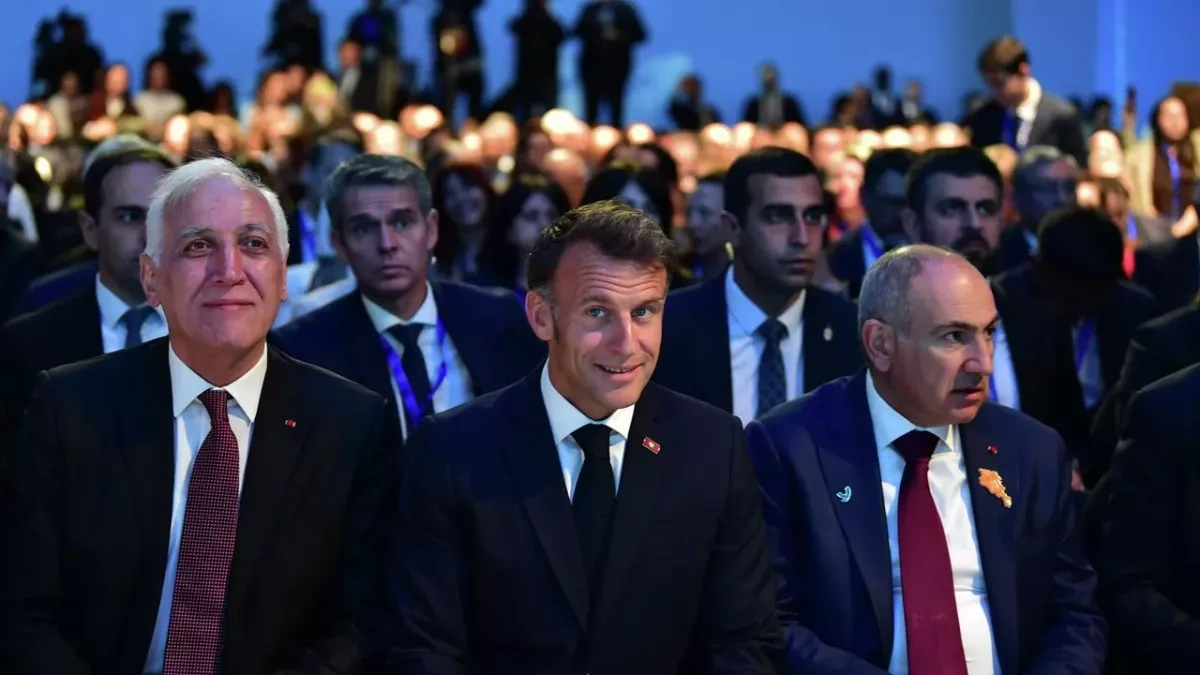
The resolution against the Georgian authorities in the lower house of the French parliament was adopted shortly after President Emmanuel Macron’s visit to Armenia, where he took part in the European Political Community summit. That visit was presented as a demonstration of the close relationship between France and Armenia, as well as their partnership and Paris’s support for Yerevan’s European aspirations.
Under such circumstances, one might have expected the French authorities to soften their rhetoric toward Georgia or, at the very least, to refrain from reiterating previous accusations. After all, Armenia’s connection to Europe still largely depends on Georgia as a transit corridor, and without this “Georgian window to Europe,” talk of a “European choice” for Yerevan remains largely theoretical. However, it appears that France is not so much concerned with economic links to Armenia via Georgia as with a different kind of transit altogether.
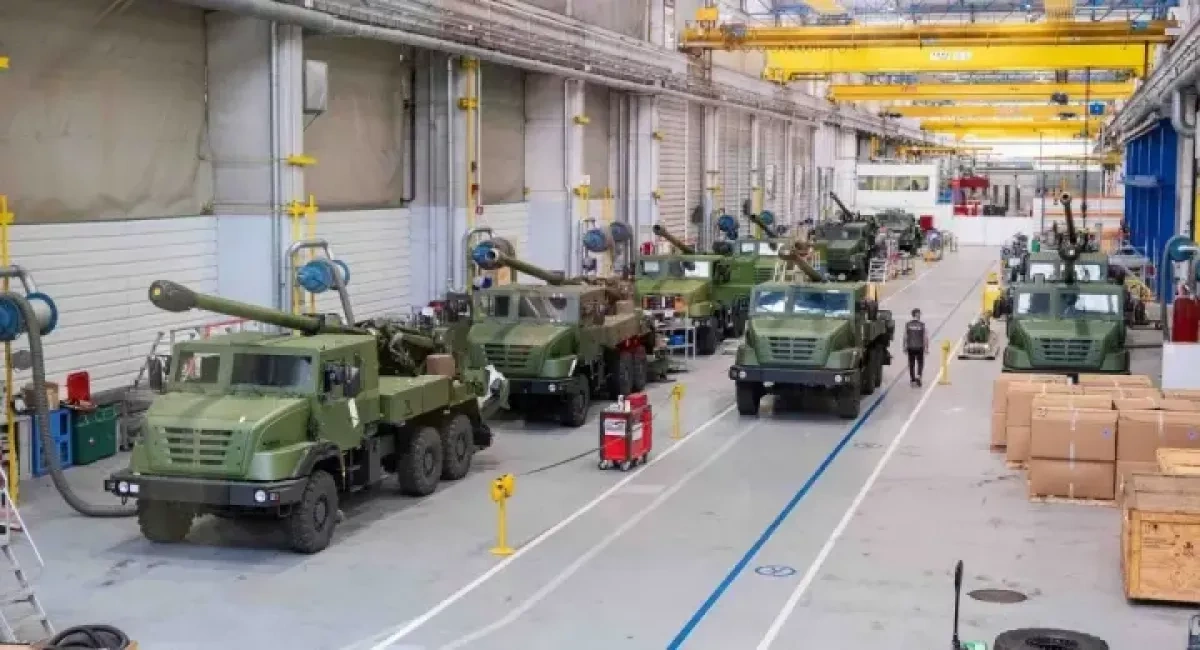
It has recently become known that Armenia has received the first self-propelled artillery units of the CAESAR system out of the 36 units ordered from France. The initial howitzers were spotted during preparations for the Republic Day parade scheduled for May 28, 2026. Footage of the equipment was published by Armenian Defence Minister Suren Papikyan. This raises the question of how this equipment was delivered to Armenia and how subsequent shipments will be transported, given the prospects for expanding military cooperation between Paris and Yerevan.
Following a scandal in November 2023 involving the transit of French Bastion armoured vehicles through the Georgian port of Poti en route to Armenia, Georgian authorities ceased allowing the use of their territory for the delivery of French weapons to Yerevan. In 2024, Armenia signed a contract with France for 36 CAESAR Mk1 artillery systems, along with other types of armaments.
As a result, this equipment could have reached Armenia either via Iran (prior to the start of the US and Israeli military operation against that country, i.e., before February 28, 2026) or by air transport. At the same time, there is no information indicating that Georgia has authorised the use of its airspace for the delivery of such weaponry.
There is reason to believe that if not the CAESAR self-propelled howitzers themselves, then at least their components may have been delivered to Armenia by France via air transport under the guise of civilian cargo, which could potentially constitute a violation of the 1944 Chicago Convention. This suspicion is reinforced by the fact that French military aircraft have recently been making frequent and unusual visits to Armenia.
According to ADS-B data, on May 4, 2026, a French Air and Space Force Airbus A330-200 arrived in Yerevan via Georgian airspace. The following day, the aircraft returned from Yerevan to Paris and subsequently flew to the French military base at Istres-Le Tubé. This flight coincided with Macron’s visit to Armenia on May 5, 2026.
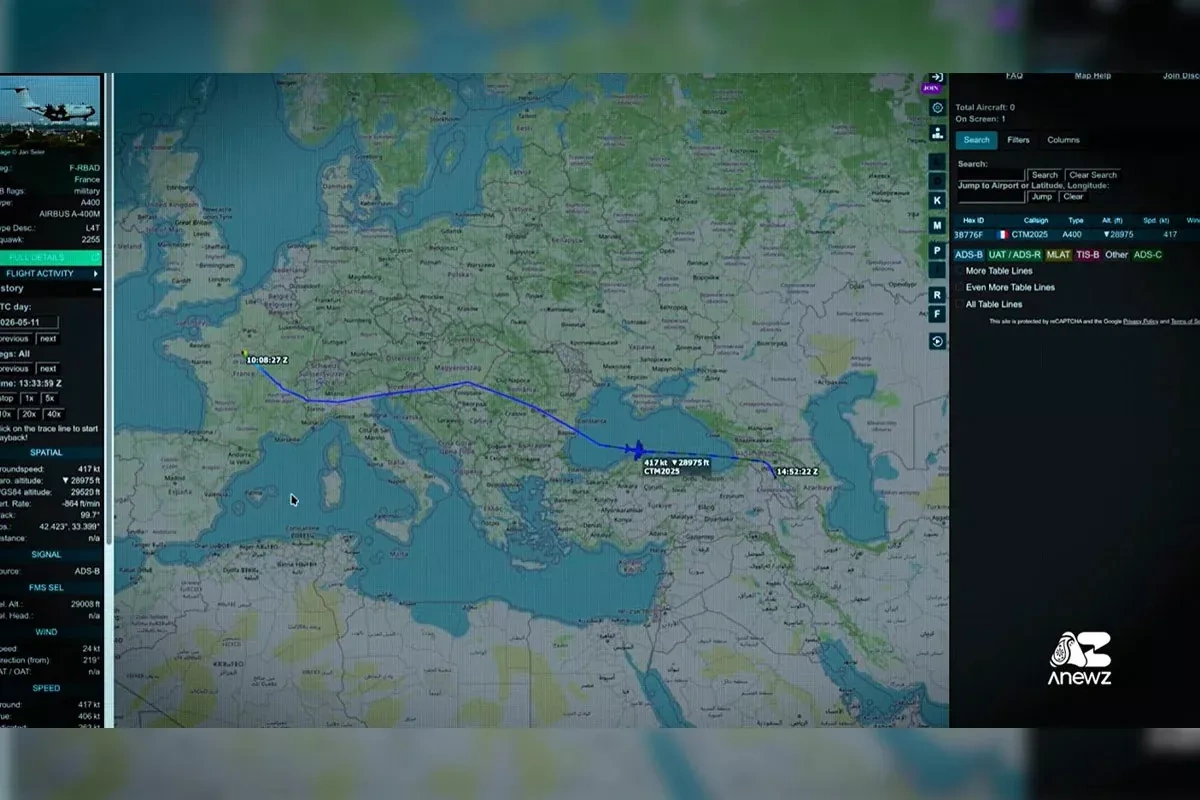
On May 11, 2026, another French military aircraft — an Airbus A400M Atlas — crossed Georgian airspace en route to Armenia. According to the declaration submitted to the Georgian authorities, the aircraft was carrying gas cylinders, lithium batteries, and chemical substances. However, questions remain as to whether the actual cargo corresponded to the declared contents, or whether components of CAESAR artillery systems—or other types of military equipment—may have been delivered to Armenia in potential violation of the Chicago Convention.
Clearly, Paris would prefer Georgia to formally authorise the transit of weapons destined for Armenia through its airspace, and even more so through its ports, as was the case in November 2023. However, Tbilisi does not grant such permission, fully aware that such deliveries could pose a threat to peace in the South Caucasus.
As a result, Paris resorts to straightforward political pressure. Through such démarches—including the May 11, 2026 resolution adopted in the presence of Salome Zourabichvili, a former French citizen who is now effectively seen as leading the Georgian opposition—France is exerting pressure on the Georgian authorities and “punishing” them for their unwillingness to cooperate on the issue of military transit.
By Vladimir Tskhvediani, Georgia, exclusively for Caliber.Az