BAKU, Azerbaijan, April 24. The
China-Kyrgyzstan-Uzbekistan railway project within the framework of
the Middle Corridor (Trans-Caspian International Transport Route)
is gaining increasingly greater strategic value, former Foreign
Minister of Uzbekistan Vladimir Norov said on his social media
account, Trend
reports.
He recalled that the recent meeting of the transport ministers
of the Turkic States Organization in Bishkek marked an important
turning point in how connectivity is developing in Central Asia and
the wider region.
The former minister said that the focus of the discussions was
on the China-Kyrgyzstan-Uzbekistan railway project.
"This project is gradually moving from a concept to a key
element of the China-Central Asia-Caucasus-Europe route. Upon
completion, this line will strengthen the Trans-Caspian
International Transport Route (Middle Corridor) and is already
being evaluated as a real alternative to traditional Eurasian trade
routes.
The strategic importance of this project is that it strengthens
the connection between China and Europe, reduces transit time and
increases route flexibility, contributes to the diversification and
sustainability of global supply chains in changing geopolitical
conditions, supports the transformation of Central Asia from a
closed region into a transit hub, and also strengthens economic
cooperation between Turkic states and neighboring regions," he
explained.
According to Norov, the discussions in Bishkek were not limited
to infrastructure, but also paid special attention to the creation
of a fully integrated transport ecosystem.
"In this regard, we can note the simplification of border
procedures and acceleration of transit, the harmonization of
tariffs, standards, and regulations, and the expansion of
multimodal transport solutions.
An equally important direction is digitalization. For example,
the introduction of e-permit systems in several countries, as well
as the introduction of the e-CMR (electronic consignment note)
system to accelerate cross-border cargo transportation, can be
noted.
Another important factor is the Caspian Sea. Here, cooperation
in ferry services and maritime logistics plays a key role in the
smooth operation of the corridor. This shows that the success of
the Middle Corridor depends on the synchronous development of rail,
road, and sea transport.
As a result, the China-Kyrgyzstan-Uzbekistan railway is no
longer just a regional infrastructure project, it's becoming a
strategic component of the new Eurasian logistics architecture. Its
full potential will depend not only on the construction process,
but also on the depth of coordination, digitalization, and policy
coherence between the participating countries," Norov
concluded.
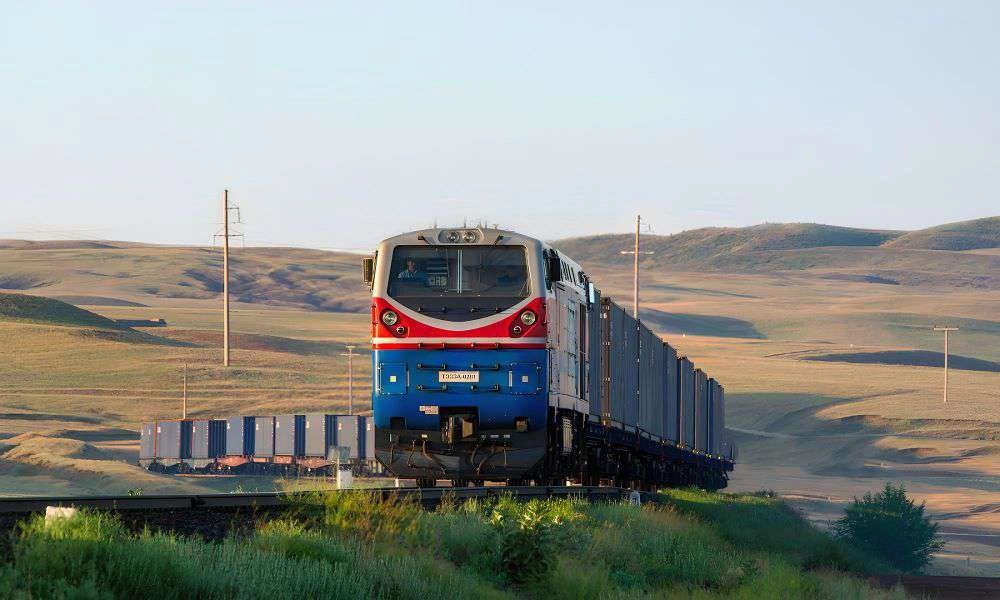
The Middle Corridor is a transport and trade route that passes
through a number of countries in the region and connects Asia with
Europe. It serves as an alternative to the traditional Northern and
Southern Corridors.
The route begins in China and runs through the countries of
Central Asia. It then crosses the Caspian Sea, Azerbaijan, Georgia,
and Türkiye, before reaching Europe. The Middle Corridor is a land
route that bypasses longer sea routes, connecting the eastern
regions of Asia, including China, with Europe.
Stay up-to-date with more news on Trend News
Agency's WhatsApp channel