BAKU, Azerbaijan, April 18. The Antalya
Diplomatic Forum, held in Türkiye on April 17-19, 2026, has become
an important platform for discussing key challenges in global
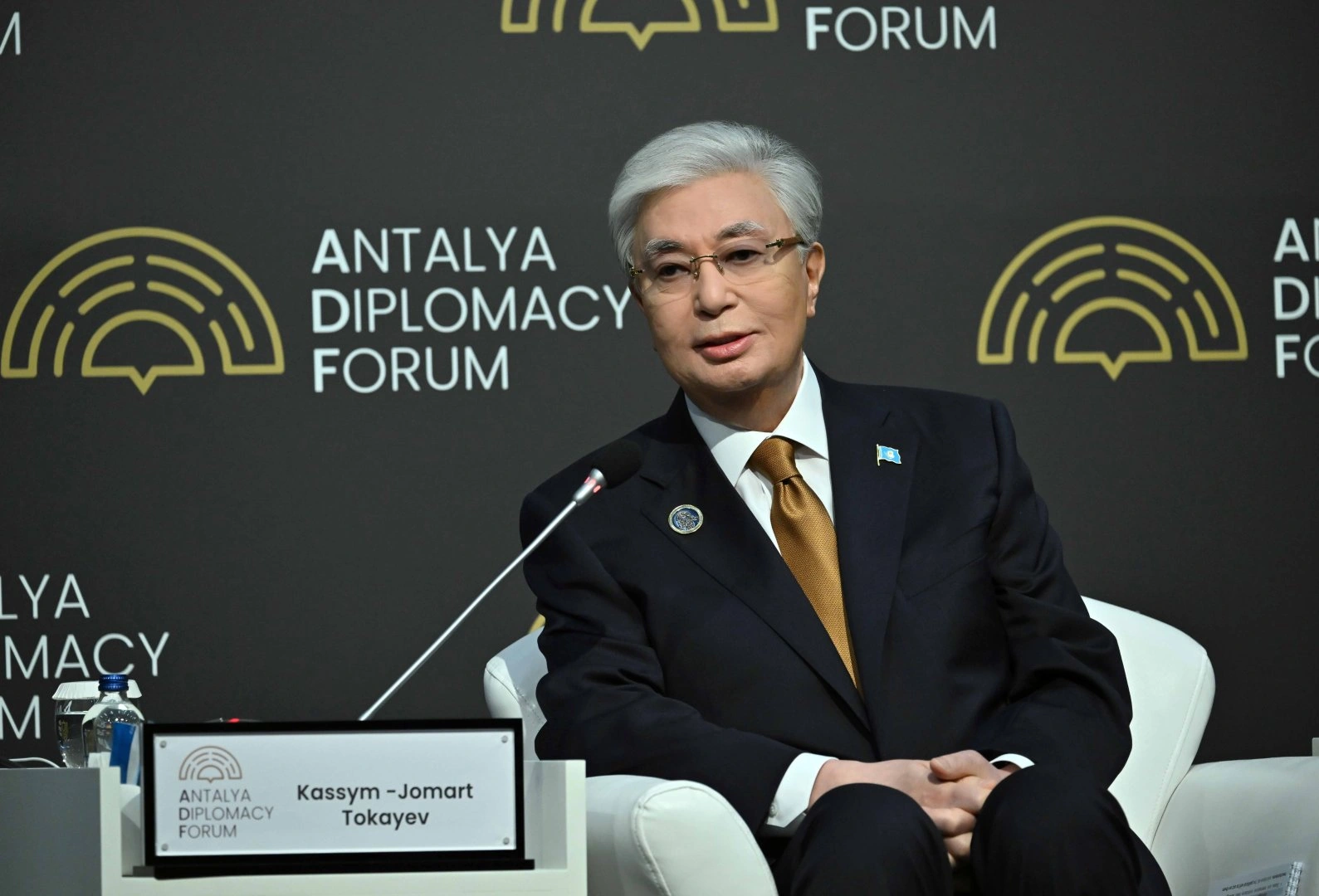
politics, bringing together world leaders. In particular, President
of Kazakhstan Kassym-Jomart Tokayev spoke at the panel session
titled “Mapping Tomorrow, Managing Uncertainties.” One of the
topics he addressed was the role of middle powers in global
politics.
According to him, Kazakhstan, Türkiye, and a number of other
countries in this category are increasingly influencing
international processes today. Azerbaijan can also undoubtedly be
included in this group, as it positions itself as a middle power
and consistently pursues a foreign policy based on balancing
interests and active engagement in the regional agenda. Against
this backdrop, Tokayev’s participation in the Antalya forum should
also be viewed through the prism of Turkic rapprochement, where
Azerbaijan plays a key role as one of the centers of
interaction.
Kazakhstan and Azerbaijan are also active members of the
Organization of Turkic States (OTS), which both sides see as an
instrument for shaping a denser Turkic economic and geopolitical
space across Eurasia.
The economic dimension of this rapprochement is also
strengthening. According to the State Customs Committee of
Azerbaijan, bilateral trade with Kazakhstan in 2025 amounted to
$670.6 million (1.4 times higher than in 2024). The Central Bank of
Azerbaijan reports that in 2025, Kazakhstan’s direct investments in
Azerbaijan amounted to $29.407 million. Compared to 2024,
investment volume increased by $14.6 million, more than doubling.
Kazakhstan’s share in total FDI stood at 0.4 percent. The dynamics
indicate a steady increase in economic interdependence within the
Turkic space.
One of the main drivers of rapprochement is the development of
the Trans-Caspian International Transport Route. Kazakhstan and
Azerbaijan plan to sign an intergovernmental agreement on the
route. Over the past 7 years, cargo volumes along the TITR have
increased fivefold—from 0.8 to 4.5 million tons per year. In 2025,
around 77,000 TEU were transported via the route, with a target of
300,000 TEU by 2029. This turns the corridor into one of the key
elements of the emerging Turkic logistics system.
In this process, the integration of transport and port
infrastructure is strengthening. Azerbaijan is developing the ports
of Alat and Baku, while Kazakhstan is developing Aktau and Kuryk,
forming a unified Caspian logistics chain. As a result, the Caspian
Sea is gradually becoming a central transit hub between Asia and
Europe. Kazakhstan is also interested in further developing TITR as
a sustainable route within broader Eurasian connectivity.
Energy cooperation is emerging as a separate area. In addition
to the traditional oil sector, the countries are strengthening
cooperation in the field of green energy. In this context, a key
role is played by the “Green Corridor” initiative involving
Azerbaijan, Kazakhstan, and Uzbekistan, which envisages electricity
exports to Europe via the Caspian Sea.
In the political dimension, Astana and Baku demonstrate a
similar model of behavior. The sides support each other’s positions
in international organizations, and consistently align their
approaches on key issues such as transport connectivity, energy
security, and regional integration. This forms the basis for deeper
Turkic cooperation beyond a bilateral framework.
Tokayev’s participation in the Antalya Diplomatic Forum reflects
not only the growing role of “middle powers,” but also a broader
process of institutionalizing Turkic rapprochement. Azerbaijan and
Kazakhstan are entering a new phase of interaction, where economic,
transport, and energy projects are gradually forming a unified
strategic agenda. Turkic cooperation is increasingly moving beyond
political declarations and becoming a practical foundation for
regional integration.