BAKU, Azerbaijan, April 3. Iran's Islamic
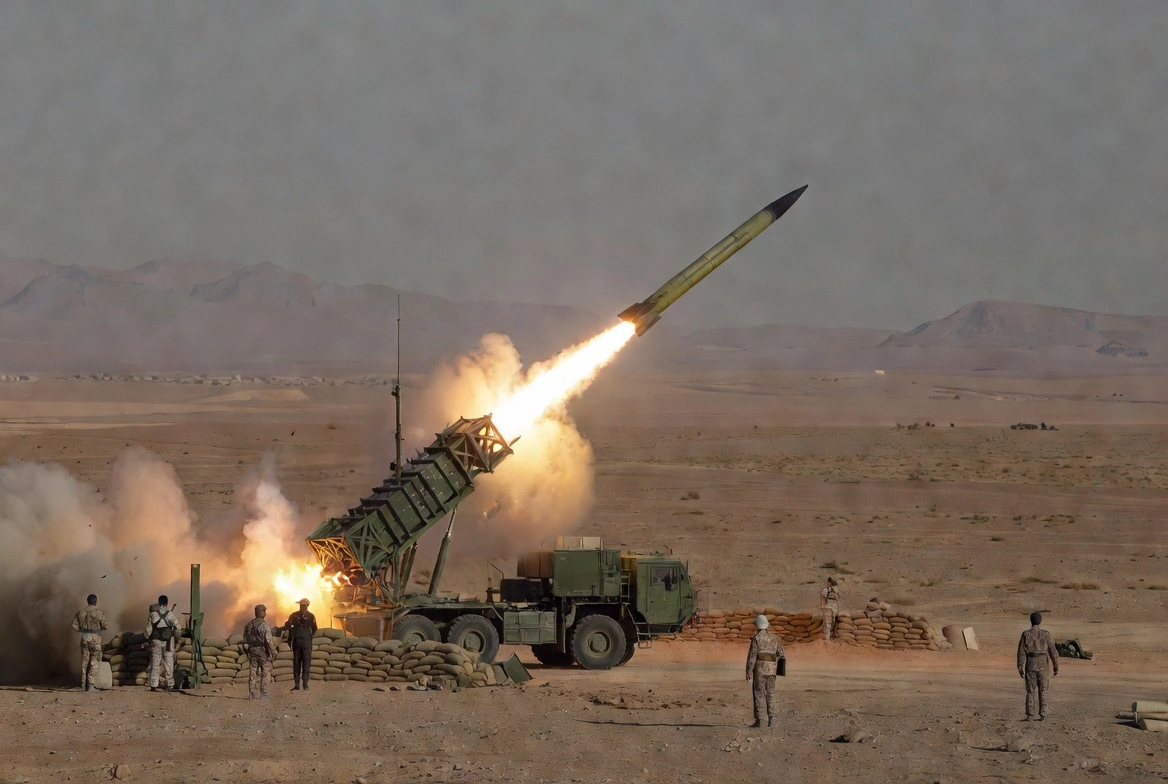
Revolutionary Guard Corps (IRGC) has announced the launch of a new
wave of missile and drone attacks on Israeli and U.S. targets in
the Middle East, the IRGC's statement says, Trend reports.
According to the statement, serious attacks were carried out
throughout the day against U.S. and Israeli radar systems, naval
vessels, and Israel’s main military airbase, and a U.S. F-35
fighter jet was destroyed.
The statement also indicates that since this morning, the IRGC's
naval and air forces have carried out the 92nd wave of "Operation
True Promise 4", carrying out rapid attacks against radar systems
and naval equipment of U.S. forces in the region (UAE, Kuwait,
Bahrain) and Israel.
The statement noted that in the initial phase of the naval
operation, the U.S. amphibious assault ship based in the port of
Al-Shuyukh in Dubai, UAE, was hit with ballistic missiles.
The IRGC added that in continuation of the attacks that
continued on Friday morning and throughout the night, the air force
successfully launched two ballistic missiles at the Ramat David Air
Base, located southeast of Haifa and hosting Israeli F-16 fighter
squadrons.
In another phase of the attack, in continuation of the "fire
against fire" tactic, the IRGC launched "Khurramshahr-4"
multiple-warhead ballistic missiles, hitting more than 50 targets
in central Tel Aviv and other parts of Israel.
The statement also noted that a high-tech U.S. F-35 fighter jet
was targeted and destroyed by the IRGC's air defense systems in
central Iran. The plane was said to belong to the U.S. "Lakenheath"
squadron, and according to the IRGC, this was the second plane shot
down in the last 12 hours.
The ongoing conflict stems from a chronology that, in 2015, an
agreement was reached between Iran and the P5+1 group on a Joint
Comprehensive Plan of Action regarding Iran’s nuclear program, and
the UN Security Council adopted Resolution 2231, which led to the
repeal of the previous six resolutions and the lifting of
widespread sanctions against Iran related to its nuclear
program.
In 2018, the U.S. withdrew from the plan and imposed sanctions
on Iran. Iran’s gradual lifting of the restrictions provided for in
the plan was not unanimously accepted by other countries.
Consequently, on September 28, 2025, UN Security Council
resolutions against Iran were reinstated.
The International Atomic Energy Agency’s report, published in
May 2025, indicated that Iran’s stockpile of enriched uranium stood
at 9,247 kilograms, of which more than 408 kilograms were enriched
to 60% or higher.
Although two rounds of negotiations on Iran’s nuclear program
took place between the U.S. and Iran at different times, the
parties failed to reach a concrete agreement, and both rounds of
talks ended in conflict. The most recent of these conflicts began
on February 28, when the U.S. and Israel launched military
airstrikes against Iran.
In response, Iran began launching missile and drone strikes
against Israeli and U.S. targets in countries across the region.
Over time, the conflict expanded significantly and engulfed various
countries in the Middle East.
The conflict has placed the region’s energy infrastructure and
maritime shipping under serious threat. Due to security tensions in
the Strait of Hormuz, global oil prices have risen significantly.
Iran fully controls the Strait of Hormuz and allows passage only to
vessels it deems necessary.
Stay up-to-date with more news on Trend News
Agency's WhatsApp
channel