BAKU, Azerbaijan, March 11. The Global Baku
Forum has established itself over the years as an authoritative
international platform for open dialogue on global security,
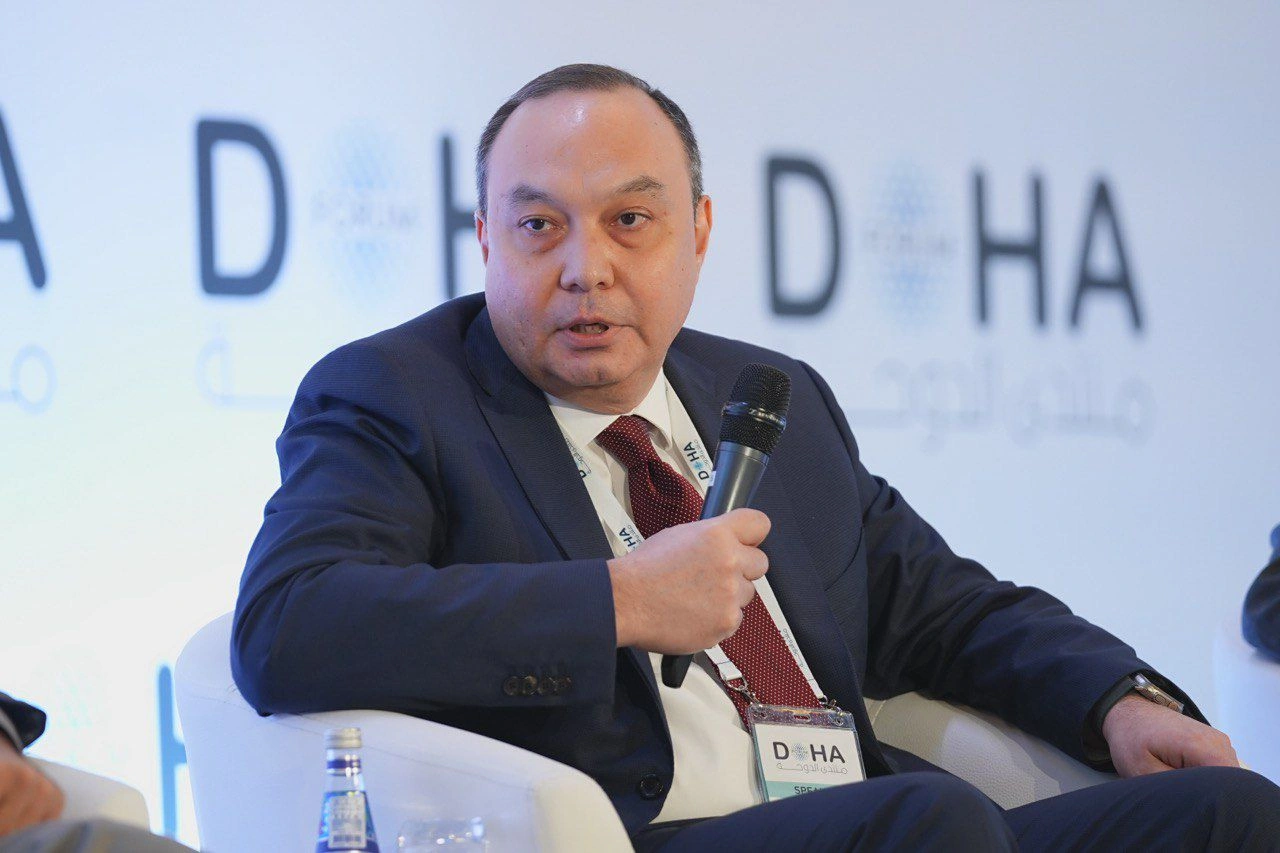
sustainable development, and international cooperation, Eldor
Aripov, Director of the Institute for Strategic and Regional
Studies under the President of Uzbekistan told Trend.
“Its distinctive feature is its multi-level format, which brings
together current and former heads of state, representatives of
international organizations, and the expert community. This makes
it possible to ensure a synthesis of political vision and expert
elaboration of solutions on key issues of the global agenda,” he
said.
According to Aripov, Central Asia is objectively becoming an
important link between East and West, as well as between North and
South, however, the effectiveness of this connectivity depends on
the level of development and coordination of the region’s transport
infrastructure.
“We understand that the transit potential will have a
synergistic effect only if infrastructure development is properly
coordinated. In this context, Azerbaijan plays a special role, as
due to its geographical position and developed transport
infrastructure, it acts as a key bridge between Central Asia and
Europe,” he noted.
He stressed that platforms such as the Global Baku Forum make it
possible to discuss these issues in a broader international
context, providing political support for infrastructure initiatives
and creating a climate of trust for the implementation of long-term
projects.
“The Forum is also important from the point of view of shaping a
new architecture of international relations. In a world where
fragmentation is increasing and trust is declining, formats in
which medium-sized states can articulate their positions and
participate in developing rules of interaction are becoming
increasingly in demand,” Aripov said.
“For Central Asia, this is an opportunity to influence
discussions on a wide range of issues—from regional security and
sustainable development to climate agenda, water management,
digitalization, and artificial intelligence. The ability of the
region’s states to ensure long-term economic growth, technological
modernization, and integration into global value chains depends on
how these challenges are addressed,” he added.
Speaking about the current level of relations between Azerbaijan
and Uzbekistan, Aripov noted that cooperation between the two
countries is at a historic high.
“If we consider Uzbek-Azerbaijani relations from a strategic
perspective, it is necessary to ensure the transition from
quantitative growth to a new quality of interaction. The increase
in trade turnover and the number of joint enterprises is important;
however, the next stage should be the creation of sustainable value
chains capable of integrating our economies at a deeper level,” he
delineated.
According to him, one of the key areas is the development of
joint industrial zones and production clusters.
“We should speak not simply about placing enterprises but about
forming integrated spaces with developed engineering, logistics,
and digital infrastructure. Such zones can become growth points
where investment, technology, and human capital are concentrated,”
he noted.
Aripov also stressed the need to deepen production localization
in the region.
“The strategic task is to form full-fledged production chains
within the region, from raw materials to finished products with
high added value. This increases resilience to external shocks,
reduces dependence on global disruptions, and creates
higher-quality jobs,” he said.
In addition, according to him, another important condition for
further development is the creation of a stable and predictable
regulatory environment, as well as coordination of foreign economic
policy.
“In the context of global instability, joint entry into
third-country markets becomes particularly important. By combining
production capacities, transit potential, and investment resources,
we will be able to form a coordinated model of external economic
presence across a broader Eurasian space,” he concluded.
Stay up-to-date with more news on Trend News
Agency's WhatsApp channel