BAKU, Azerbaijan, December 11. The first
official visit of President Ilham Aliyev to Slovakia marked a
significant milestone in the history of bilateral relations,
reflecting a new level of political dialogue and economic
cooperation between Baku and Bratislava. At a time of shifting
geopolitical dynamics in Europe and ongoing challenges in energy
security, the agreements and discussions held on 8-9 December carry
both symbolic weight and concrete practical value for the two
countries. From the Hungarian perspective, the visit is seen as
strategically important, reinforcing Budapest’s own energy and
regional policies.
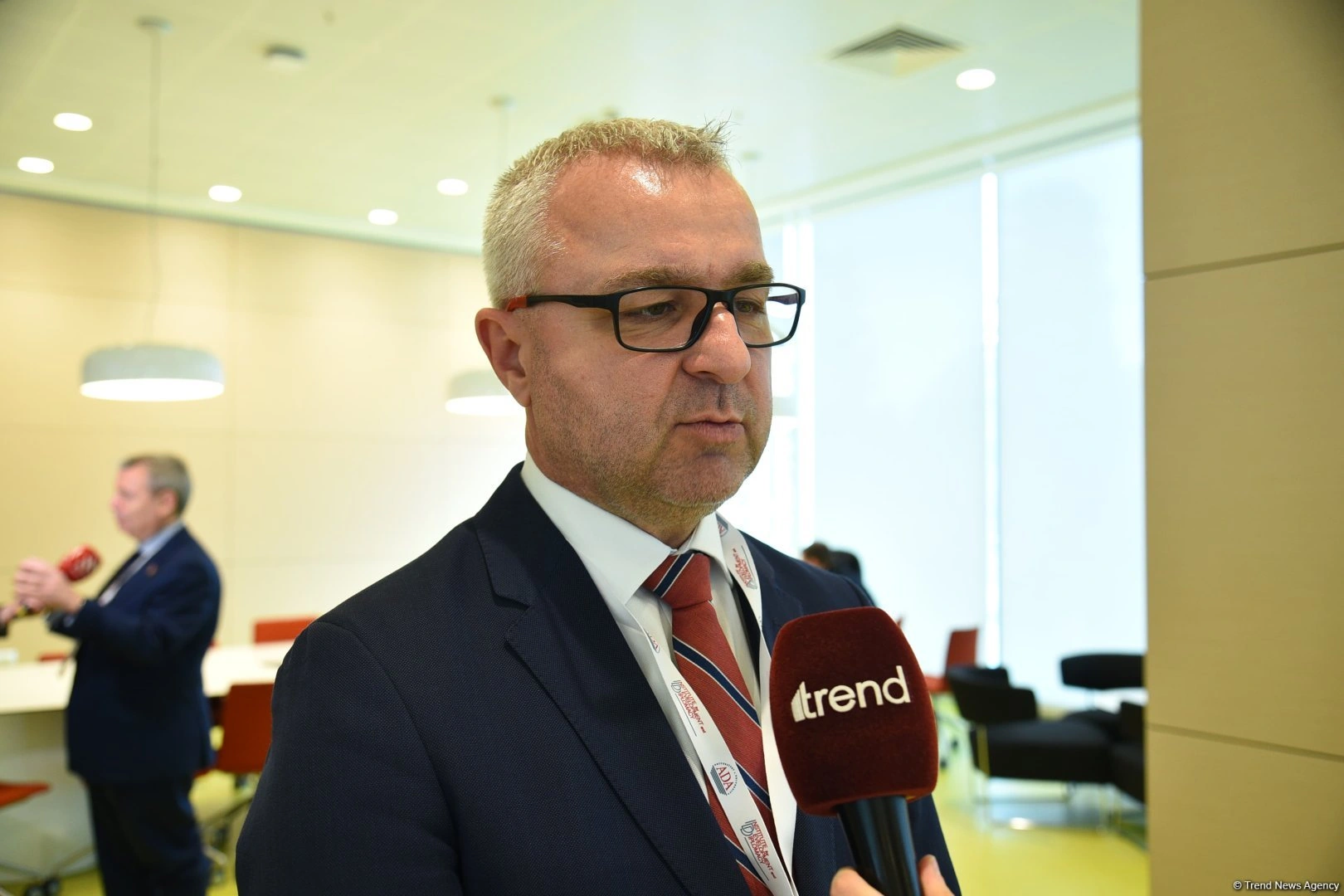
Commenting on the visit, Professor László Vasa, senior
researcher at the Hungarian Institute of International Affairs
(HIIA), told Trend that the
real progress between the two countries already happened with the
2024 Joint Declaration on strategic partnership, which raised
relations to the highest formal level. “This visit operationalizes
it with concrete MoUs on defense industry, food safety, consular
issues, culture and SME cooperation, plus the background of SOCAR’s
pilot gas supplies to Slovakia,” he noted.
The analyst added that the visit marks a transition toward a
more meaningful partnership, but still primarily in the
energy-economic and niche defense-industrial fields. Its depth will
depend on whether gas volumes grow, interconnectors are fully used
and new projects in renewables or digital infrastructure follow, he
pointed out.
“For Central Europe, a closer Baku-Bratislava axis strengthens
the Southern Gas Corridor’s northern branch and reduces the
region’s dependence on Russian and Ukrainian transit, which aligns
with Hungary’s own diversification strategy and our growing ties
with Azerbaijan,” Professor Vasa highlighted. He suggested that in
the medium term, this could create a loose V4+Azerbaijan platform,
where Hungary and Slovakia coordinate more closely on Caspian
energy, connectivity and perhaps defense industry, slightly
increasing Central Europe’s bargaining power inside the EU and
vis-à-vis external suppliers.
According to Vasa, several main drivers define the partnership.
“First, energy security and diversification: Slovakia is in a
vulnerable position after the Ukraine transit stop and the
politicisation of Russian gas; it needs new, non-Russian volumes
fast. Azerbaijan wants to lock in new EU buyers for Southern Gas
Corridor exports and future production, and Slovakia fits well as a
landlocked, highly dependent market,” he said.
“Furthermore, defense-industrial and connectivity interests:
Slovakia’s defense industry is looking for new markets; Azerbaijan
is seeking technology transfer and joint production for export. And
the logistics and East-West connectivity, where Central Europe
links to the South Caucasus via the Black Sea and Türkiye, is also
a factor,” he added.
From Budapest’s perspective, Vasa stressed, this rapprochement
is mostly viewed positively and as complementary. It reinforces
Hungary’s own Azerbaijan policy: more Caspian gas into Central
Europe strengthens the Southern Gas Corridor branch that we also
rely on and reduces the stigma that Hungary is ‘alone’ in engaging
Baku.
Professor Vasa emphasized that gas cooperation lies at the core
of the partnership. “With SOCAR now supplying Slovakia, Baku is no
longer just a supplier for Italy and the Balkans, but a source
reaching deep into Central Europe,” he said. “Slovakia is a
landlocked market highly dependent on imports, and Azerbaijani gas
via the Southern Gas Corridor provides a non-Russian alternative,
strengthening energy security and diversification.”
He noted that the practical importance of the visit is in
formalizing and expanding these flows. “If Slovakia can anchor
regular SOCAR deliveries and establish multi-annual contracts, it
will transform from a potential endpoint into a real anchor market
at the northern end of the Vertical Corridor. That creates strong
incentives to upgrade and fully use interconnectors along the
Greece-Bulgaria-Romania-Hungary-Slovakia line, align regulatory
rules, and coordinate capacity booking and reverse-flow options,”
Vasa explained.
According to him, Azerbaijan has a solid track record of
honoring long-term contracts toward EU buyers. “This reliability
matches Central Europe’s interest in predictable, multi-year
deliveries, as opposed to exposure to spot-market volatility. The
structural limitation is export volumes, and expansion via new
fields, TANAP/TAP upgrades, and Balkan interconnectors will take
time and investment,” he added.
Vasa also linked Slovakia’s gas cooperation with Hungary’s
broader energy strategy. “From Budapest, this visit is fully
aligned with our multi-vector, pipeline-centric strategy:
maintaining Russian gas, adding Azerbaijani gas volumes from the
South, plus some LNG and renewables. Azerbaijani gas helps
stabilise flows through the Balkans and strengthens the case for
further interconnector investments. A visible Baku-Bratislava axis
enhances the northward extension of the Southern Gas Corridor,
indirectly benefiting Hungary by creating a larger, more liquid
regional market for non-Russian gas.”
He underlined that the visit is more than a bilateral energy
deal. “It sends a message that Azerbaijan is becoming a more
integrated player in Europe’s pan-regional gas system. As the 12th
European importer of Azeri gas, Slovakia demonstrates that the
Southern Gas Corridor is no longer just a southern route - it has a
real Central European reach,” he said.
Professor Vasa also underlined the symbolic and practical
importance of Slovak involvement in Karabakh reconstruction. “It
gives EU/NATO ‘stamp of legitimacy’ to the post-war reality and to
the Great Return reconstruction agenda. A Slovak-led project in
Karabakh and new MoUs on economic and tech cooperation signal that
ties are not just about gas, but also about long-term development
and investment. In Hungary, which is a fellow EU member and
Azerbaijan’s partner, this is seen largely positively. It widens
the group of EU states that have a tangible stake in Azerbaijan’s
post-war reconstruction,” he explained.
“From a Hungarian perspective, stronger Azerbaijan-Slovakia
cooperation is welcome: it raises the economic logic and EU
visibility of the Vertical Corridor, while giving Budapest a chance
to act as a key transit hub and political broker in Central
Europe’s south-north energy architecture,” László Vasa
concluded.