BAKU, Azerbaijan, December 11. The first
official visit of President Ilham Aliyev to Slovakia marked a
significant milestone in the history of bilateral relations,
reflecting a new level of political dialogue and economic
cooperation between Baku and Bratislava. At a time of shifting
geopolitical dynamics in Europe and ongoing challenges in energy
security, the agreements and discussions held on 8-9 December carry
both symbolic weight and concrete practical value for the two
countries.
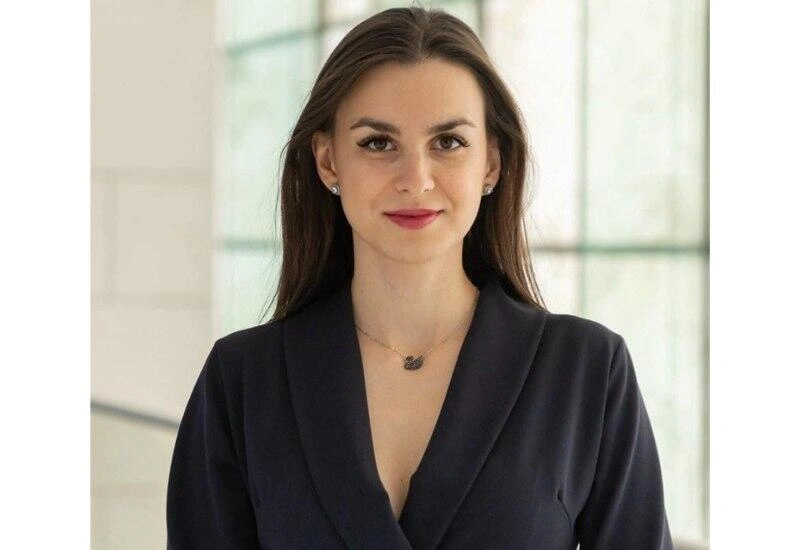
Speaking to Trend, Rita
Csápaiová, a political analyst from Slovakia, described the visit
as considerably more strategic than a routine high-level exchange,
noting that for the first time the relationship was articulated in
a political, energy, and industrial framework all at once, which
she said is usually the threshold where countries begin
transitioning from ad-hoc cooperation to something more
structured.
According to the analyst, the visit stands out because it did
not rely on symbolism alone. Slovakia has already begun receiving
Azerbaijani gas under a pilot scheme, and both sides openly
discussed expanding these deliveries. She stressed that this marks
a qualitative shift: “When energy cooperation moves from
political declarations to actual molecules entering the Slovak
grid, it changes the character of the relationship. It becomes less
about diplomatic goodwill and more about practical interdependence.
And interdependence is the backbone of any credible strategic
partnership”.
Csápaiová noted that Azerbaijan’s growing role in Slovakia’s
energy architecture is one of the most consequential elements of
the visit. She underscored that Bratislava’s diversification
efforts are not theoretical but have now moved into
implementation.
“Slovakia is restructuring its energy supply chain in real
time. In this process, Azerbaijani gas is not a symbolic gesture -
it is an operational component of our diversification strategy.
Even if the current volumes are modest, the political signal and
strategic value are extremely important: Slovakia is no longer
dependent on a single supplier and is strengthening its negotiating
position within the EU,” she pointed out.
The analyst added that Azerbaijani gas fits naturally into
Slovakia’s short-, medium-, and long-term needs. “In the
short to medium term, Azerbaijani gas helps Slovakia cover
immediate needs and manage seasonal fluctuations. Pilot deliveries
have already started, and expanding them gives Slovakia more
flexibility and greater predictability. It also allows Bratislava
to demonstrate, both domestically and in Brussels, that it is
taking active steps to diversify responsibly”.
Looking further ahead, Csápaiová emphasized that energy
cooperation must evolve from temporary shipments to structural
commitments. “For this partnership to move from a promising
beginning to a long-term strategic asset, we need multi-year
agreements with clearly defined volumes, guarantees, and
infrastructure planning. Azerbaijan’s supply is reliable, but
long-term energy security requires investment in interconnectors,
storage, and transmission capacity. This is where the next stage of
cooperation must focus”.
She added that Slovakia’s experience already illustrates a
broader trend in Europe. “What is happening now is that
Azerbaijan is gradually becoming part of Europe’s strategic
diversification efforts. It is not a peripheral supplier anymore.
It is entering the core of the conversation on what Europe’s
post-Russian-gas map looks like,” the analyst explained.
Beyond energy, Csápaiová highlighted that the visit produced
MoUs in reconstruction and industrial cooperation that give the
partnership multi-year depth. If Slovak companies become
systematically involved in infrastructure and smart-city projects,
this would create “a long-term economic presence, not an episodic
opportunity”. Still, she noted that three steps are necessary for a
fully-fledged strategic partnership: long-term energy contracts,
regular coordination mechanisms, and implementation timelines for
joint projects.
The analyst pointed to energy diversification, geopolitical
interests, and economic opportunities as key drivers behind the
closer alignment. Slovakia is seeking alternatives to reduce
dependence on a single supplier, and Azerbaijani gas offers a
credible option. For Azerbaijan, strengthening ties with EU member
states expands its presence in Europe and facilitates access to
expertise and investment.
On defence-industry and industrial collaboration, Csápaiová said
opportunities are real but pragmatic, with the strongest potential
in dual-use technologies, modernization, and engineering. She
emphasized that “strategically, this kind of cooperation reinforces
resilience for both countries.”
She also noted the importance of Slovakia’s participation in the
reconstruction of Azerbaijan’s liberated territories. A Slovak
company is already implementing the Garvand smart-village project
in Aghdam. Such engagement “signals European confidence in the
reconstruction process” while providing Slovakia with long-term
commercial opportunities.
Looking ahead, she said the areas with greatest potential in the
next 3-5 years include economic cooperation, industrial joint
ventures, SME development, food safety, cultural exchanges,
consular cooperation, and infrastructure development. Planned
initiatives such as an honorary consulate, expanded consular
mechanisms, and increased educational and cultural programs will
further cement bilateral ties.
“These areas, supported by memoranda, pilot projects, and
early-stage initiatives, offer a clear roadmap to transform
political goodwill into a strategic, multi-sector partnership,”
Csápaiová concluded, noting that the steps launched during
President Ilham Aliyev’s visit could shape bilateral relations for
years to come.