BAKU, Azerbaijan, November 28. The Iranian
Shahid Hasheminejad Gas Processing Company plans to increase sulfur
production by 11,000 metric tons per year.
According to the Iranian Ministry of Petroleum, this was
announced by Yahya Feyzi, executive director of the gas processing
company "Shahid Hasheminejad."
"One of the main projects currently being implemented by the
Shahid Hasheminejad Gas Processing Company is the construction of a
second sour gas purification unit. This unit relies entirely on
domestic manufacturing and is being built to enrich the sour gas
supplied to the sulfur processing plants, as well as to increase
sulfur production," he noted.
Feyzi added that this project will eliminate the need to replace
110 catalysts at the plant annually, which will play an effective
role in reducing maintenance costs.
"As for the economic and environmental opportunities this
project offers, the plant’s exhaust turbine can release 400 metric
tons of carbon dioxide per day. According to the plan, following
the signing of an agreement with a local startup, the carbon
dioxide will not be released into the atmosphere but will be
converted into a valuable raw material for use in various
industrial sectors," he emphasized.
A company representative also stated that implementing the plan
to sell carbon dioxide produced at sour gas treatment plants will
directly employ 30 people. In addition, indirect jobs will be
created in the transportation sector and other related fields.
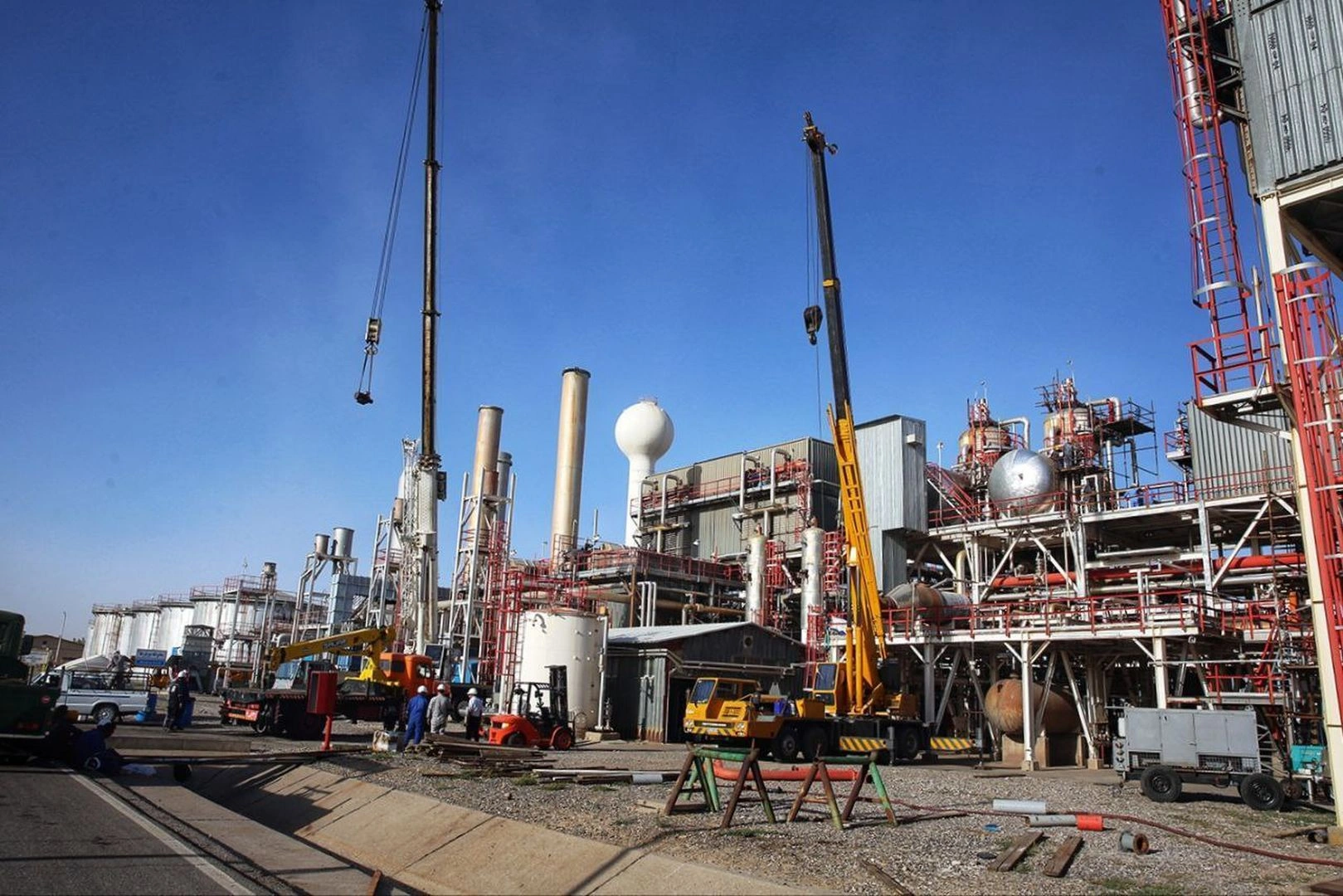
The Shahid Hasheminejad Gas Processing Company operates under
Iran's East Oil & Gas Production Company (EOGPC). The company
consists of 7 plants (5 processing plants and 2 dehydration
plants). Each of the processing plants has a processing capacity of
58 million cubic meters of gas per day. The facility can produce
natural gas, gas condensate, naphtha, kerosene, fuel oil, solvent,
and sulfur.
According to Trend's calculation, based on data from the Iranian
Shahid Hasheminejad Gas Processing Company, 13.9 billion cubic
meters of gas were produced at this facility during the last
Iranian year (March 20, 2024, through March 20, 2025). Compared to
figures from the previous Iranian year (March 21, 2023, through
March 19, 2024), production volume increased by 5%.
For the record, Iran uses the Solar Hijri calendar, also known
as the Persian calendar. The country is currently in the year 1405.
The Iranian year begins on March 20 or 21. The first six months of
the year each have 31 days, the following five months have 30 days,
while the final month has 29 days in three out of every four years
and 30 days in the fourth year. Consequently, the months of the
Iranian calendar begin on the 21st, 22nd or 23rd day of the
corresponding Gregorian calendar month.