BAKU, Azerbaijan, November 27. The World
Intellectual Property Organization (WIPO) has highly commended
Azerbaijan's proposals on intellectual property and artificial
intelligence (AI), the Intellectual Property Agency of the Republic
of Azerbaijan said.
The Global Forum on Intellectual Property and Artificial
Intelligence, organized by WIPO, was held in Geneva on November
9–10, 2026.
According to the agency, the forum brought together intellectual
property and innovation leaders from various countries, prominent
scholars and experts from leading universities worldwide,
representatives of international civil society organizations, and
senior executives of international technology companies at the
forefront of AI development.
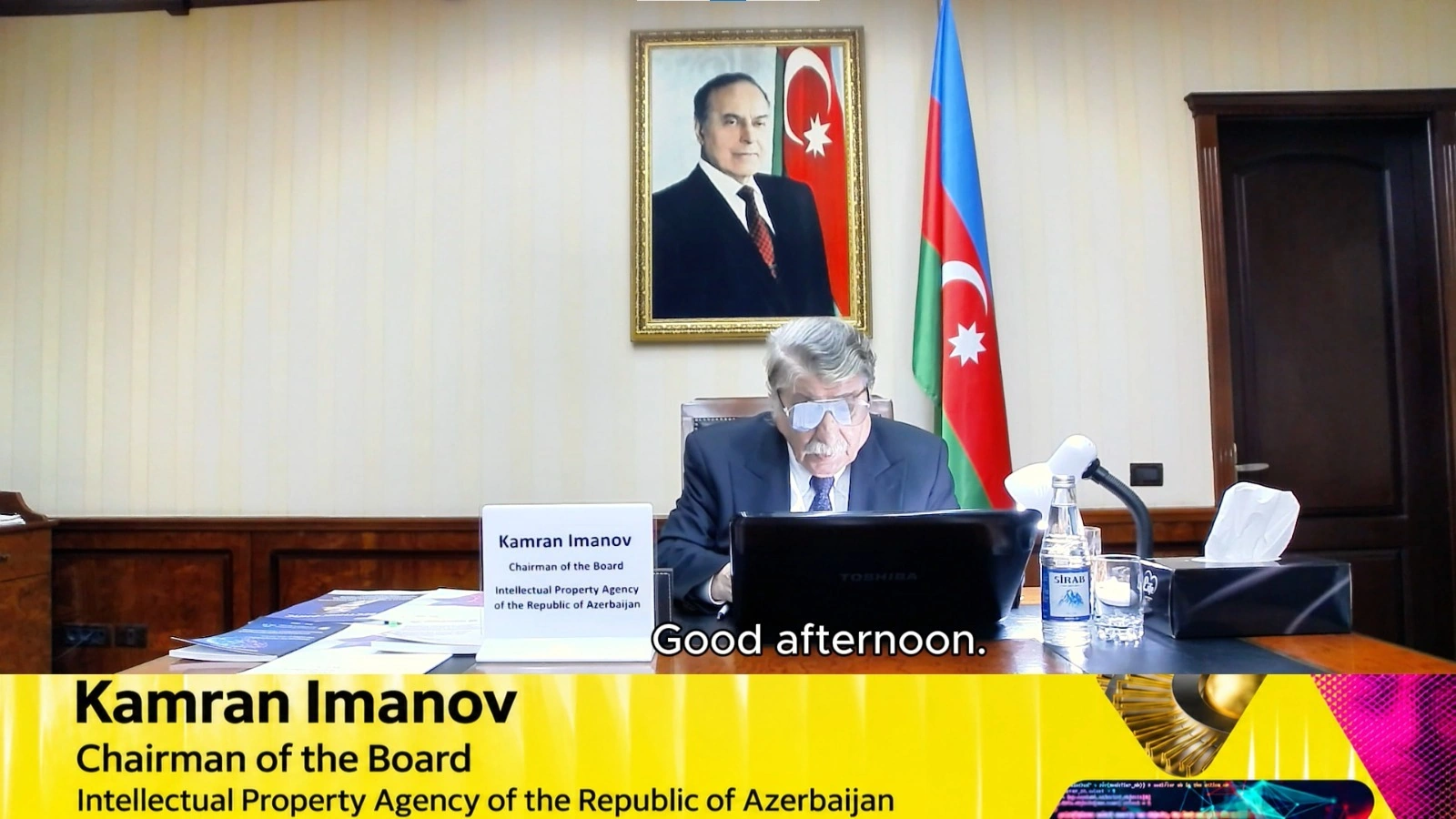
Chairman of the Board of the Intellectual Property Agency of
Azerbaijan Kamran Imanov addressed the forum online on November
10.
At the outset, Imanov thanked WIPO for organizing this important
international dialogue on the interaction between artificial
intelligence and intellectual property.
In his remarks, Imanov stressed that AI development is one of
Azerbaijan's strategic state policy priorities. He noted that the
special attention paid to this area by President of Azerbaijan
Ilham Aliyev underpins the country's efforts to accelerate digital
transformation, introduce advanced technologies and build an AI
ecosystem.
In this context, he highlighted the adoption of Azerbaijan's
Artificial Intelligence Strategy for 2025–2028 and the
establishment of the Digital Development Council, chaired by First
Vice-President Mehriban Aliyeva. These initiatives demonstrate the
importance attached at the highest level to coordinating state
policy on digital development and AI and strengthening the
institutional mechanisms in this area.
The agency chairman also addressed key issues at the
intersection of intellectual property and AI. He examined the
impact of generative AI on the nature of creative activity and
traditional legal concepts, the philosophical, legal and practical
aspects of AI legal personality, and the legal protection of
intellectual outputs generated by AI.
Imanov put forward proposals on the gradual determination of
AI's legal personality; introducing a special 25–30-year legal
protection regime for works autonomously generated by AI; ensuring
fair compensation for copyright holders whose protected works are
used to train AI systems; establishing a compulsory licensing
mechanism designed to support human creativity; and developing a
dedicated international protocol governing the legal status of
AI-generated content.
He also stressed the importance of establishing new legal
mechanisms in response to technological progress while maintaining
human oversight of artificial intelligence. Further details of his
address are available here.
It is particularly noteworthy that, although the forum
regulations allocated three minutes for each speaker, the
organizers granted Imanov 10 minutes to deliver his address at
their invitation.
His speech on contemporary intellectual property and AI issues
was closely followed and highly appreciated by forum
participants.
In this regard, WIPO Director General Daren Tang sent a letter
of appreciation to Imanov.
In the letter, Tang said he was particularly pleased with
Azerbaijan's active participation in the discussions and its
contribution of perspectives and practical proposals on the
evolving relationship between AI and intellectual property.
"Such active engagement by our Member States is important as we
work together to ensure that the international intellectual
property system continues to respond effectively to rapid
technological change," the letter said.