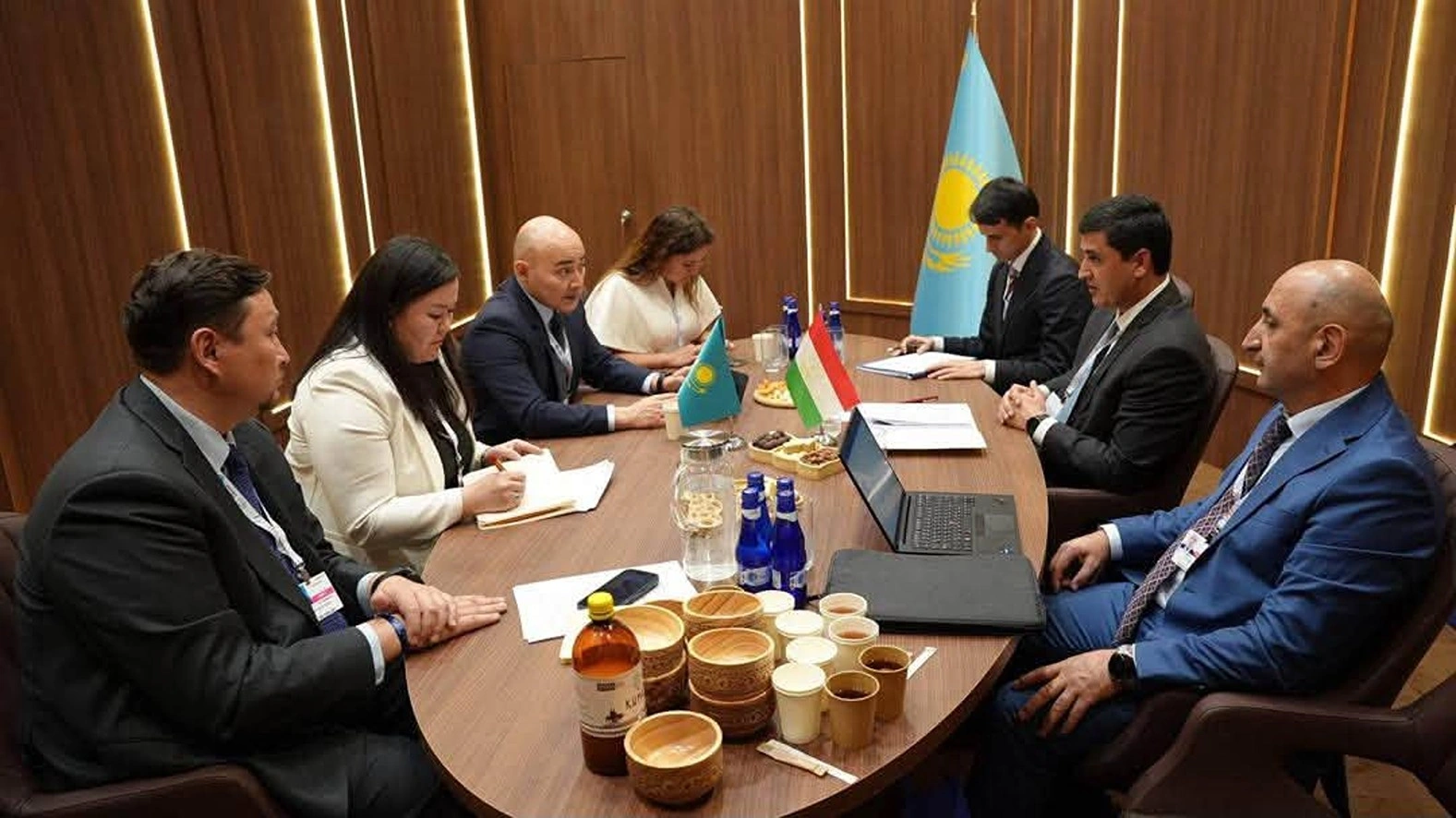
BAKU, Azerbaijan, November 16. Tajikistan and
Kazakhstan have discussed expanding cooperation on water resource
management, biodiversity conservation and combating
desertification, according to Tajikistan's Committee for
Environmental Protection.
The discussions took place on the sidelines of the 31st
Conference of the Parties to the UN Framework Convention on Climate
Change (COP31) in Antalya, Türkiye, during a meeting between
Committee Chairman Bahodur Sheralizoda and Kazakhstan's Minister of
Ecology and Natural Resources Alibek Kuantyrov.
The sides discussed bilateral cooperation in environmental
protection, the sustainable use of natural resources, climate
change mitigation and the implementation of regional and
international environmental initiatives.
Particular attention was paid to ecosystem protection,
biodiversity conservation, water management and combating
desertification.
The two sides also emphasized the importance of exchanging
experience and information and strengthening coordination within
international and regional organizations.
The committee noted that a memorandum of understanding signed by
the relevant agencies of the two countries on May 3, 2023, provides
a basis for further developing bilateral environmental
cooperation.
For reference, environmental cooperation is part of the broader
strategic partnership between Tajikistan and Kazakhstan with water
management being a particularly important area of their cooperation
due to the countries' shared interests in the sustainable use of
Central Asia's transboundary water resources. Tajikistan is an
upstream country in the region's major river systems, while water
availability is essential for agriculture, energy generation and
economic development across Central Asia. In 2023, Tajikistan
renewed a memorandum of understanding on environmental cooperation
with Kazakhstan, providing a framework for further collaboration in
this field.
The two countries also participate in wider regional efforts to
address environmental challenges, including the protection of water
resources and ecosystems in the Aral Sea basin. These issues
require coordination among Central Asian states, particularly in
monitoring water quality, improving resource management and
developing sustainable approaches to environmental protection.