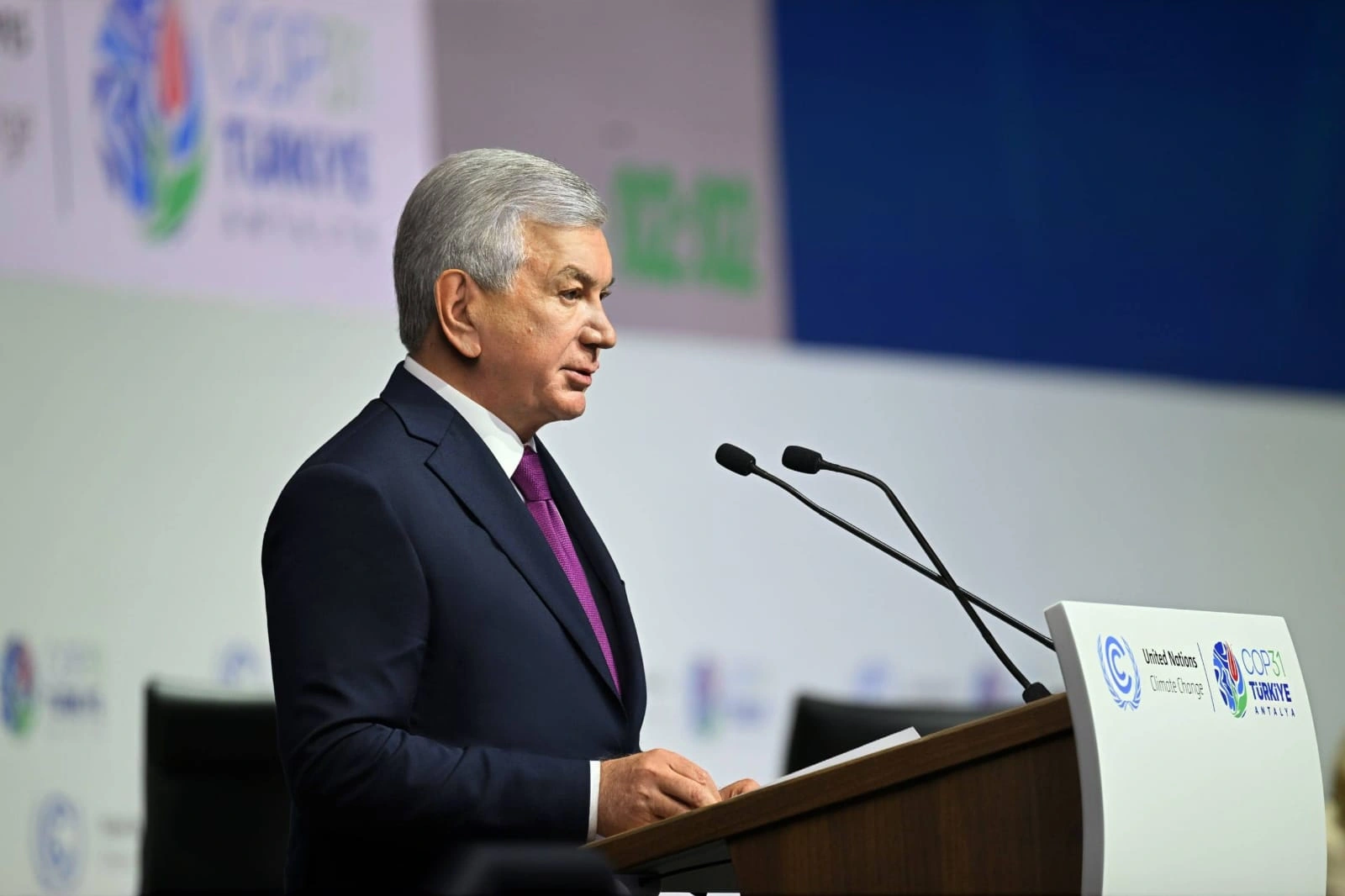
BAKU, Azerbaijan, November 11. Uzbekistan has
put forward an initiative to develop a climate integration model in
Central Asia aimed at strengthening regional cooperation in
combating climate change, President Shavkat Mirziyoyev announced at
the 31st session of the Conference of the Parties to the UN
Framework Convention on Climate Change (COP31) in Turkish
Antalya.
According to the press service of the President of Uzbekistan,
Mirziyoyev noted that countries in the region are facing growing
climate threats, including melting glaciers, water shortages and
extreme droughts. He said these common challenges require joint
action by Central Asian states.
The President proposed launching the development of climate
integration along three main pillars: information, technology and
finance.
Under the first pillar, Uzbekistan proposes, with the assistance
of the World Meteorological Organization, beginning the
establishment of infrastructure for exchanging information on
climate risks.
At the initial stage, the plan is to establish an early warning
system to ensure a prompt response to natural disasters. The next
step would be to develop common indicators and mechanisms for joint
monitoring of slowly developing natural hazards.
The second pillar envisages the development of nature-based
technologies that can be used to restore soils, absorb carbon in
arid areas and combat dust and sandstorms.
In this regard, Mirziyoyev highlighted the annual ECO-EXPO
exhibition, which showcases best practices and promising
environmental innovations. Uzbekistan intends to transform it into
a permanent investment and technology platform for promoting modern
environmental solutions tailored to the region's specific
characteristics.
The President identified financing climate projects as the third
pillar. According to him, Central Asia needs sufficient and
predictable financial resources that take local conditions and
needs into account.
"We propose working with development banks and targeted funds to
develop new support instruments, including concessional grants, as
well as 'blue' and 'arid' financing mechanisms," Mirziyoyev
said.
He called on the countries and international organizations
participating in COP31 to support the initiative and give it
concrete practical substance. The President also proposed applying
this model in other regions of the world interested in similar
cooperation.
Mirziyoyev emphasized that no country can tackle climate change
challenges on its own, making the pooling of efforts at the
regional and international levels particularly important.