BAKU, Azerbaijan, November 5. Uzbekistan is
considering building a new high-capacity bridge at the Olot border
checkpoint on its border with Turkmenistan and revising cargo
transportation procedures to increase border throughput, following
a meeting on November 4.
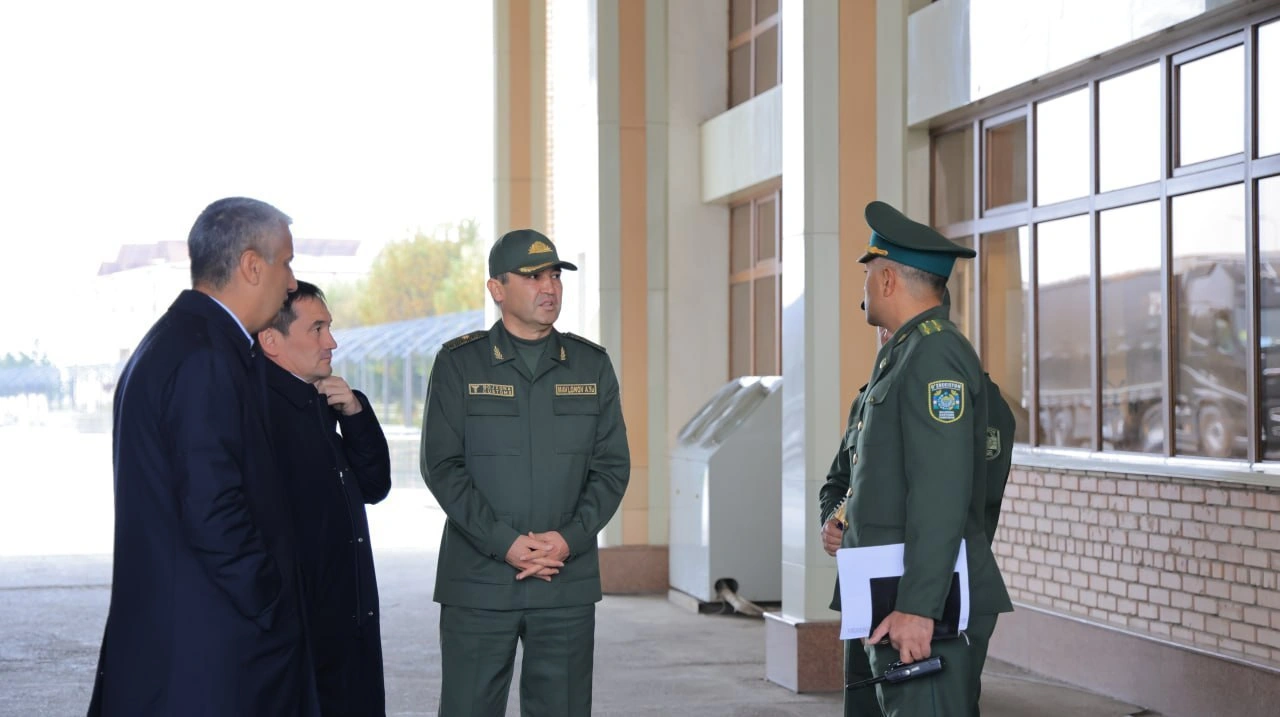
According to Uzbekistan's Ministry of Transport, the proposals
were discussed during a visit to the Olot checkpoint by Chairman of
Uzbekistan's Customs Committee Akmalkhuja Mavlonov, Transport
Minister Ilkhom Makhkamov, Chairman of the Committee for Roads
Jamshid Tursunov and Chairman of the Board of Uzsuvtaminot Akhmad
Suvonkulov.
The officials reviewed the checkpoint's operations and
infrastructure, focusing on improving its capacity, ensuring
uninterrupted cross-border vehicle movement, simplifying freight
transportation procedures and upgrading logistics facilities.
More than 243,000 vehicles passed through the checkpoint in the
first 10 months of 2026, representing a 2.3-fold increase compared
with the same period in 2022. Currently, the crossing handles up to
1,200 vehicles per day in both directions.
The growing traffic has increased the need to modernize the
checkpoint's infrastructure, revise existing operational procedures
and improve traffic management.
One of the proposals involves abandoning the vehicle-trailer
exchange mechanism introduced by the neighboring side during the
COVID-19 pandemic and returning to the traditional international
freight transportation system. The proposed change is expected to
reduce additional border control procedures and speed up vehicle
movement.
Another initiative concerns replacing the bridge over the
Yomonjar Canal, which connects the neutral zones of the two
countries. Built in 1978, the existing bridge is considered
technically outdated.
The proposed new bridge would have at least two lanes for trucks
in each direction. It is expected to accelerate freight
transportation, reduce congestion in the border area and improve
access for pedestrians and passenger vehicles.
Relevant government agencies will conduct comprehensive
assessments of the proposals and prepare feasibility studies. The
resulting recommendations are expected to be submitted for
consideration at the government level.